






Framed Panels
Filters
5 products


One fixing, a few minutes, done
Every other map we make goes up piece by piece: continents taped to the wall one at a time, a template or corner stencils to set them, a few hours of work. These do not. They arrive assembled inside a frame, and they hang the way a picture hangs, from the fixing built into the back.
That is the entire difference, and for a lot of people it is the deciding one.
Why choose a panel over a taped map?
A piece-by-piece map has no edge. The continents sit directly on the wall, the wall itself becomes the ocean, and the finished thing is an object rather than a picture. It needs clear space around it and it does not group with other framed things.
A panel has a defined boundary. It belongs in a gallery wall, above a sideboard, in a room already hung with prints and photographs – and it can be moved to a different wall in the time it takes to put in a second hook.
Neither is better. They suit different rooms and different appetites for a few hours of taping.
The wood is still raised
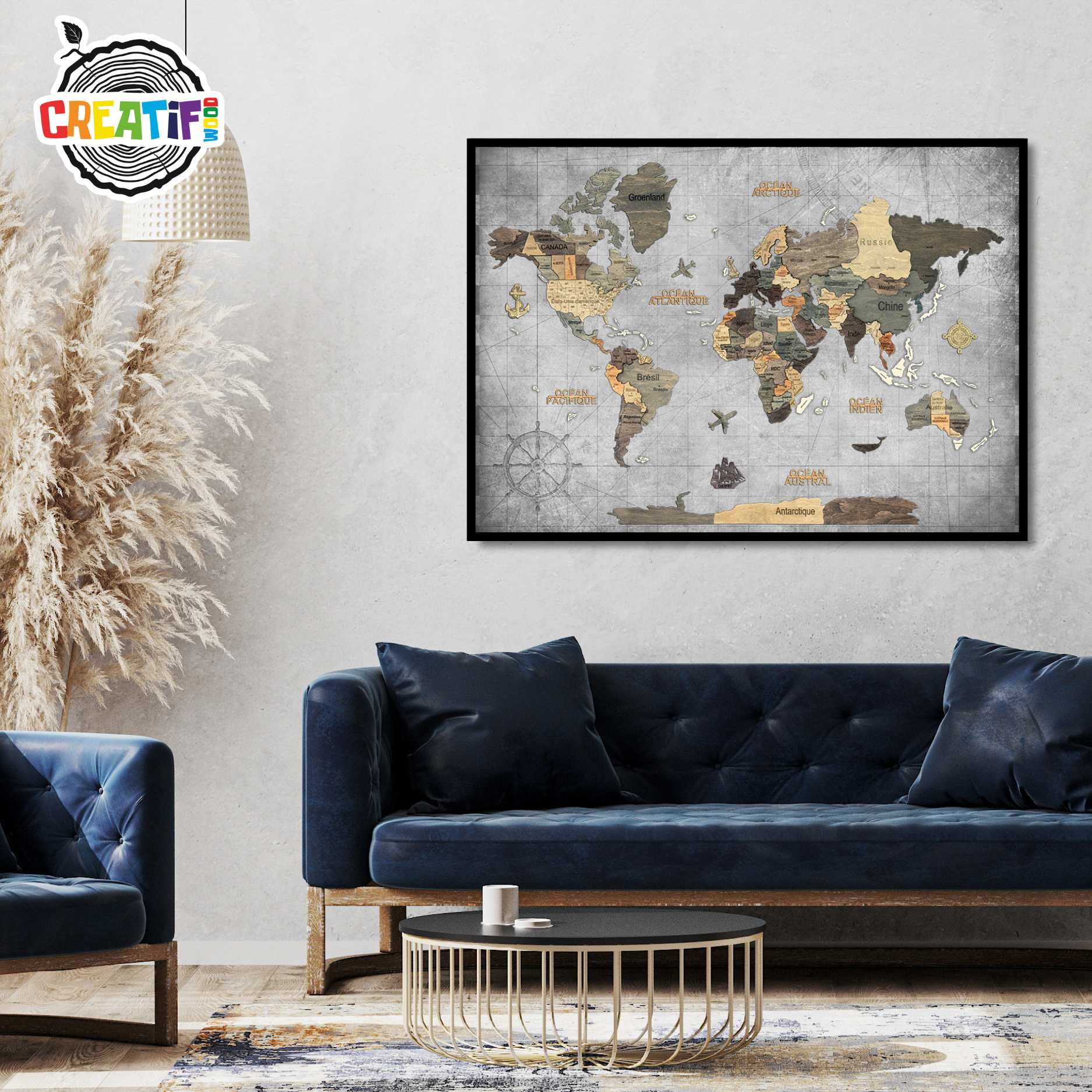
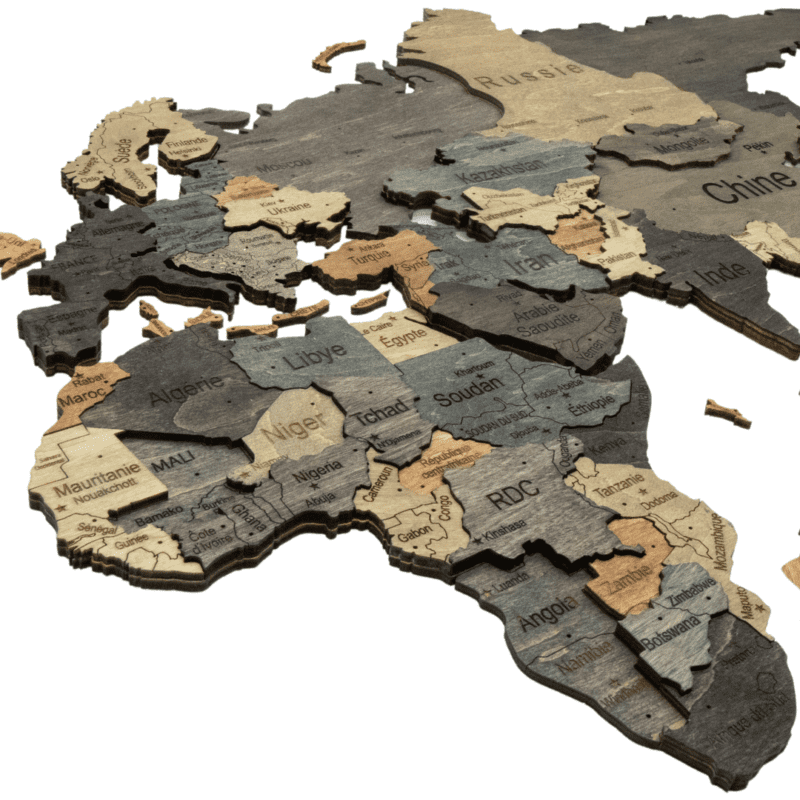
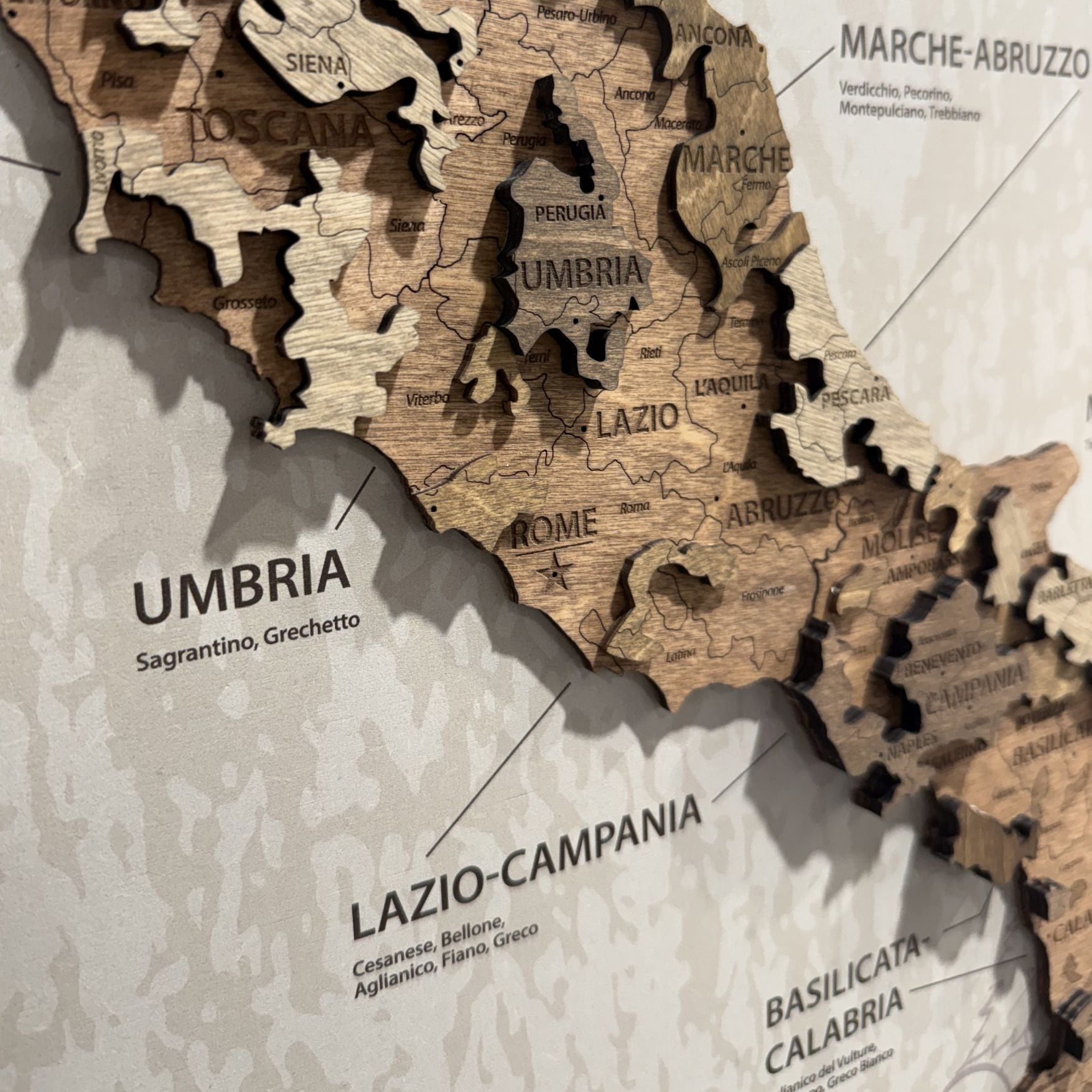
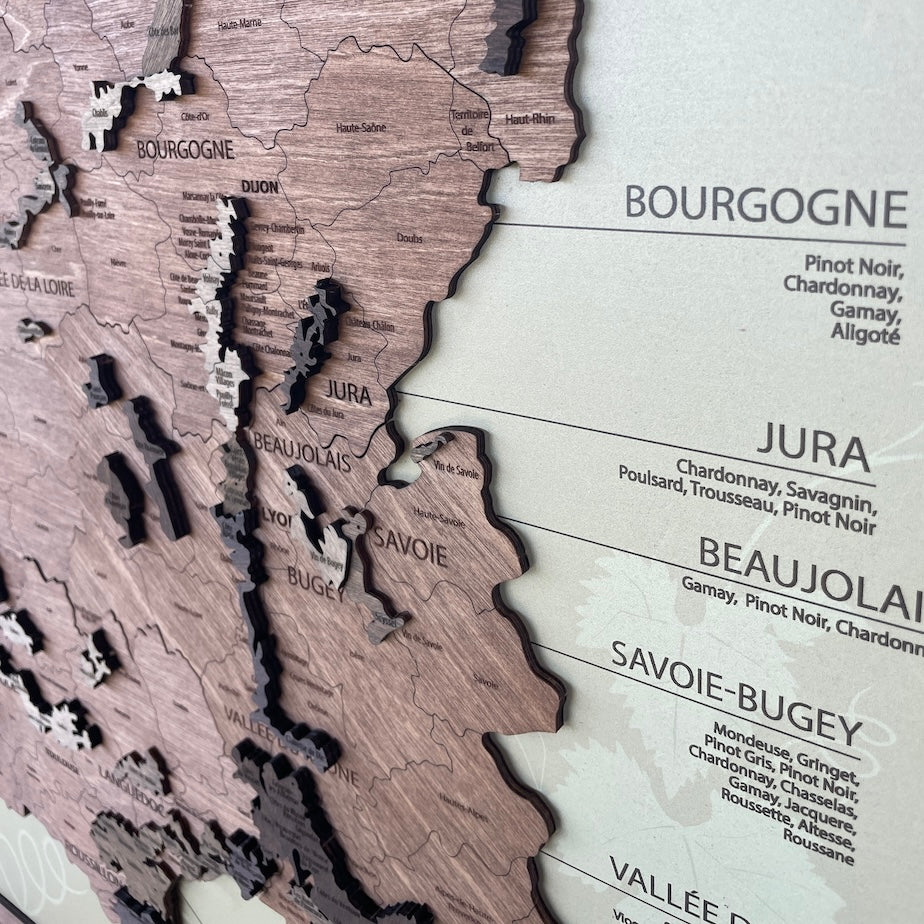
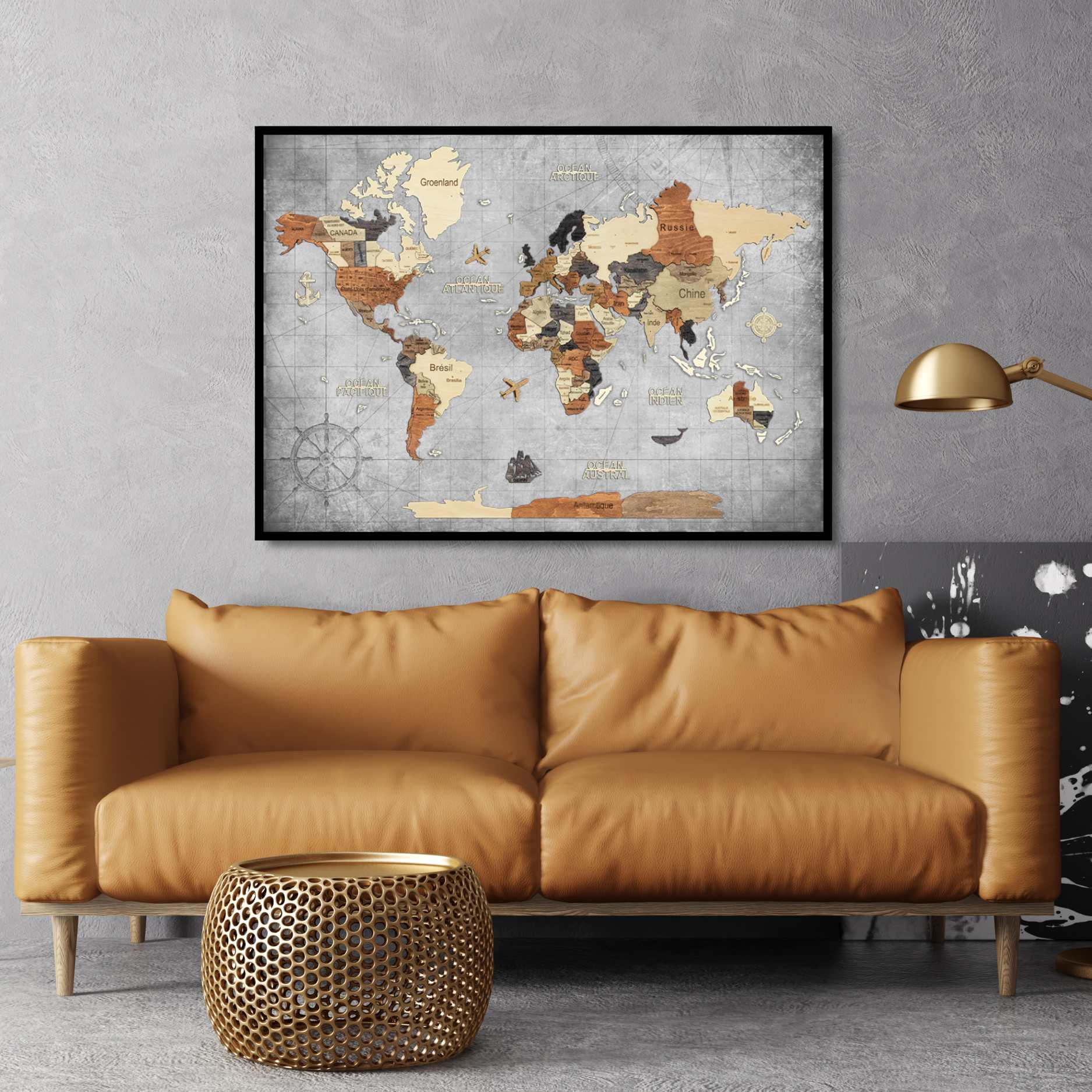
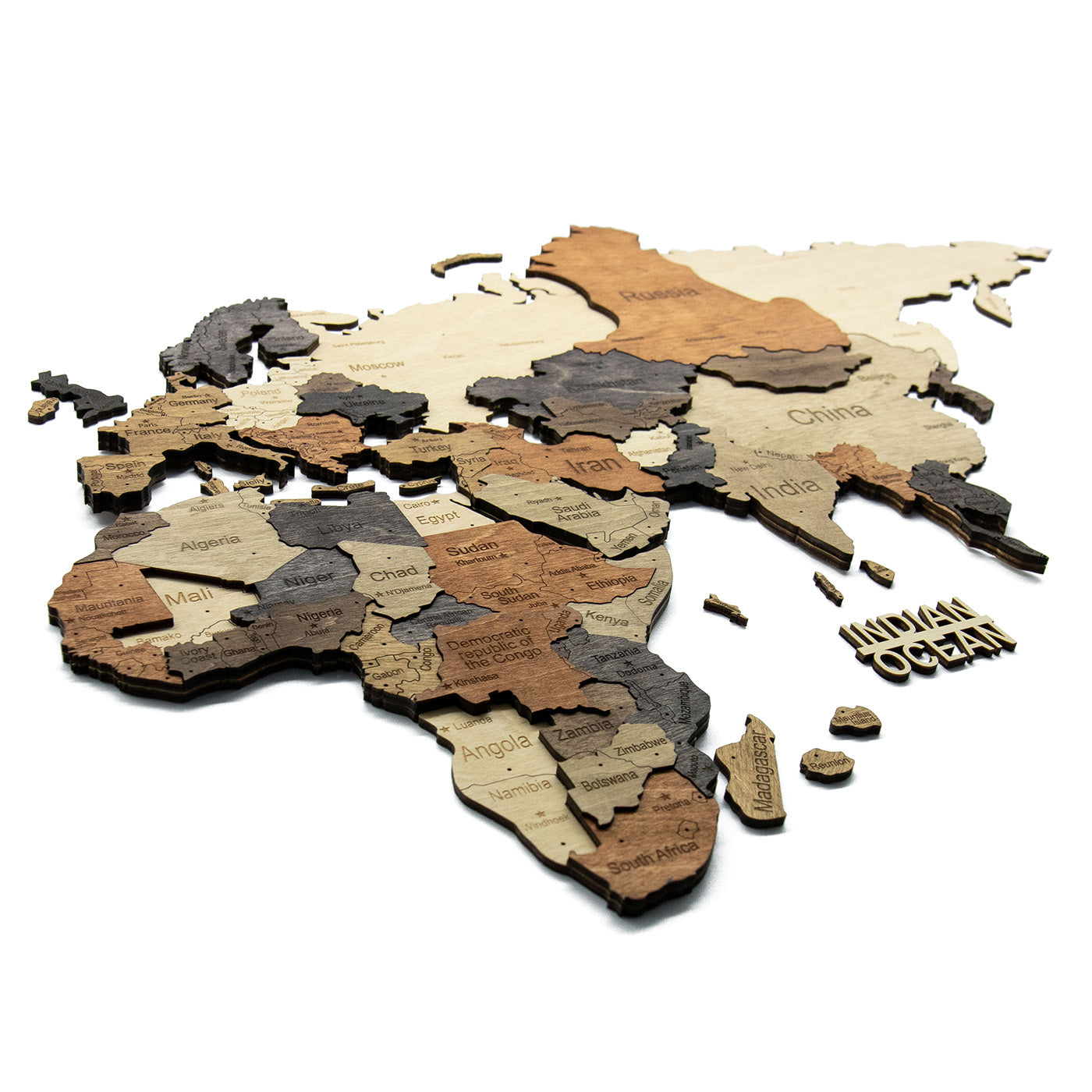
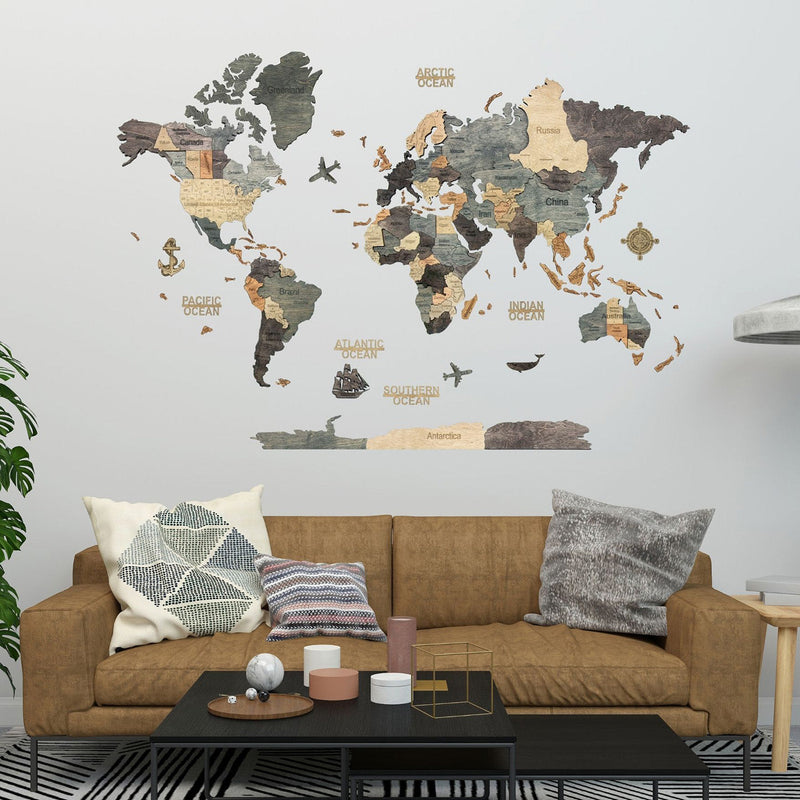
These are not prints. The map itself is cut from wood and mounted on top of the panel, standing off the background – up to nine millimetres on the world panels, with the mountain regions tallest – so it still throws a shadow and still changes as the light moves. The country names, borders and the US states, Canadian provinces and Australian states are engraved in the wood exactly as on our taped maps, and on the world panels even the ocean names, the compass rose, the ships and the planes are separate wooden pieces mounted on the surface.
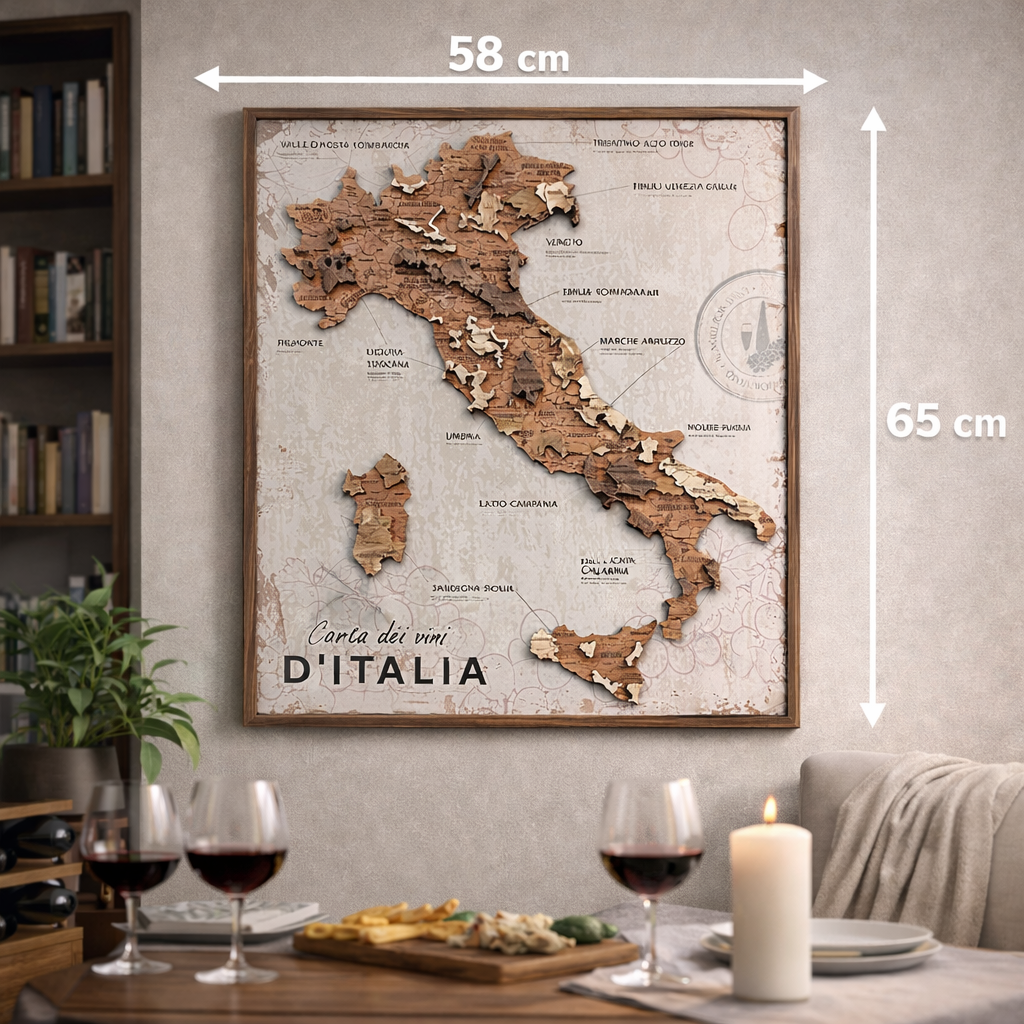
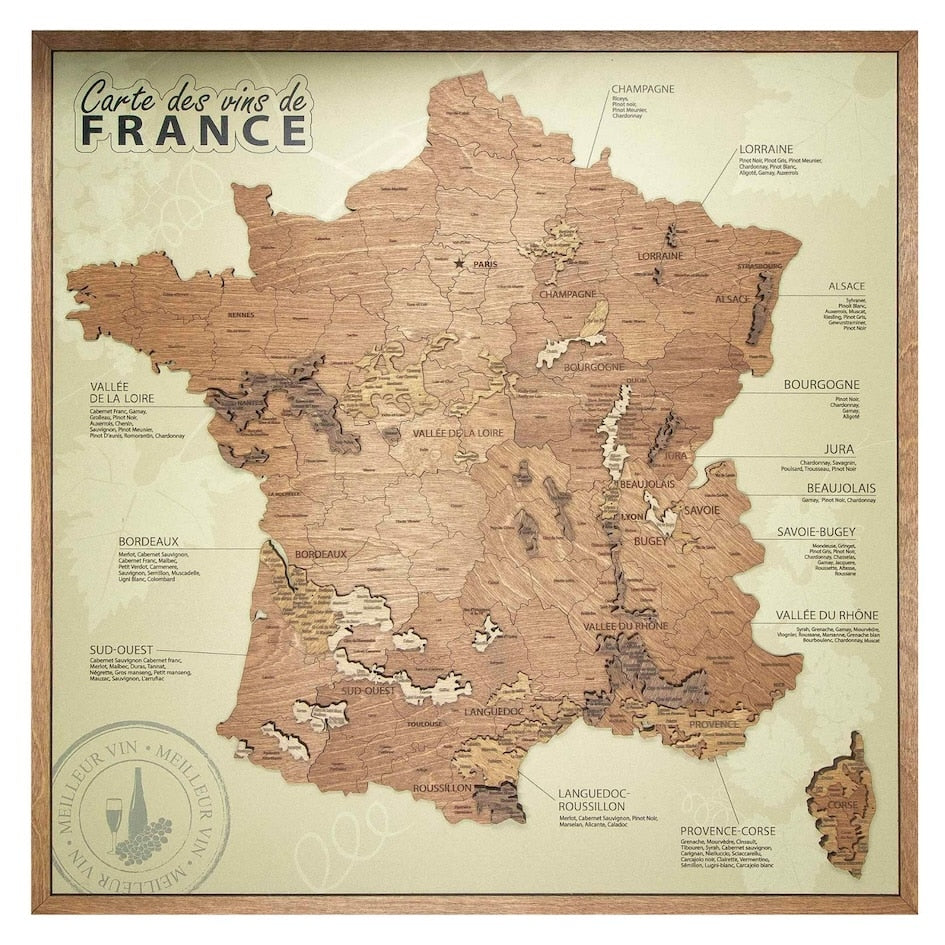
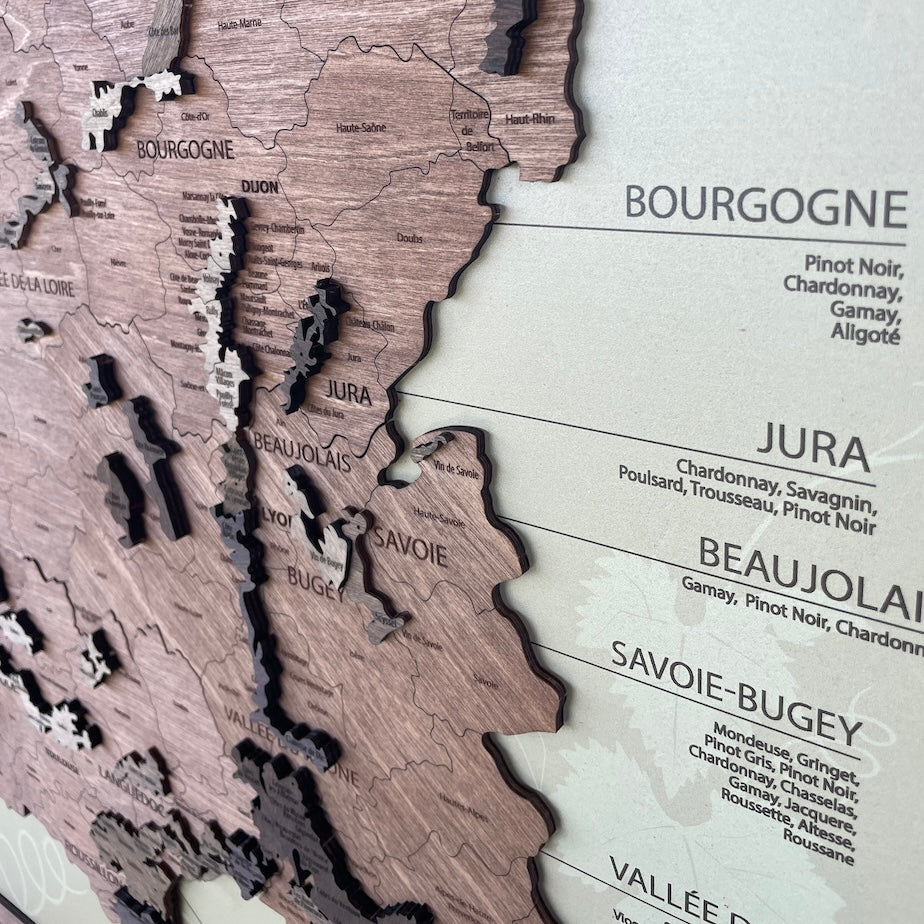
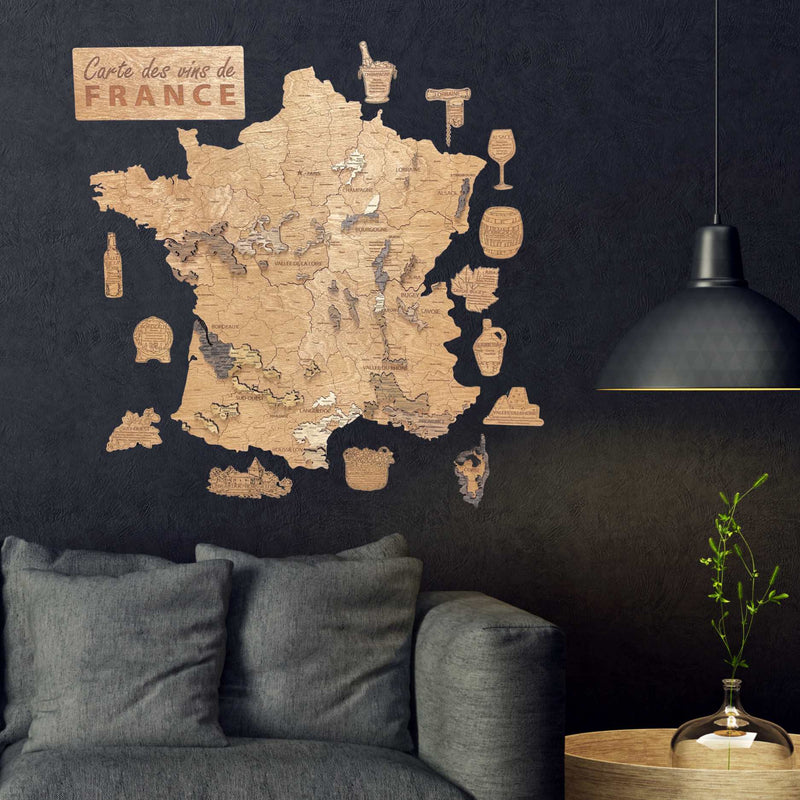
What is printed is the ground. On the world panels it is a chart-grey ocean ruled with meridians and given an old-map wash. On the wine panels the chart does more: around the edge it names each wine region again with its grape varieties, Pinot Noir and Chardonnay under Bourgogne, Merlot and Cabernet under Bordeaux, which is more than the wood alone could carry at this size.
Which maps come as panels?
Two world maps and three wine maps. The world panels sit in a slim black frame on the same chart-grey ocean: Multicolor, where the land runs the whole warm range and neighbouring countries almost never share a shade, in two sizes; and Graphite, where slate and bronze mix with sand and terracotta and the cold ground pushes the land forward, in one. The Graphite panel is lettered in French, the Multicolor in English, and unlike the taped maps neither offers the other language.
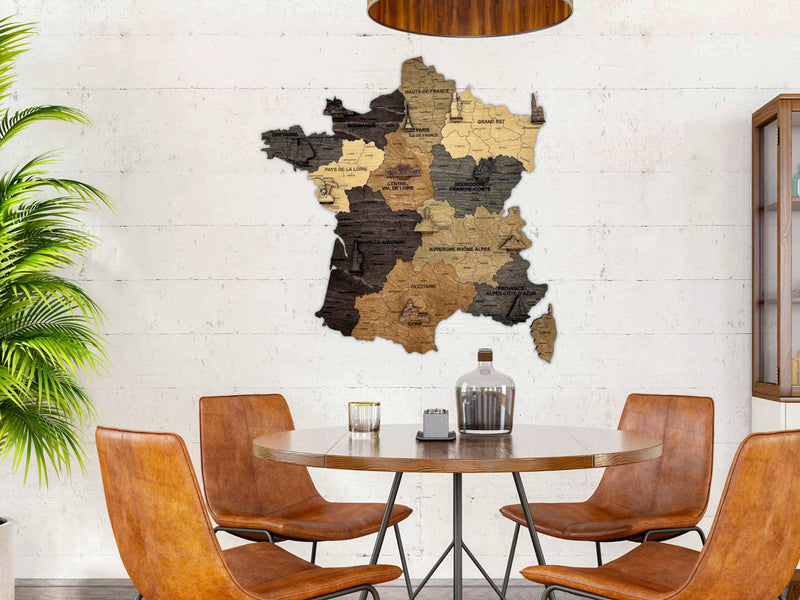
The wine maps divide France or Italy by wine region, the vineyards raised on the wood and the regions named around the edge with their grapes. France comes on two grounds: a pale cream chart with a weathered border in a dark walnut frame, which reads as an old chart, and a smooth warm parchment in a light oak frame, the quieter of the two. Italy is taller than it is wide, on an aged grey ground in a dark frame, with all twenty regions on it.
What does the wall need?
One fixing rated for three to five kilograms, depending on the panel: a plasterboard anchor rather than a picture pin, and a hook rather than adhesive. That is the one thing to check before ordering.
Because the fixing is mechanical, the wall surface stops mattering. Textured plaster, brick, wallpaper and freshly painted walls, where our double-sided tape is unreliable or unwelcome, are all fine here.
Who chooses a panel?
Renters, and anyone who has moved recently or expects to. People buying a map as a gift, since a framed panel can be given and hung the same day, while a piece-by-piece map is a few hours of work the recipient has not agreed to. And anyone who wants the map on the wall this evening.
What these are not
Decorative rather than cartographic. Small countries and island groups are simplified at this scale, coastlines are smoothed, and on the wine maps the smallest designations are grouped into their regions.