







Sea & Ocean Wooden Puzzles
Filters
13 products
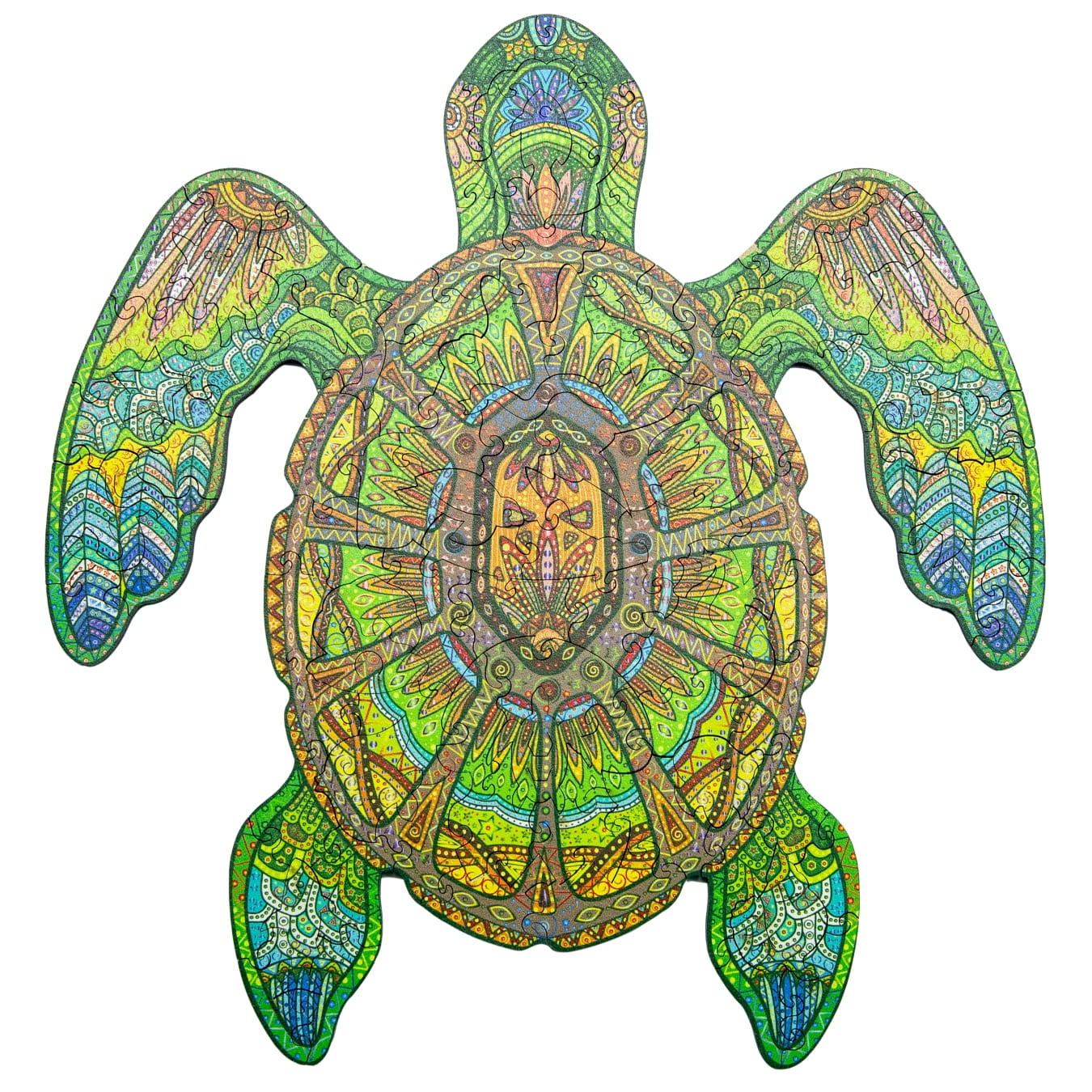
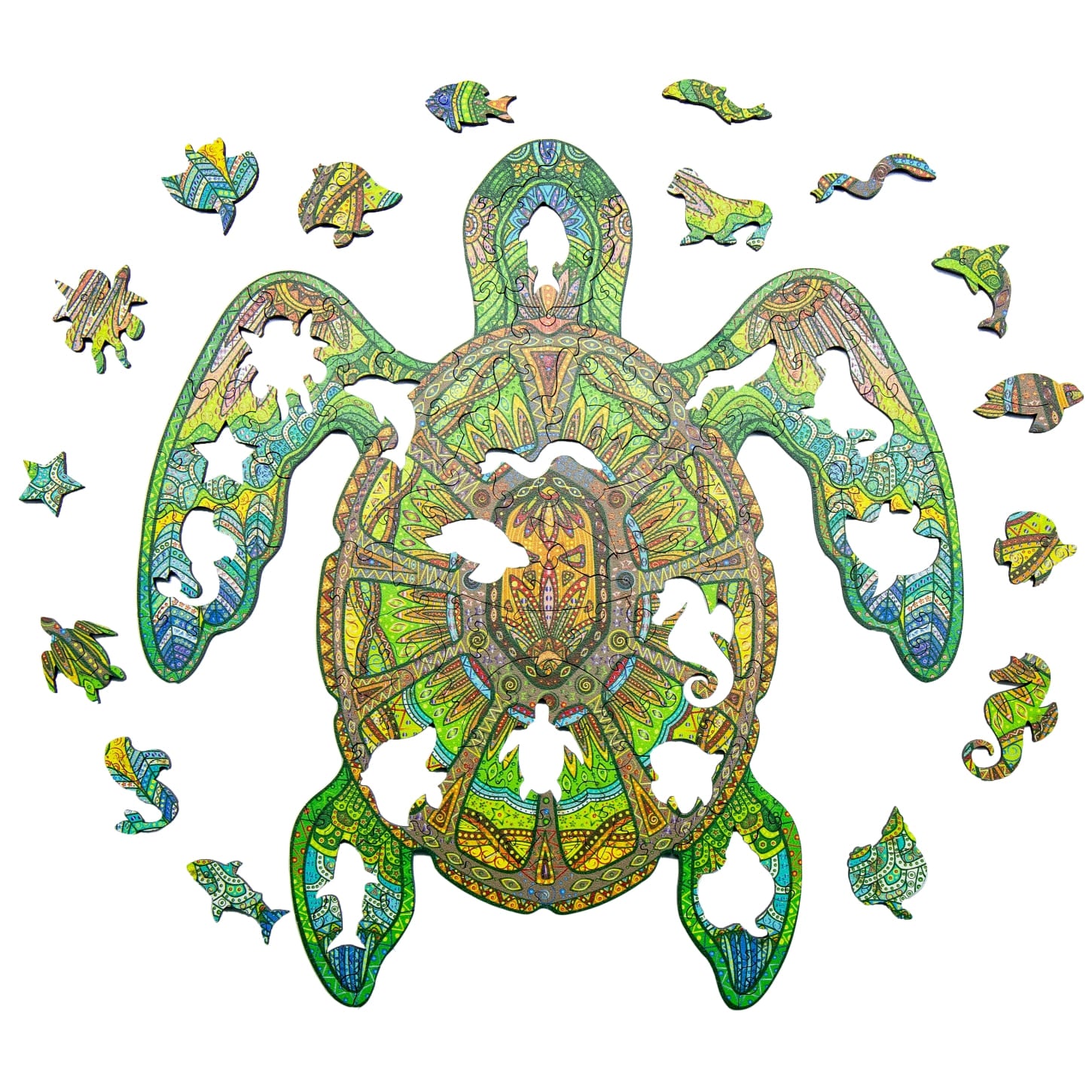
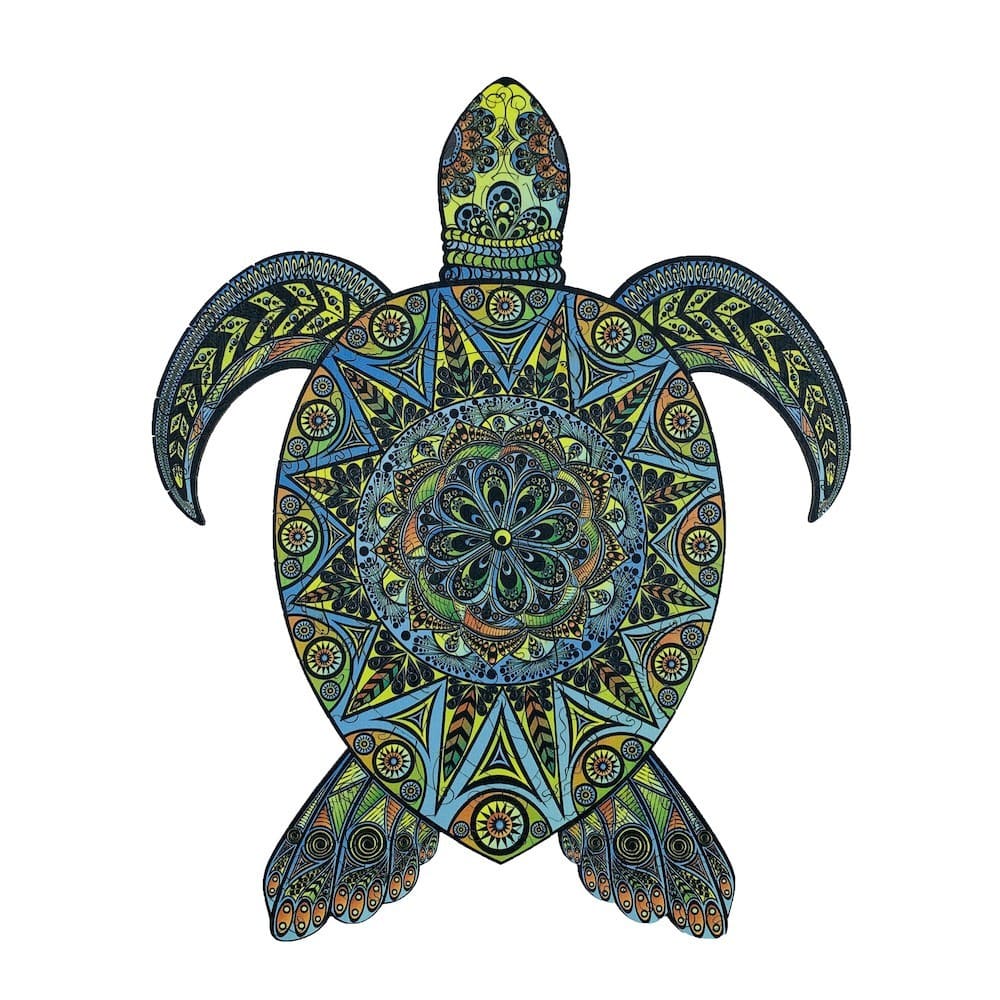
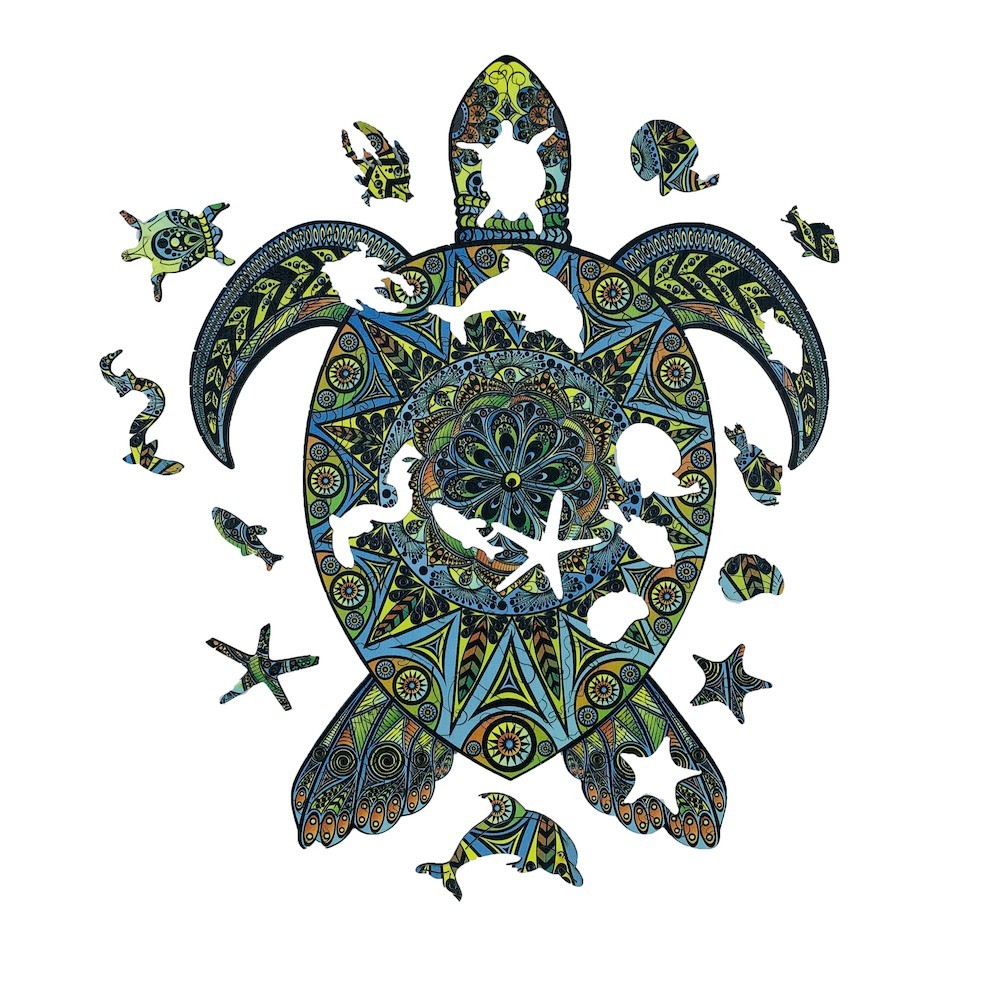
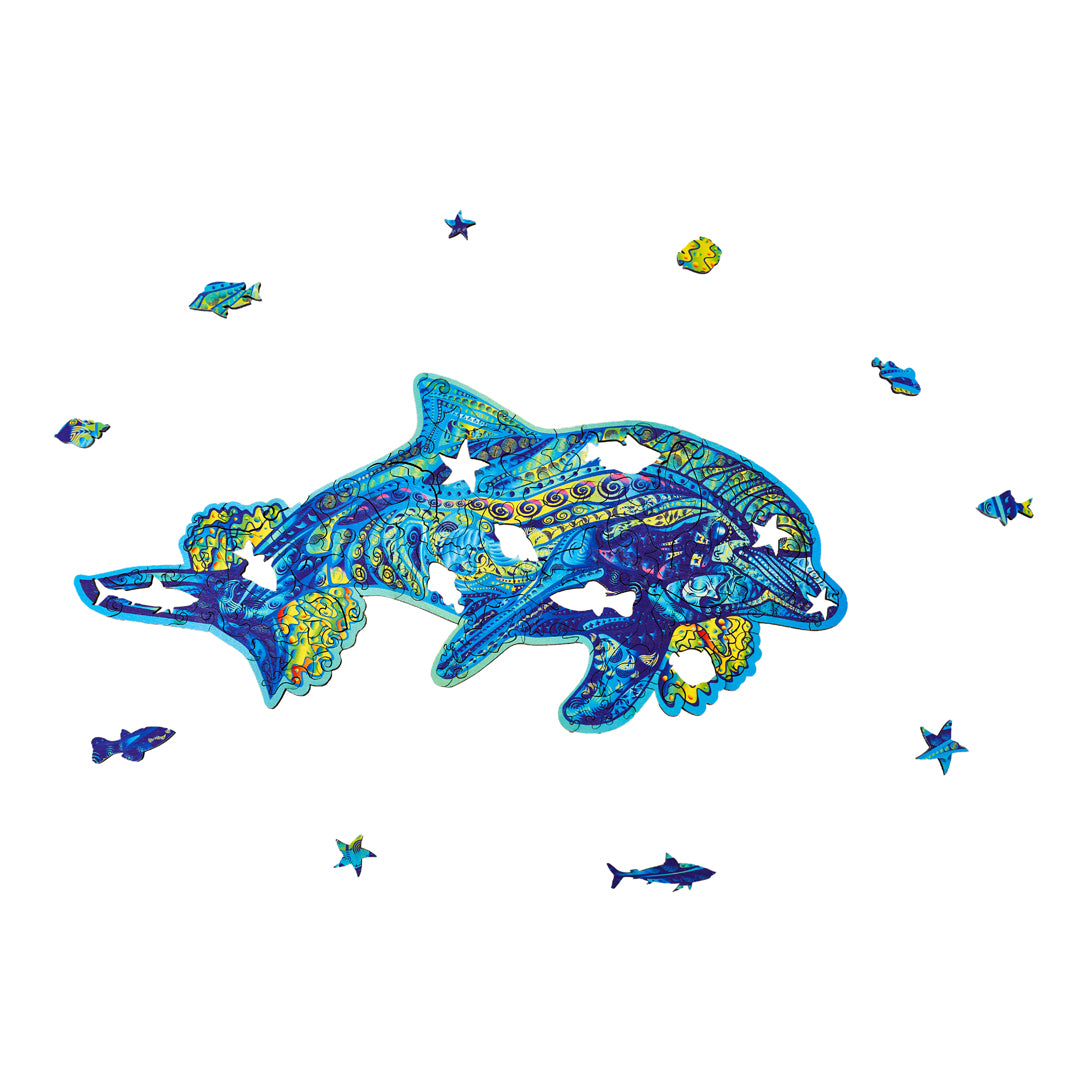
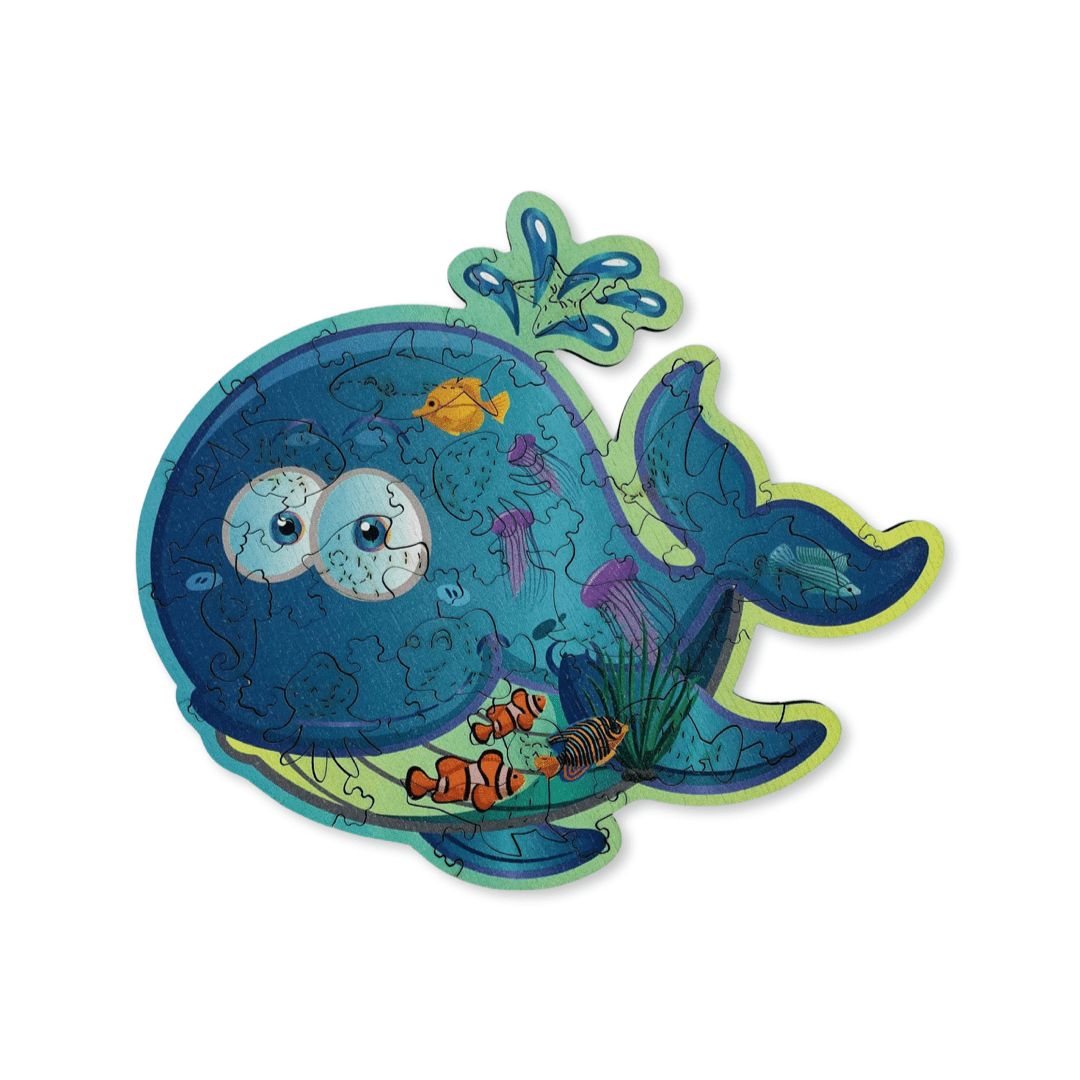
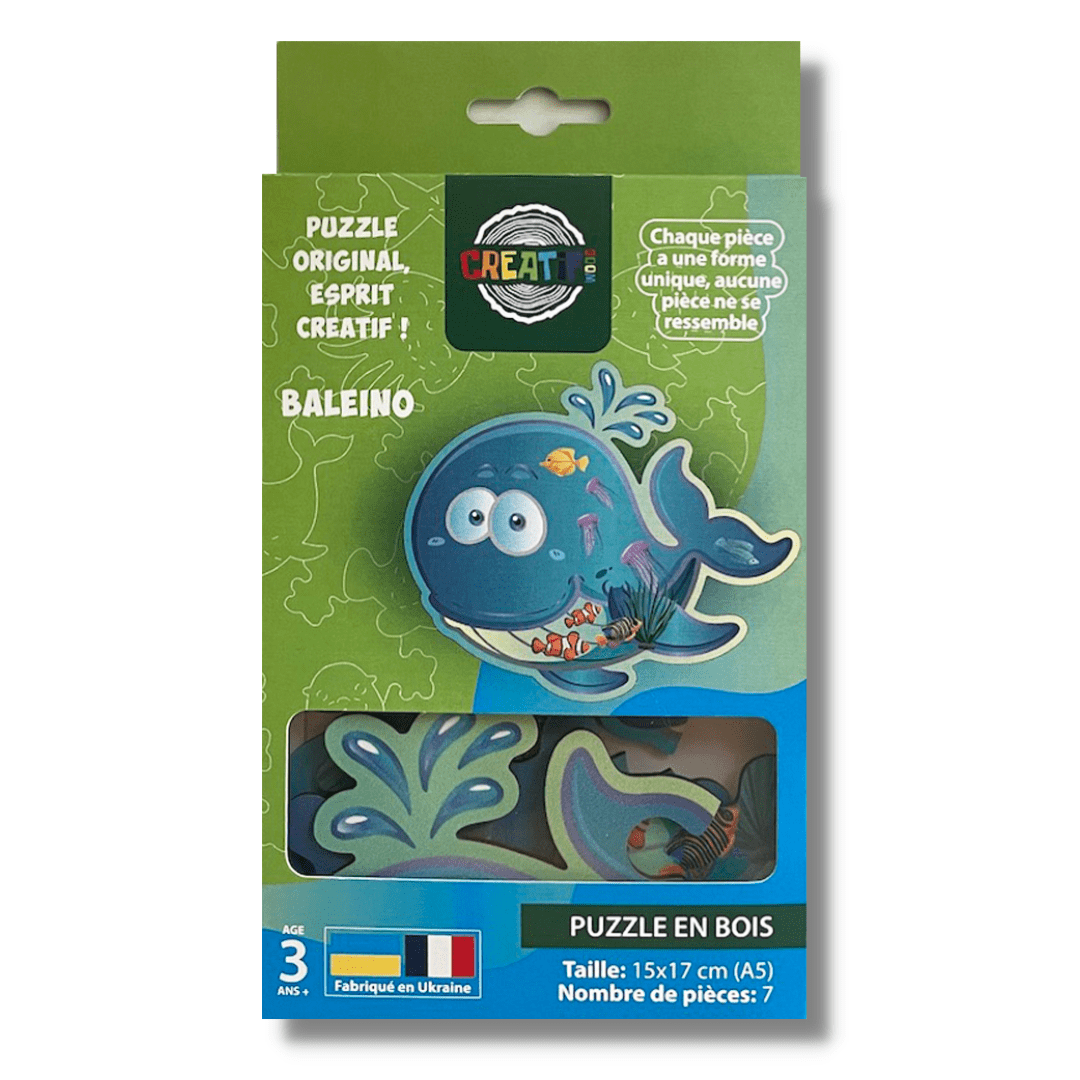
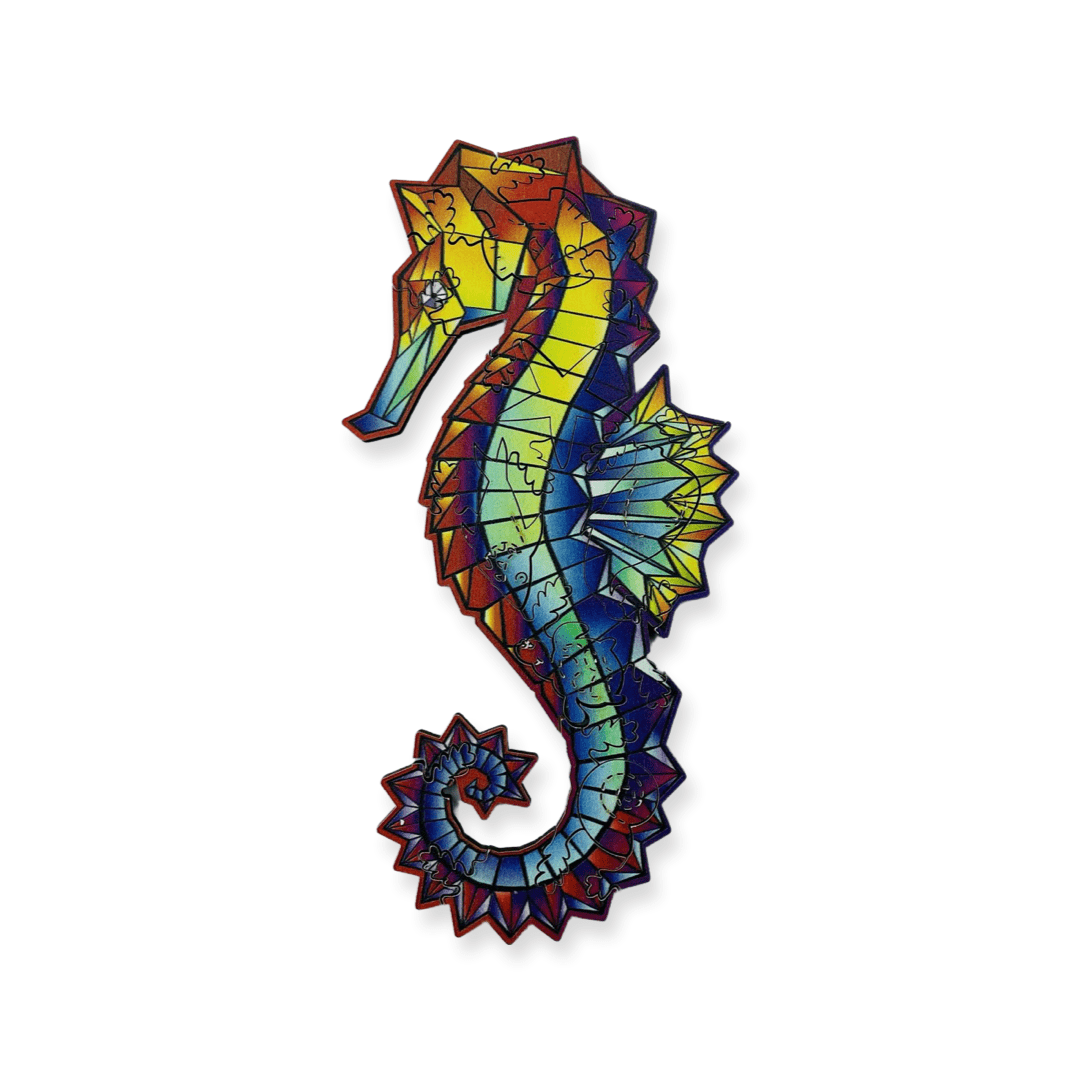
The least uniform group in the catalogue
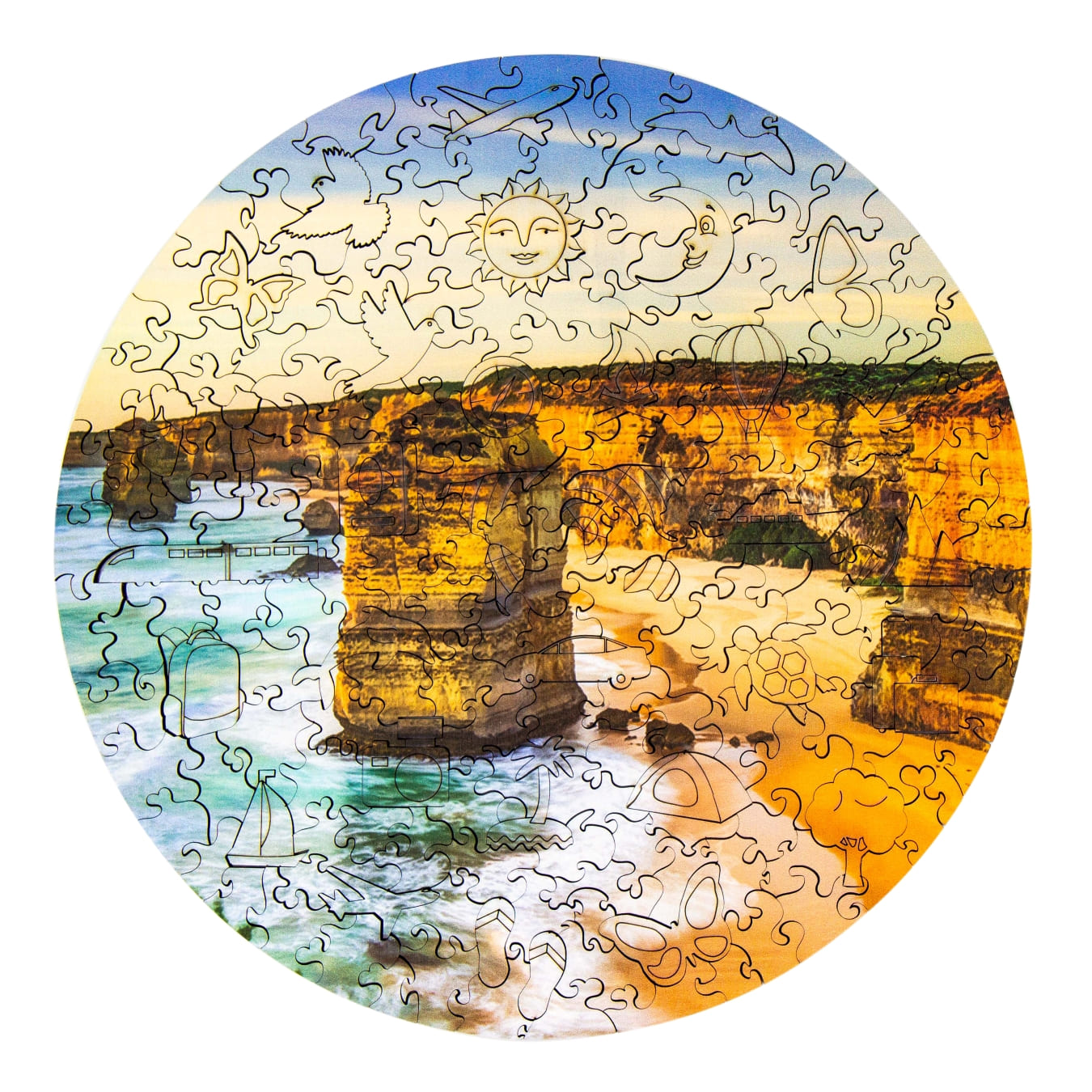
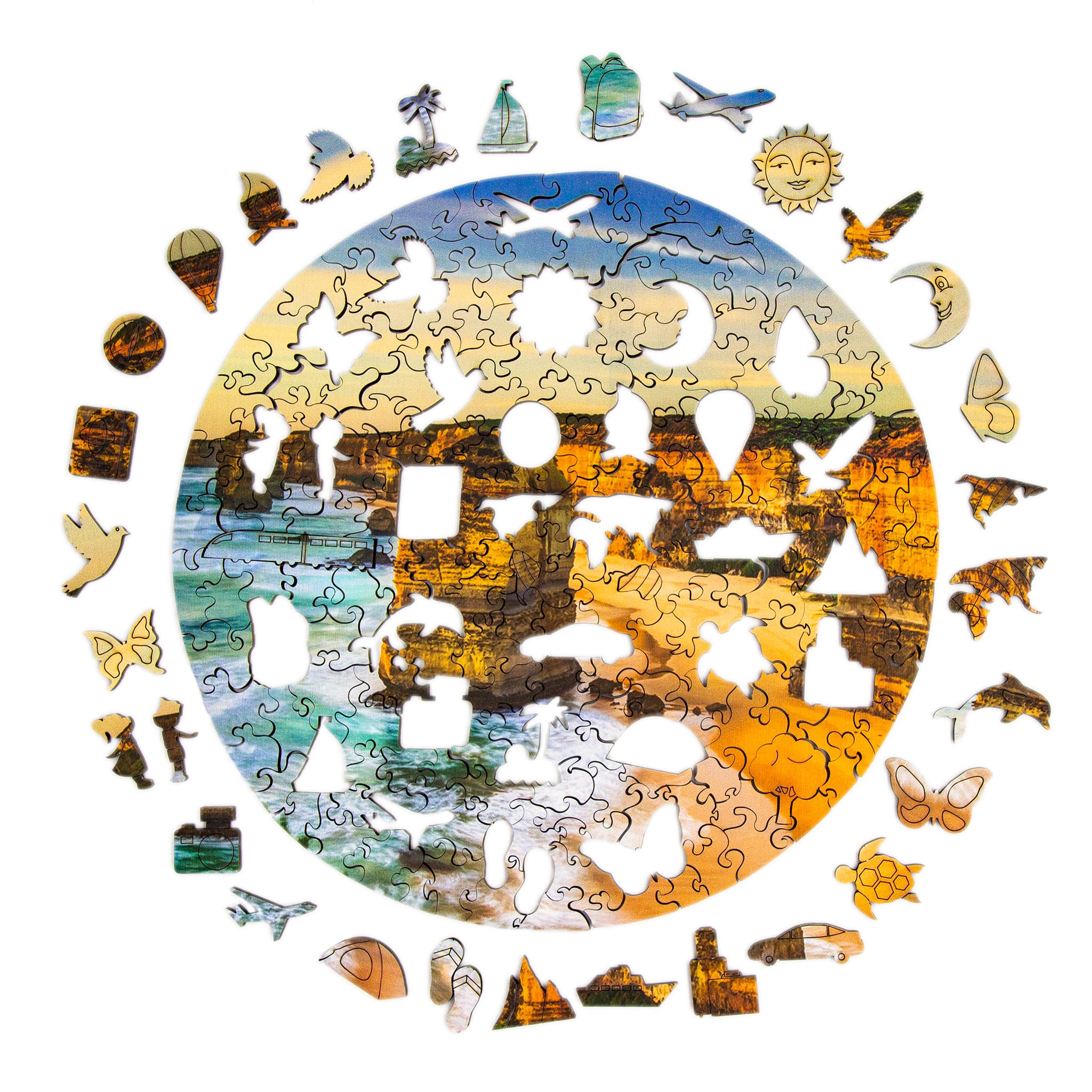
This is the least uniform group in the catalogue, and it is worth knowing before you choose. Alongside the ornamental animal silhouettes that make up most of our range, this collection holds a rectangular photographic reef scene, a round landscape of the Great Ocean Road, and a set of small cartoon animals aimed at young children. They share a subject and nothing else. Piece counts run from seven to just over two hundred, and the boards range from eight centimetres across to over forty.
Which sea puzzles are ornamental silhouettes?
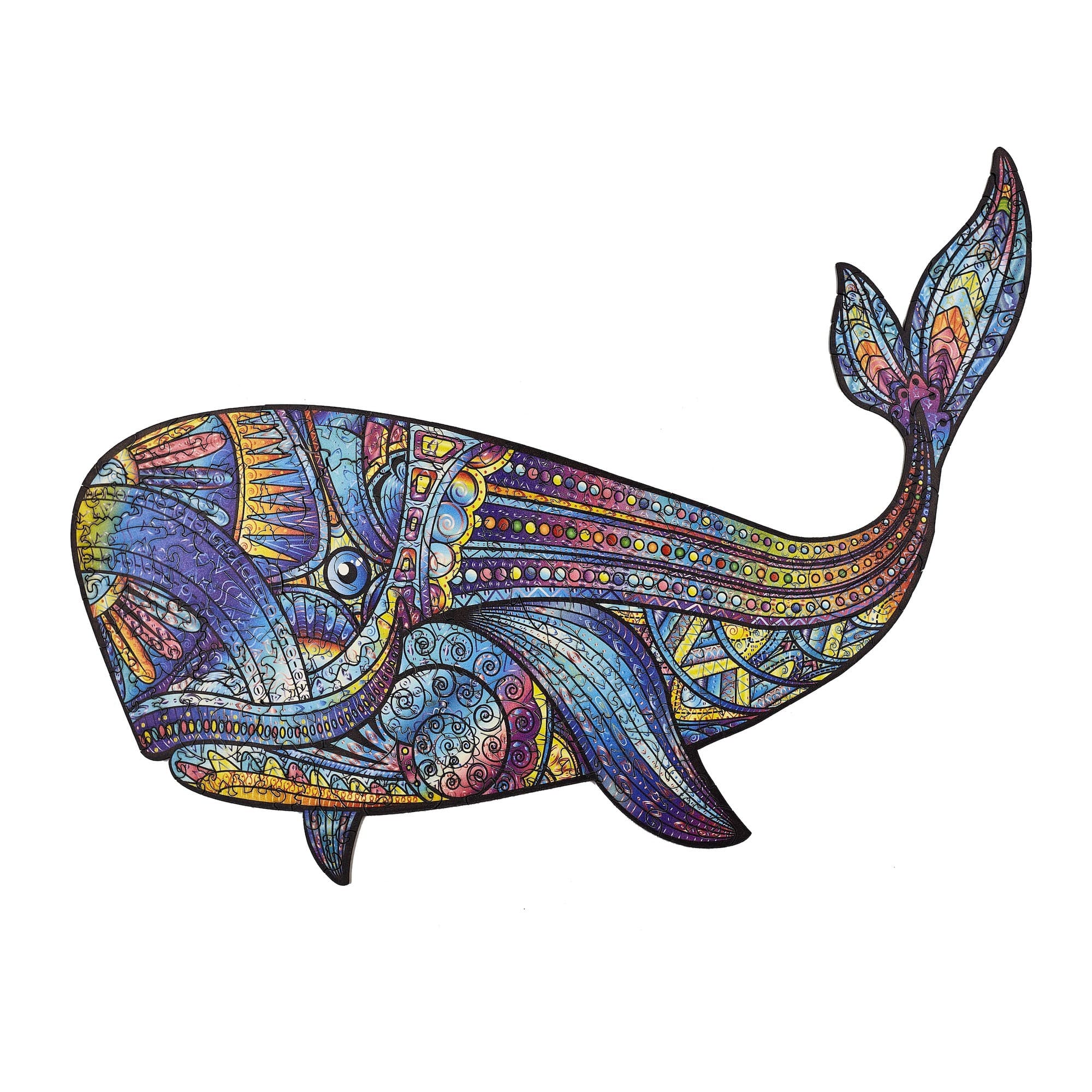
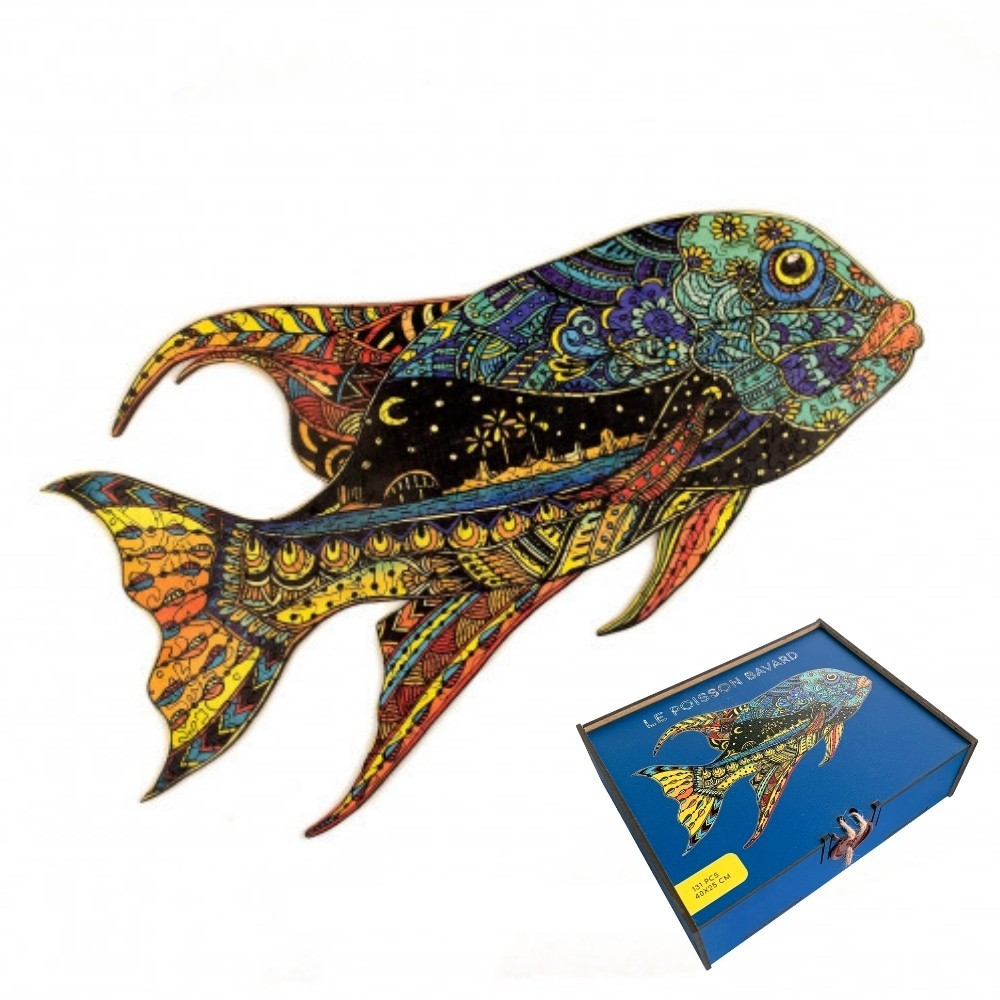
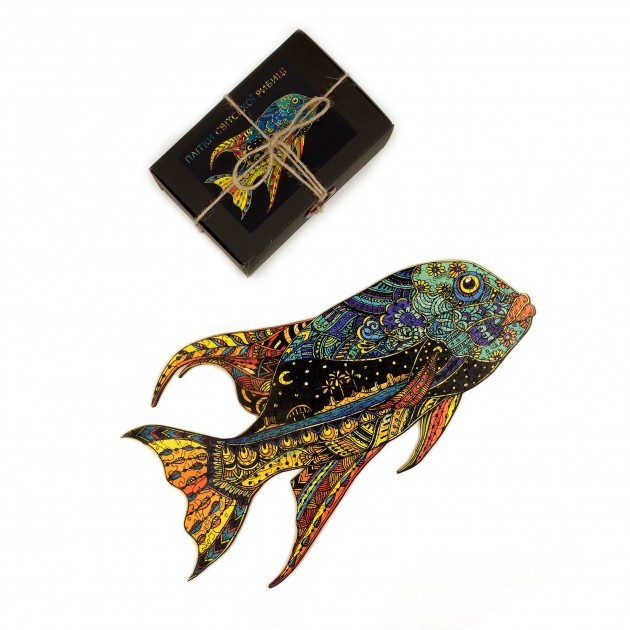
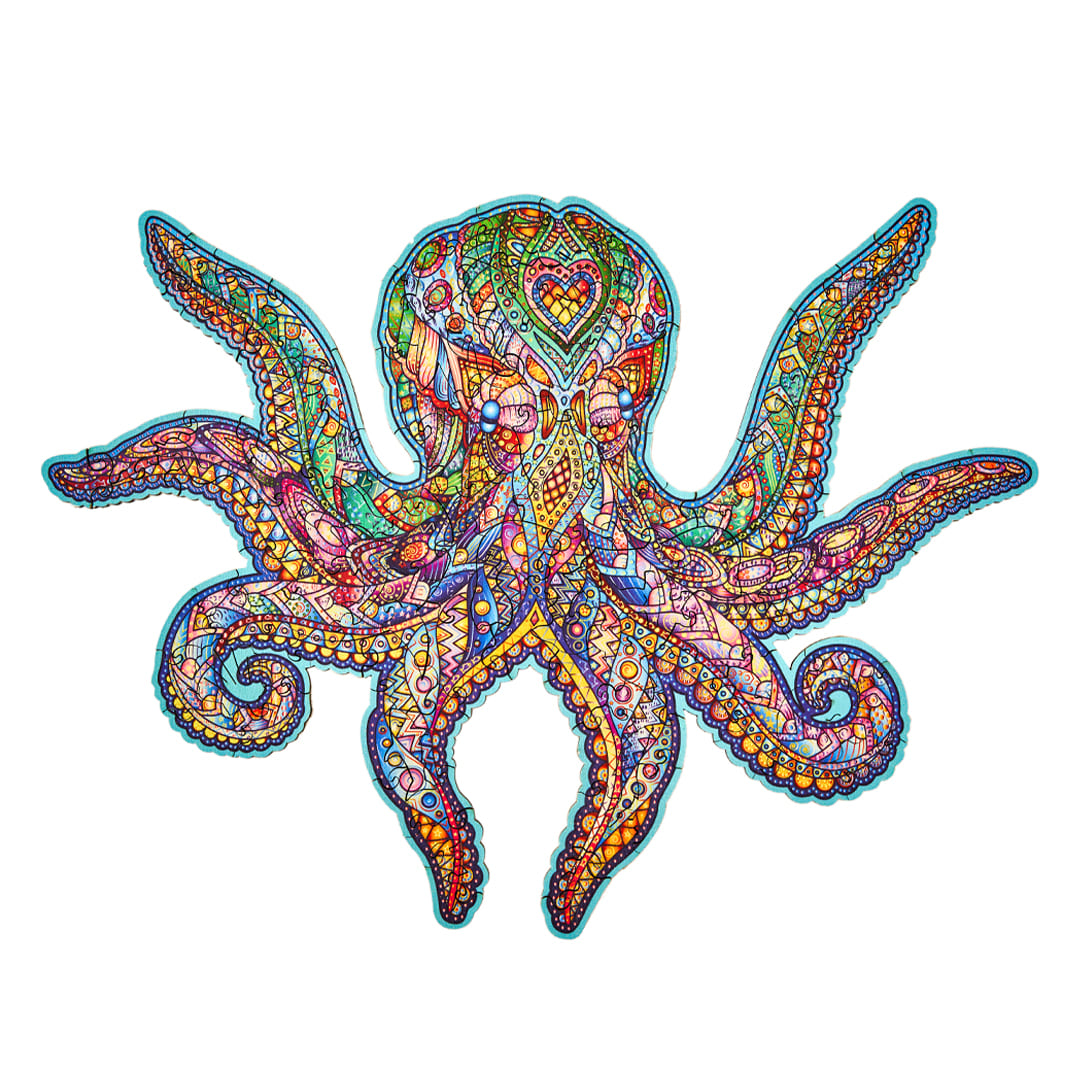
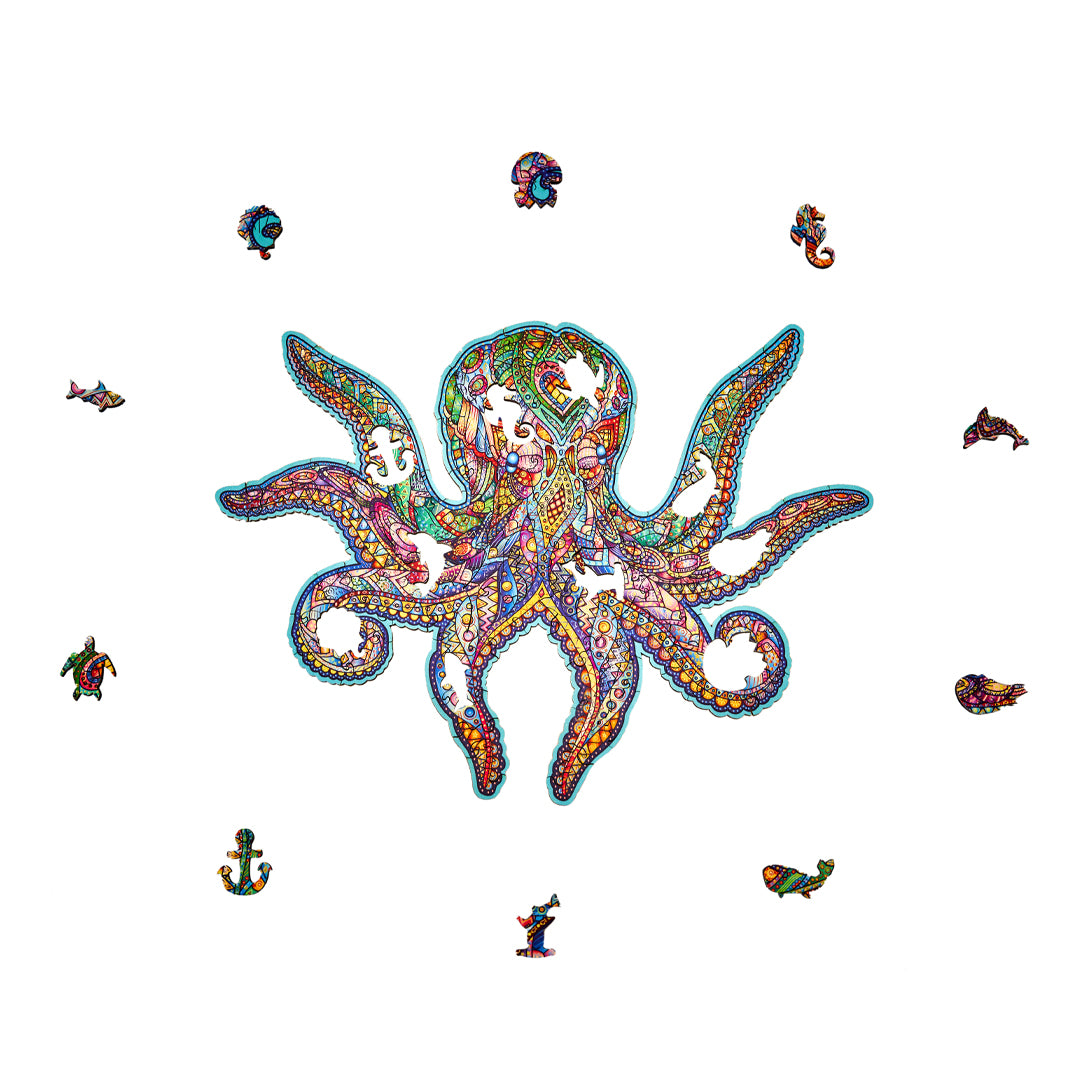
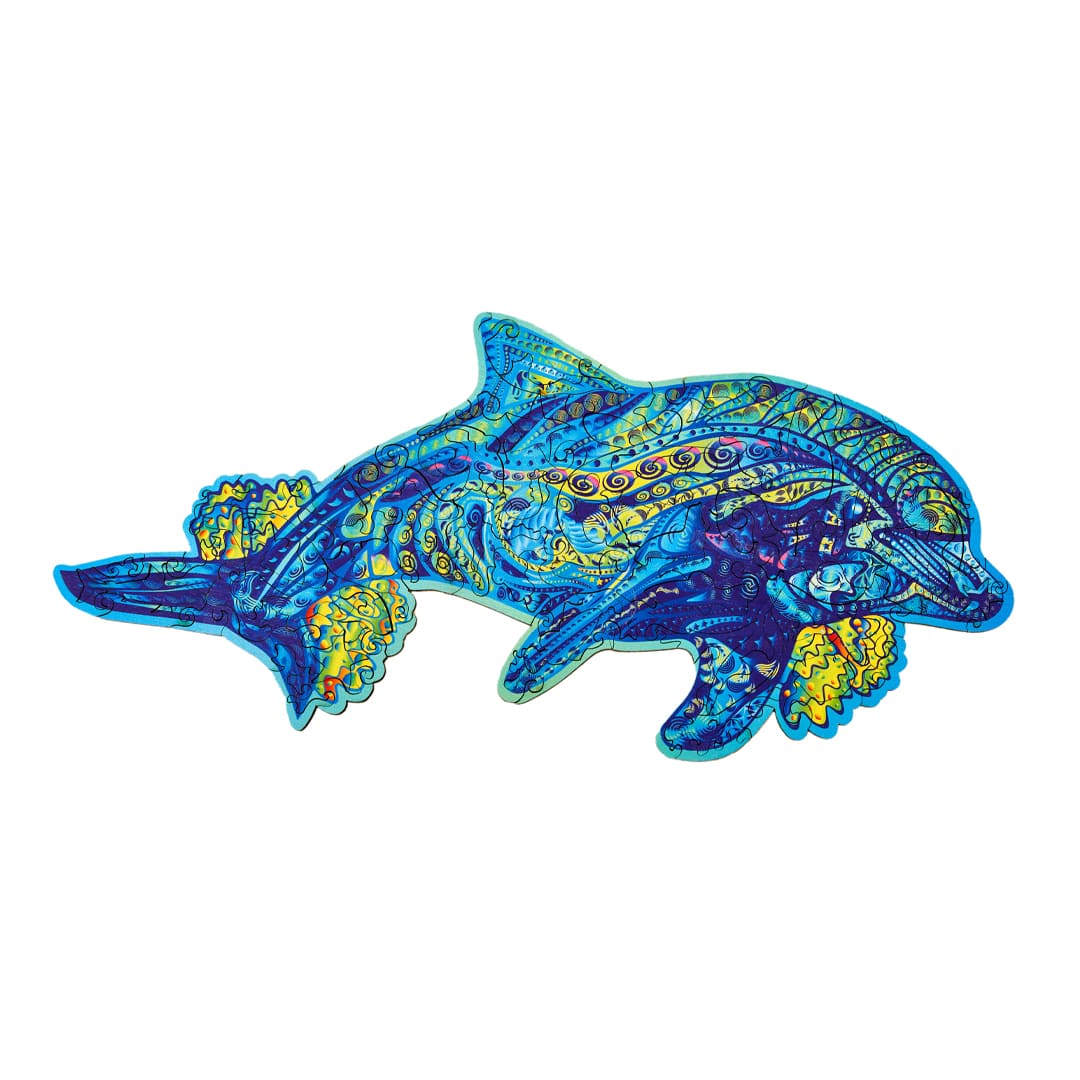
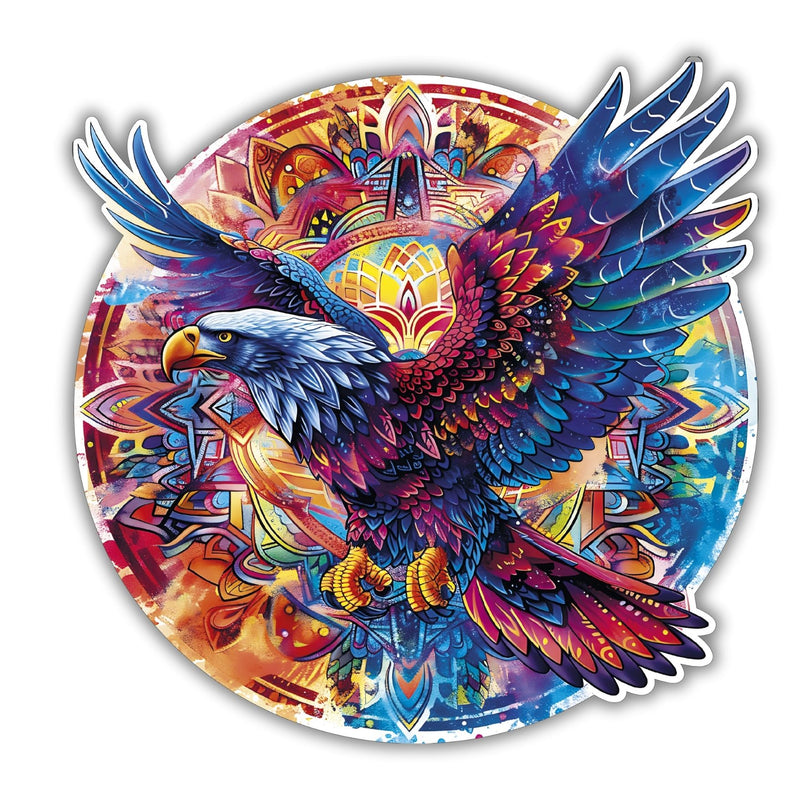
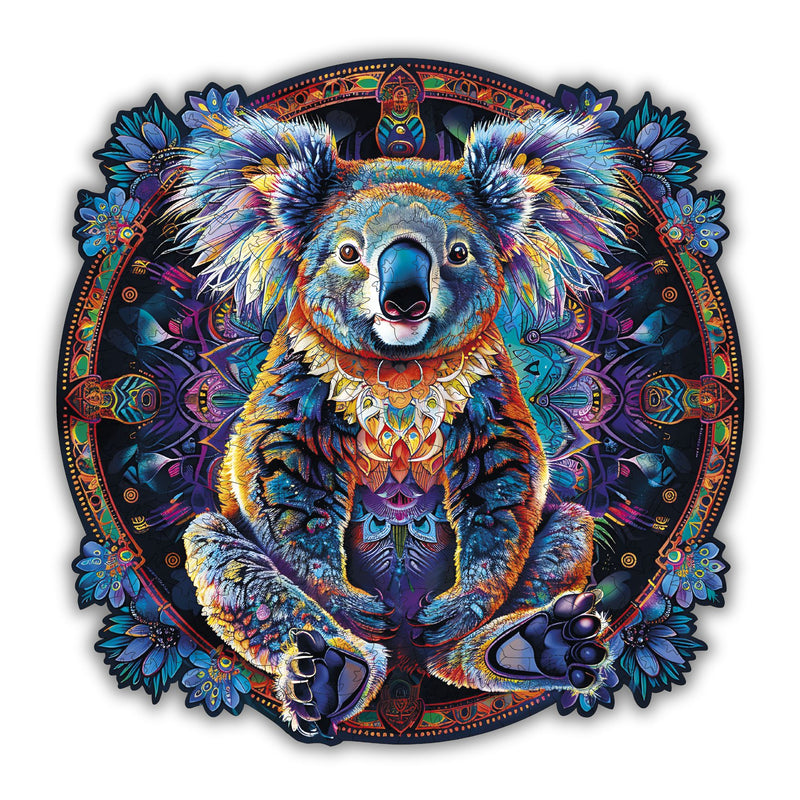
The octopus, the whale, the chatty fish, the two turtles and the dolphin follow the familiar pattern: a silhouette of the animal, densely worked in ornament, with figural pieces cut as smaller sea creatures inside the body. The octopus is the extreme case, with eight arms curling outward and the ornament running the length of each one, so the outline has more edge relative to its area than anything else we make.
Why are the reef and the Great Ocean Road different?
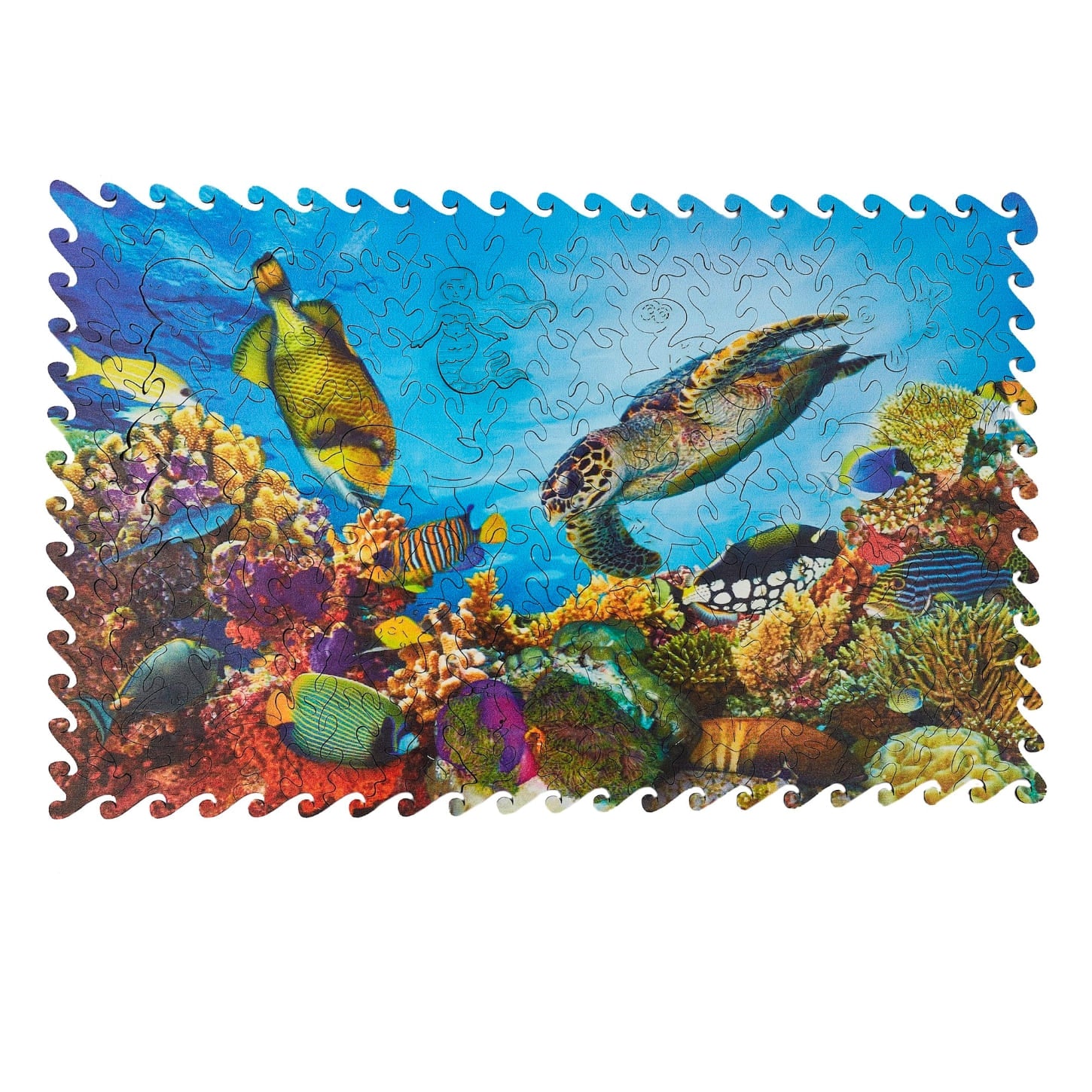
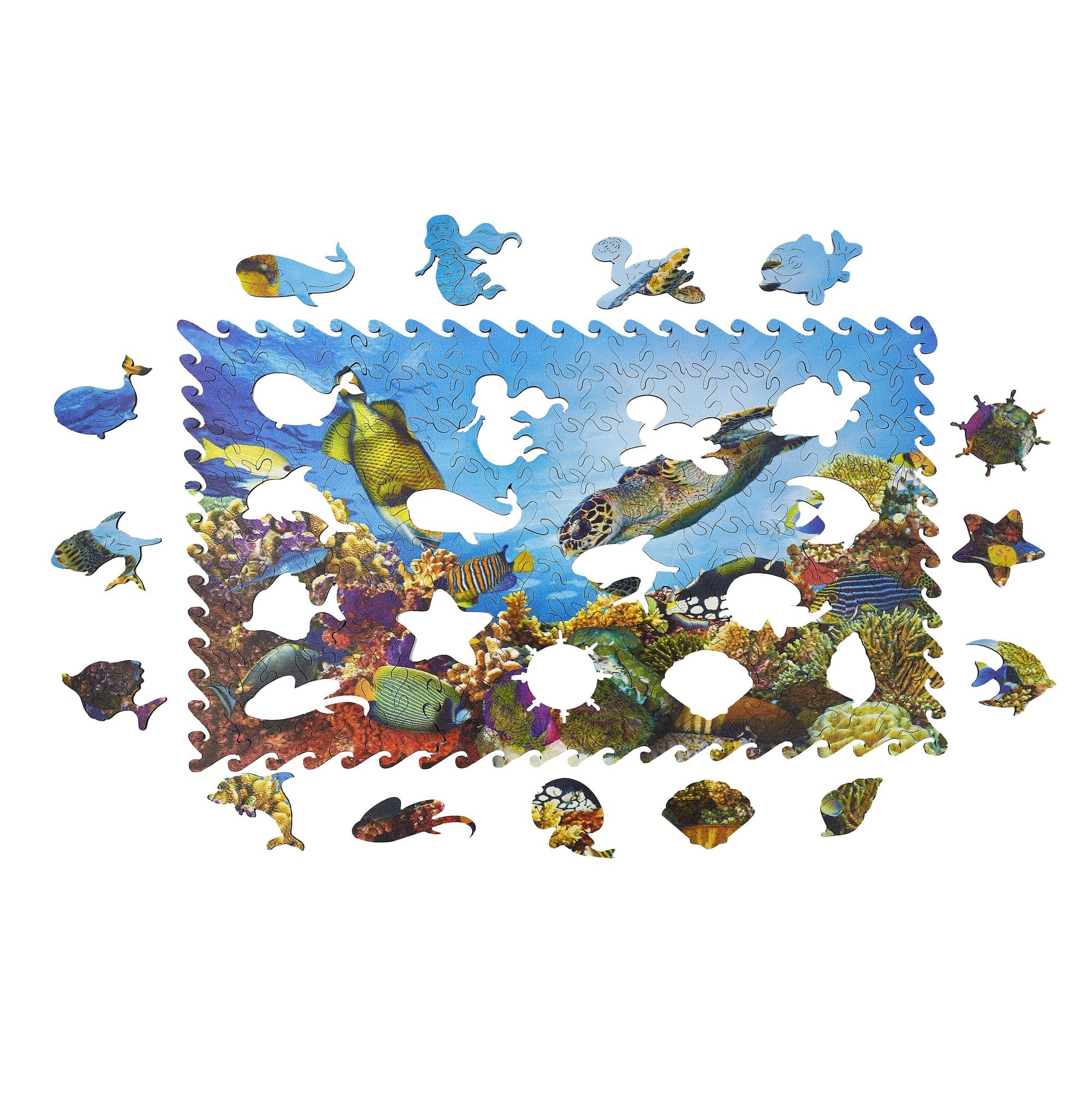
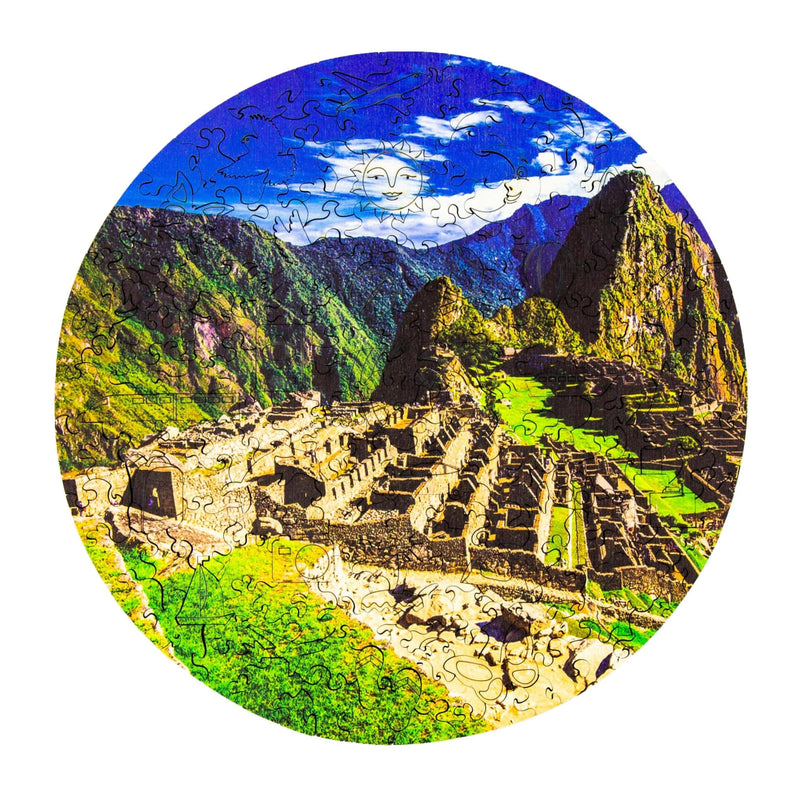
The reef scene and the Great Ocean Road are a different proposition entirely. Both are photographic rather than drawn, and both keep a conventional outer shape – a rectangle whose border is cut as breaking waves, and a plain circle. That means you get a border to build from, which the animal silhouettes deny you. The difficulty moves into the picture instead. Open water and open sky occupy large parts of both boards and shade smoothly with nothing to sort by, which is the same problem the round painted designs pose elsewhere in our catalogue.
How do people build the reef?
The reef board gets sorted by depth rather than by colour. Its lower half is coral, dense and high-contrast, and those pieces go in quickly; above it the open blue water shades from turquoise to deep blue with only the turtle and a few fish crossing it. Builders finish the coral, then place the fish – and the mermaid figure pieces cut into the water – as landmarks, then fill between them. It is the one design in the range where people commonly work from the bottom up rather than from a central feature outward.
Which of these are for young children?
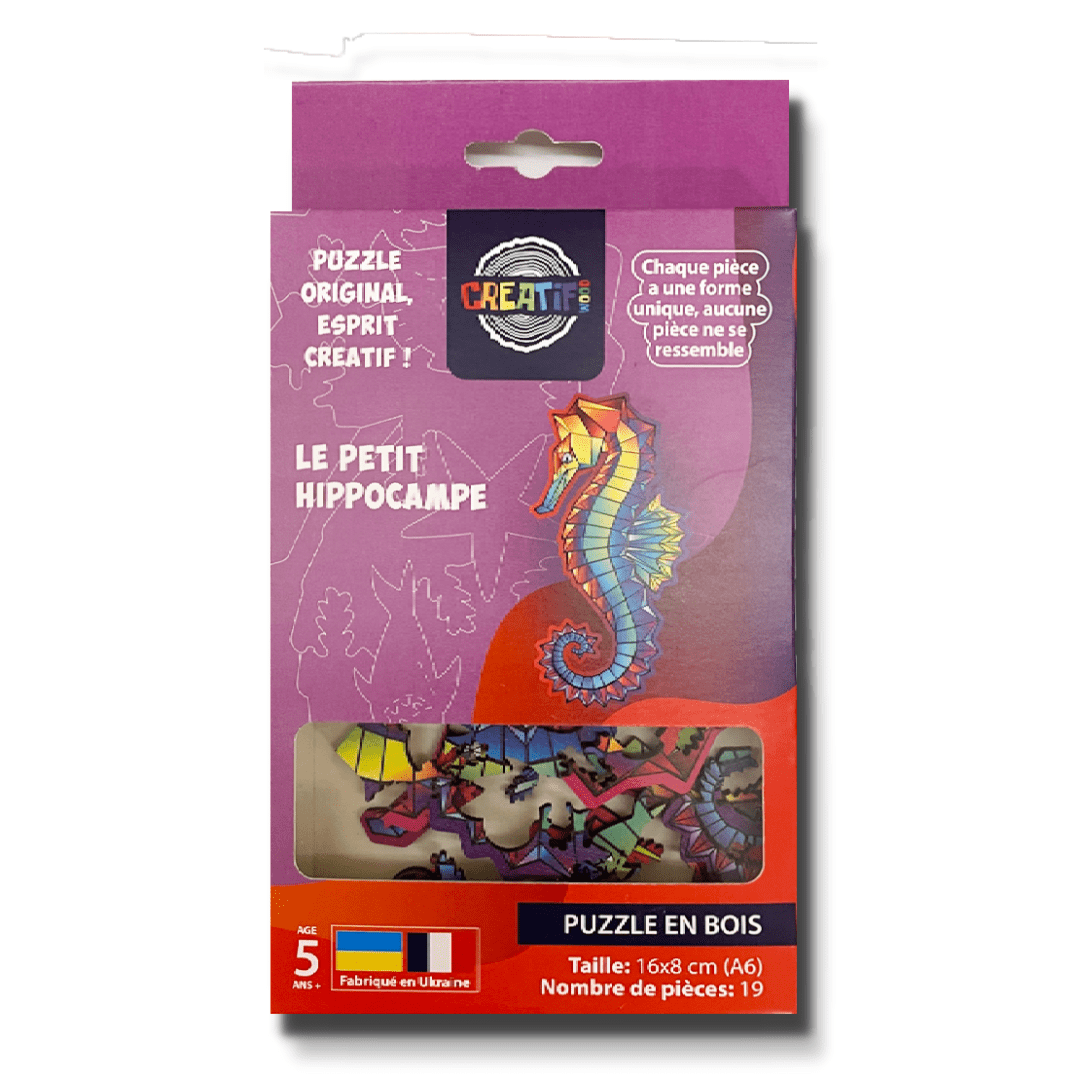
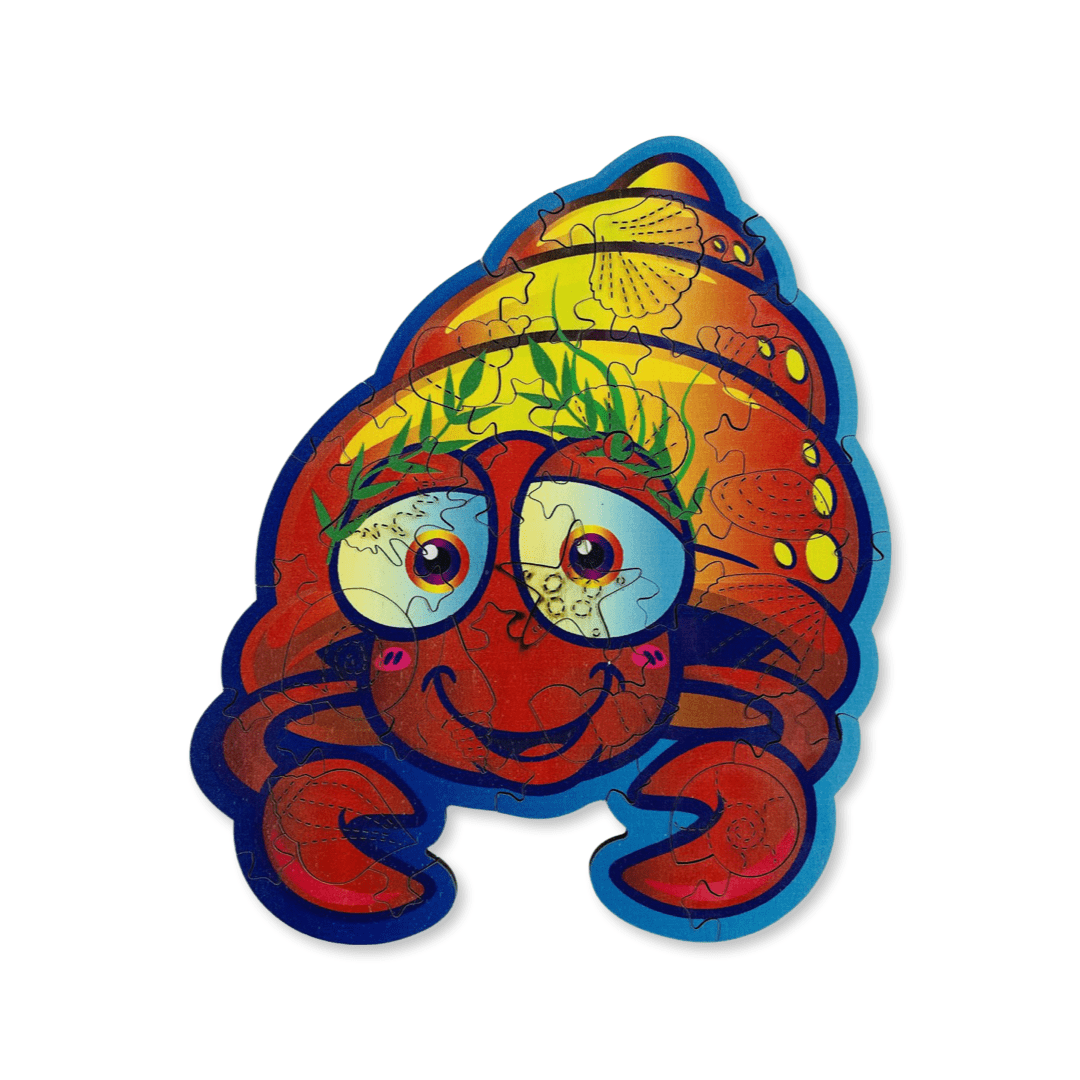
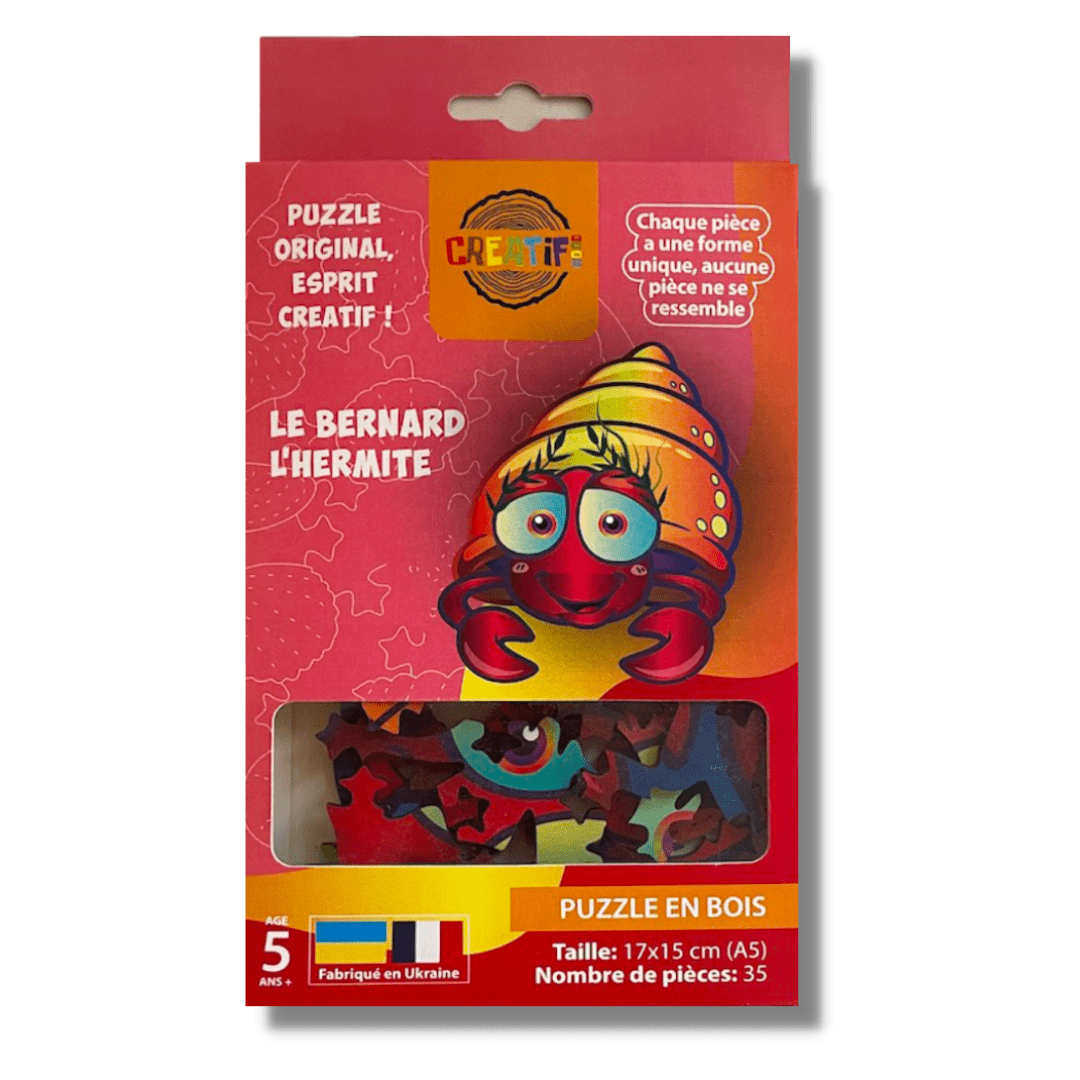
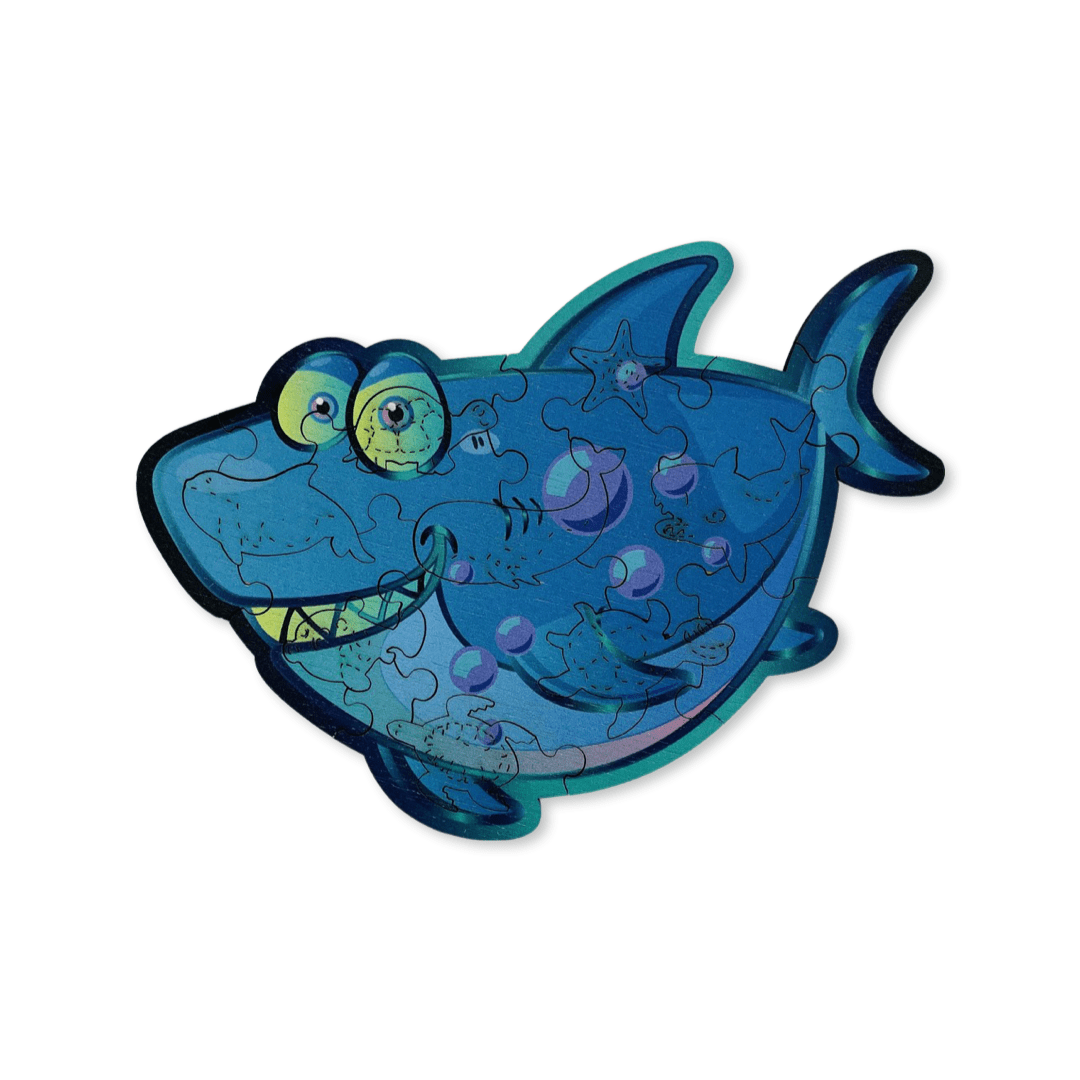
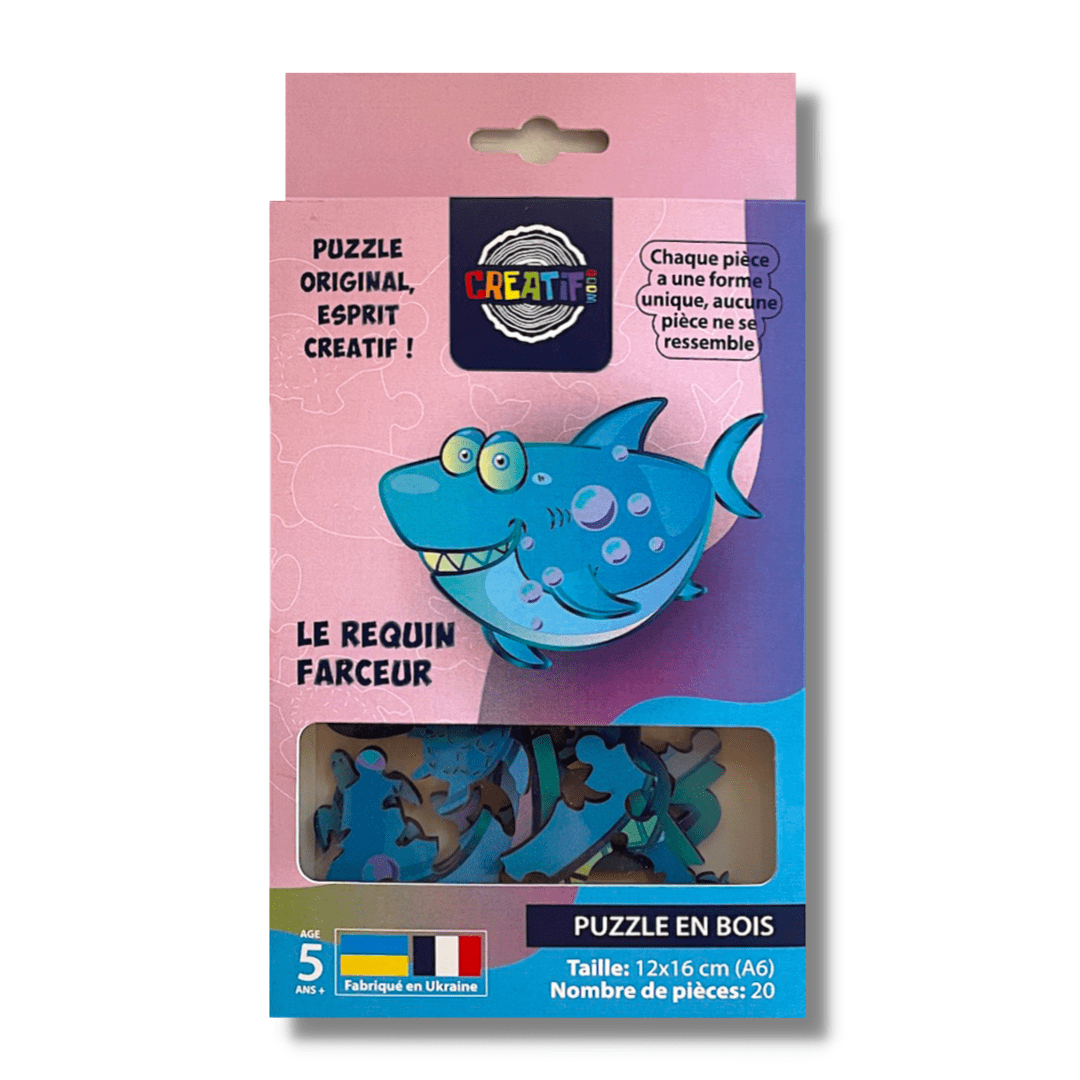
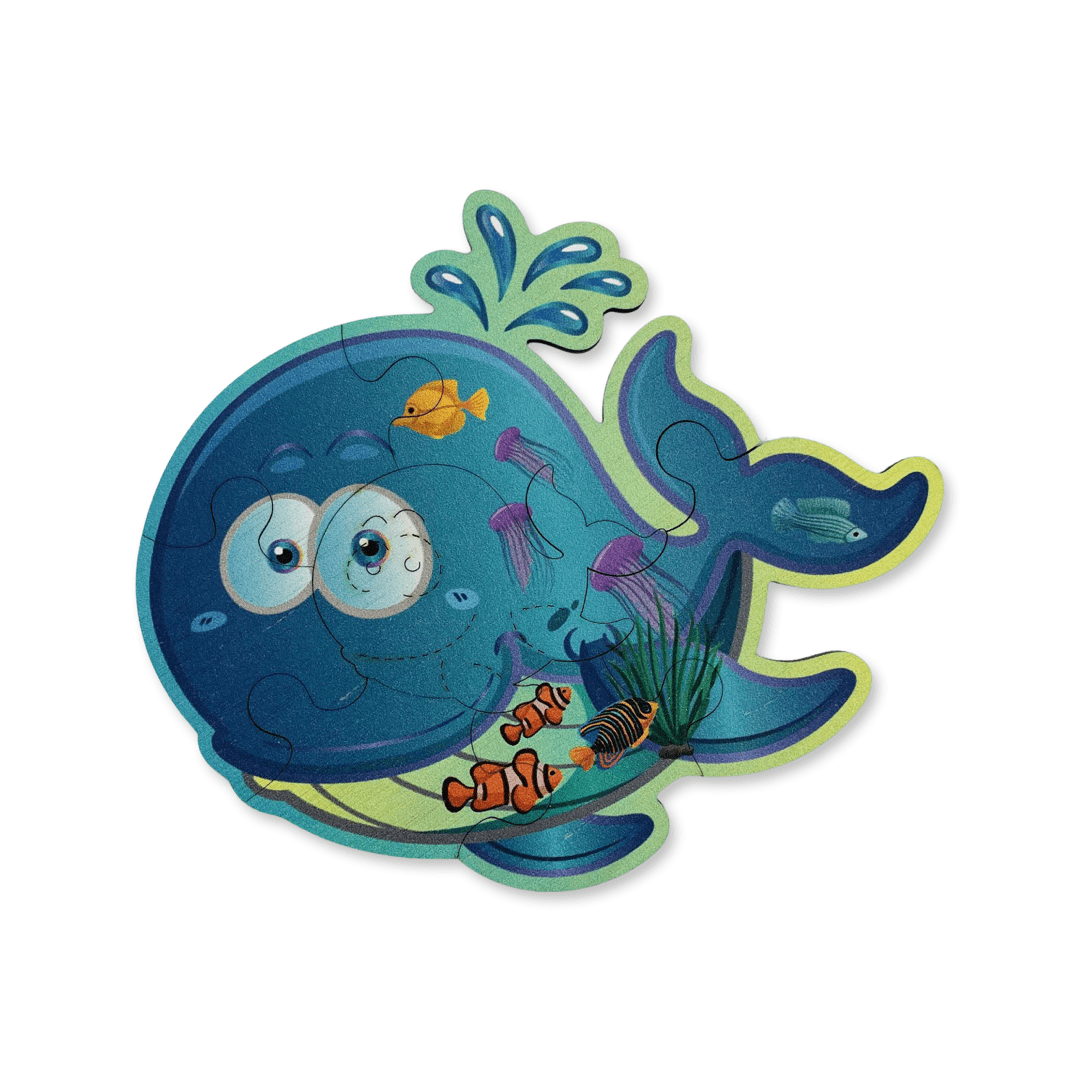
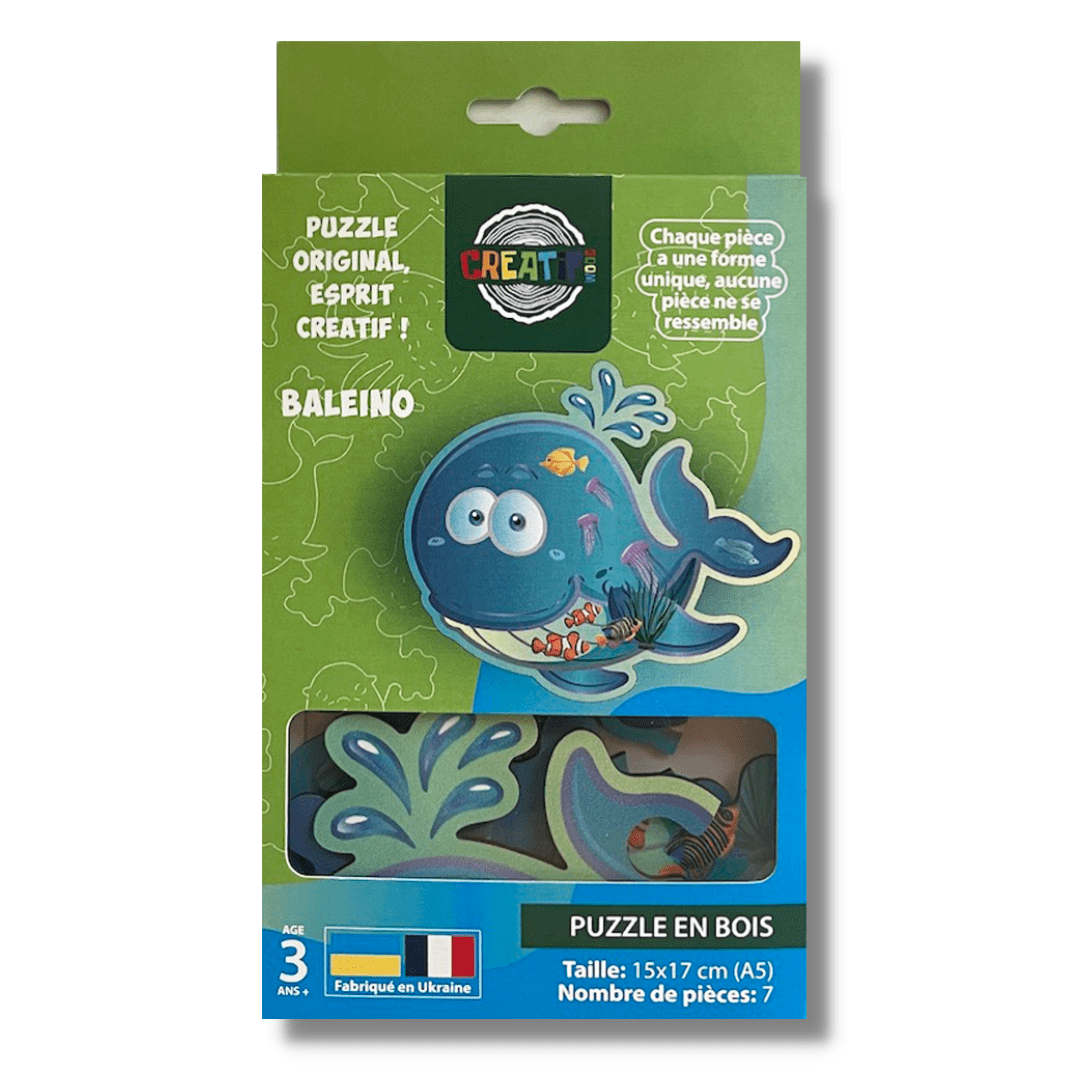
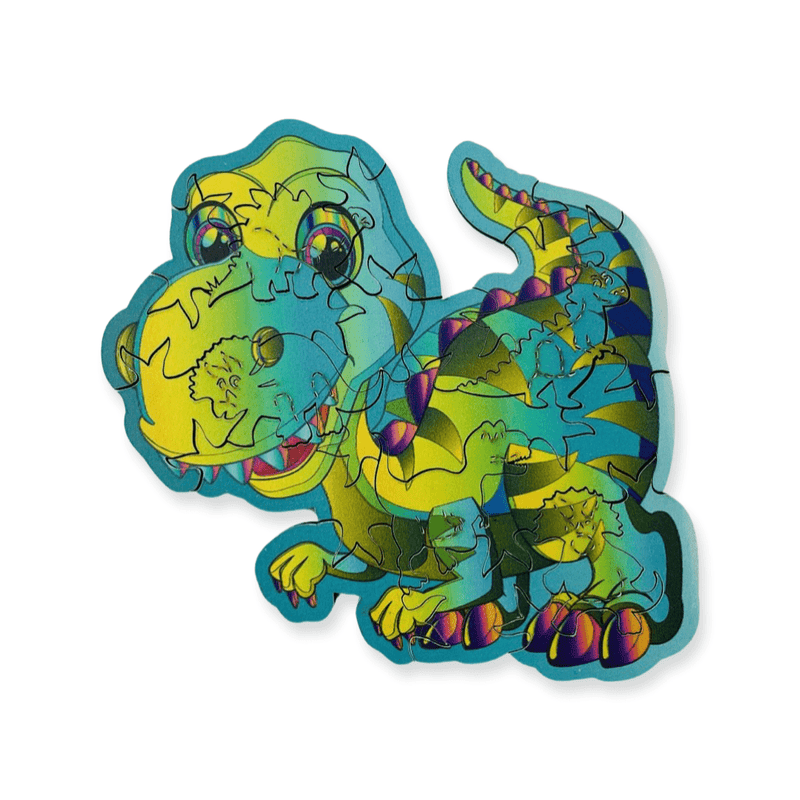
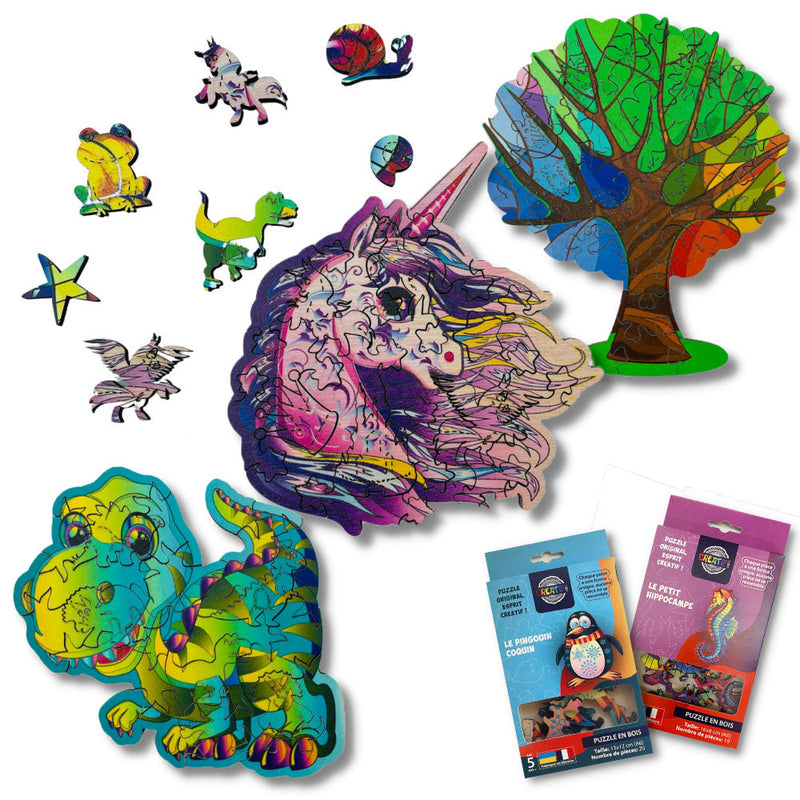
The shark, the hermit crab, the seahorse and the little whale are cartoon designs with a few dozen pieces or fewer, drawn with faces rather than ornament. They belong with young children rather than with the rest of this collection, and the product pages carry the age guidance. The same whale drawing exists once more at thirty-five pieces as The Funny Whale – the one cartoon board that carries our standard age marking rather than a children's one.
What do the sea creatures mean?
Worth saying plainly. The whale carries genuinely old symbolism – trial and return, from the Jonah narrative, and majesty in maritime cultures. The turtle is among the most consistently documented symbols anywhere: longevity, and in Hindu and Native American cosmology the animal that carries the world. The shark and the octopus are different. Classical sources describe the octopus as sneaky, and some Pacific cultures give sharks a protective ancestral role, but the readings most people know today – shark as menace, octopus as alien intelligence – come from modern media rather than from any older tradition.