







Mandala & Zen Wooden Puzzles
Filters
3 products

Pattern as the subject, not as decoration
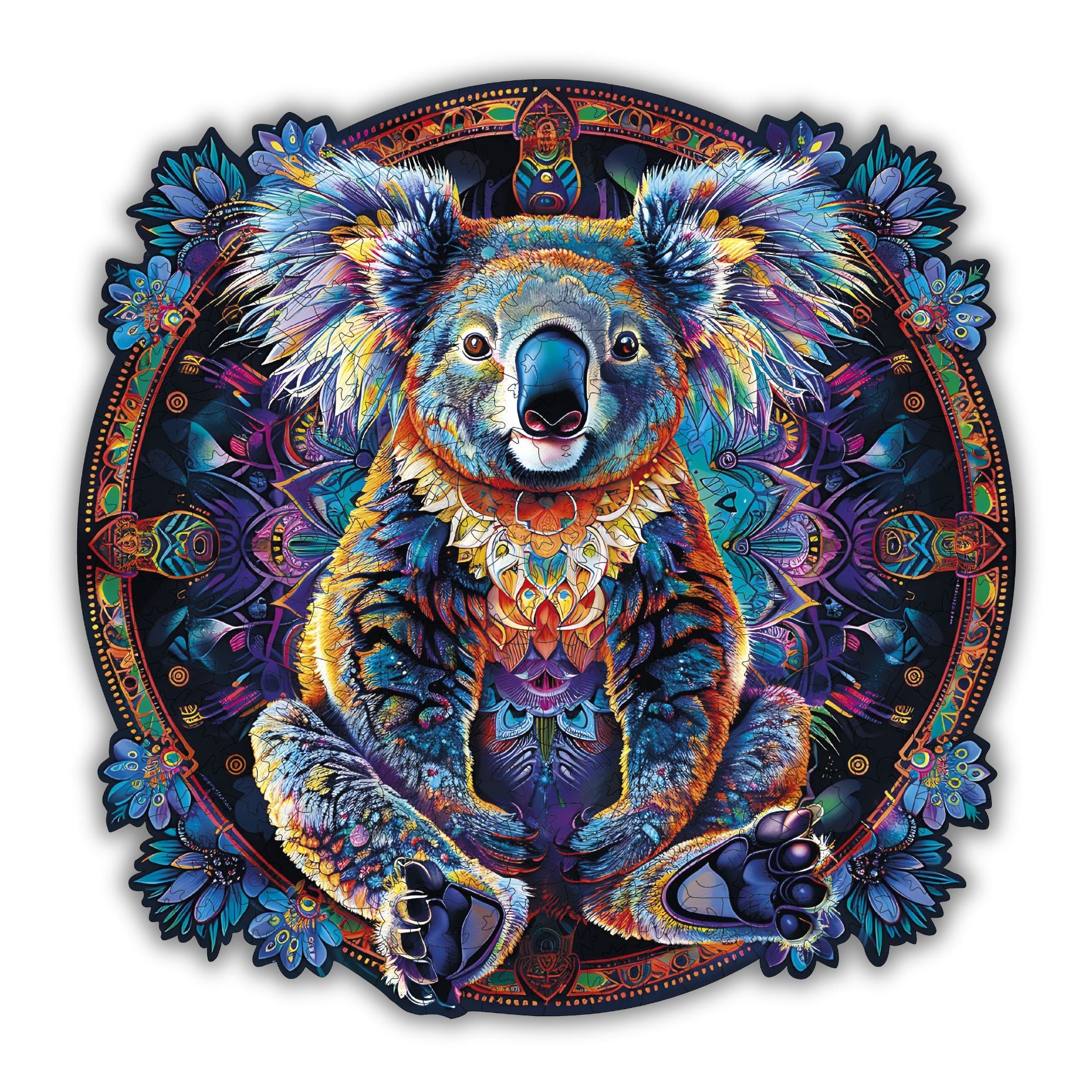
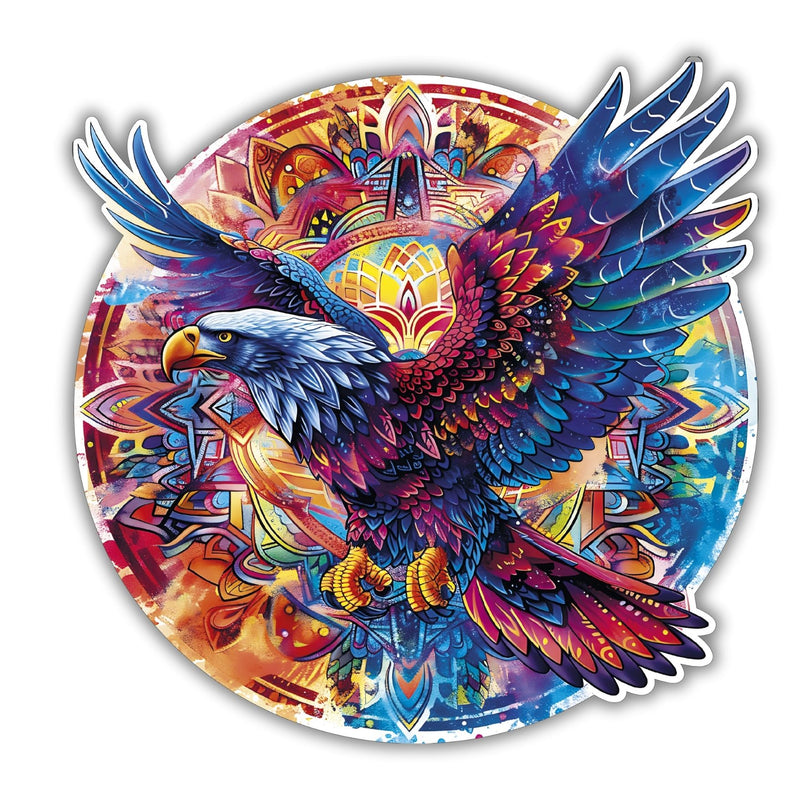
A small family of designs, and they work differently from everything else we make. Across the rest of the catalogue the ornament sits on an animal: a lion patterned like a carpet is still a lion. Here the pattern is the thing itself, and where an animal appears it is placed inside the pattern rather than the other way round.
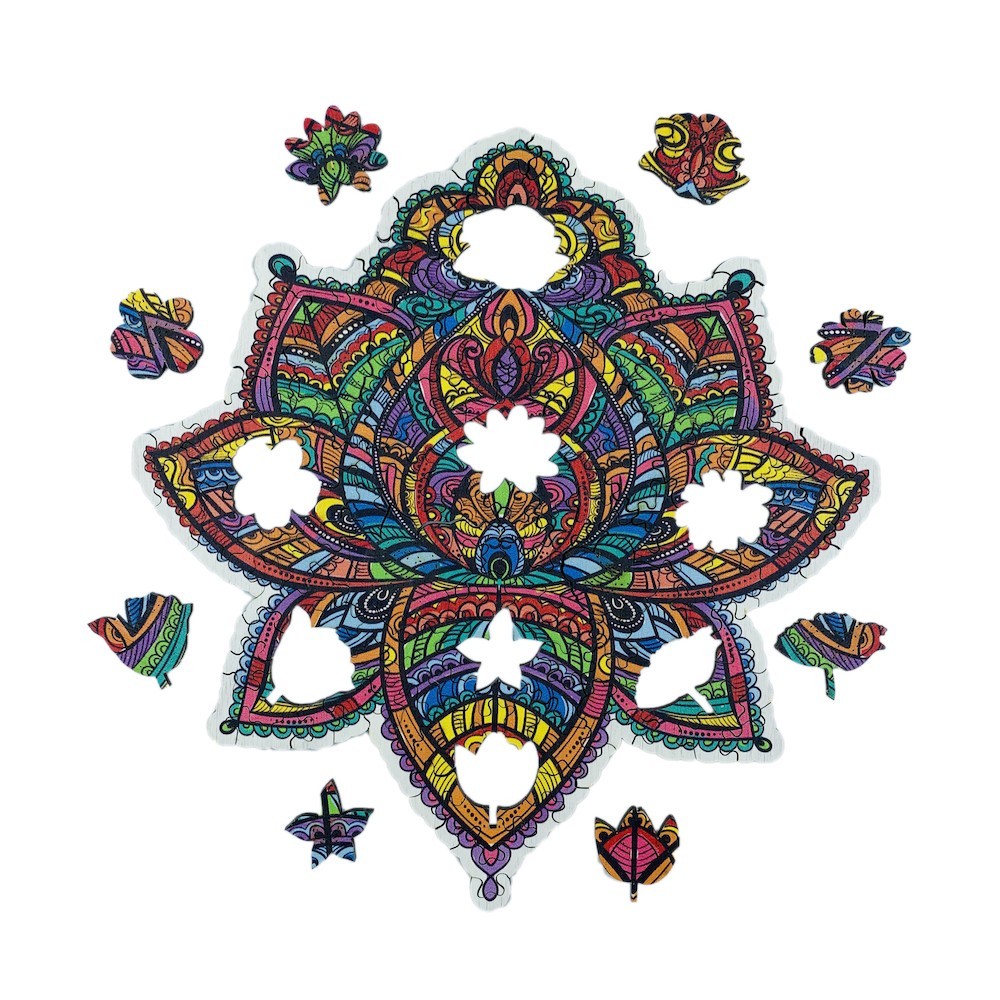
The Bloomy Lotus goes furthest. There is no creature at all, only a flower built from concentric rings of petals, each ring worked in a different motif and colour range, radiating from a single point at the centre.
What is a mandala?
Worth being accurate, since the word is used loosely in decor. A mandala is a cosmogram from Hindu and Buddhist practice, a diagram of the universe organised around a centre, used as an aid to concentration and in ritual. The adult colouring boom of the 2010s pulled the form into secular use as a relaxation exercise, which is where most people now meet it.
That secular reading is what these designs belong to. They are ornamental rather than devotional, and we would not claim otherwise.
Why is rotational symmetry harder?
This is the technical difference that matters when you sit down with one. Most symmetrical designs in our range are mirrored: a piece on the left has a twin on the right, reversed. A mandala repeats by rotation instead. The motif at four o'clock recurs at eight o'clock turned through a third of a circle, and again at twelve.
The practical effect is that two pieces can carry the identical ornament at different angles and both look correct in either slot. Orientation places them, not pattern, and it is a slower kind of checking. The Bloomy Lotus is the exception in its own family: its petals mirror across a vertical axis rather than turning about the centre, so on that board left and right pieces are twins and the rotation rule does not apply.
How do people build a mandala puzzle?
Builders work outward in rings rather than inward from an edge. The centre of a mandala is the one point with no rotational twin anywhere on the board, so it can be identified with certainty, and each ring outward is a band of consistent scale and colour that can be closed before starting the next.
People also rotate the board itself as they work, turning it to bring the ring they are on to the near edge, which is not something the animal silhouettes invite.
Which mandala puzzles have animals?
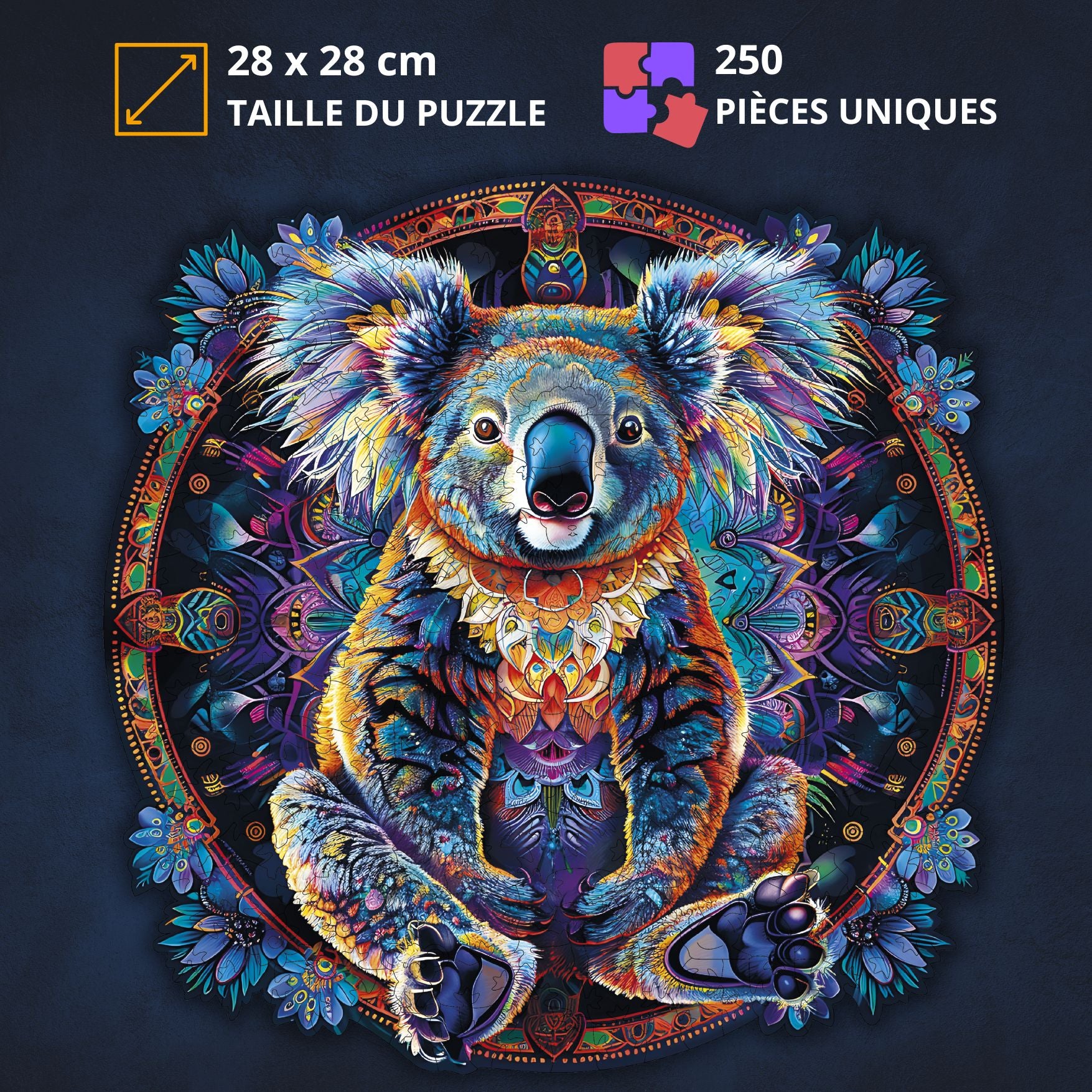
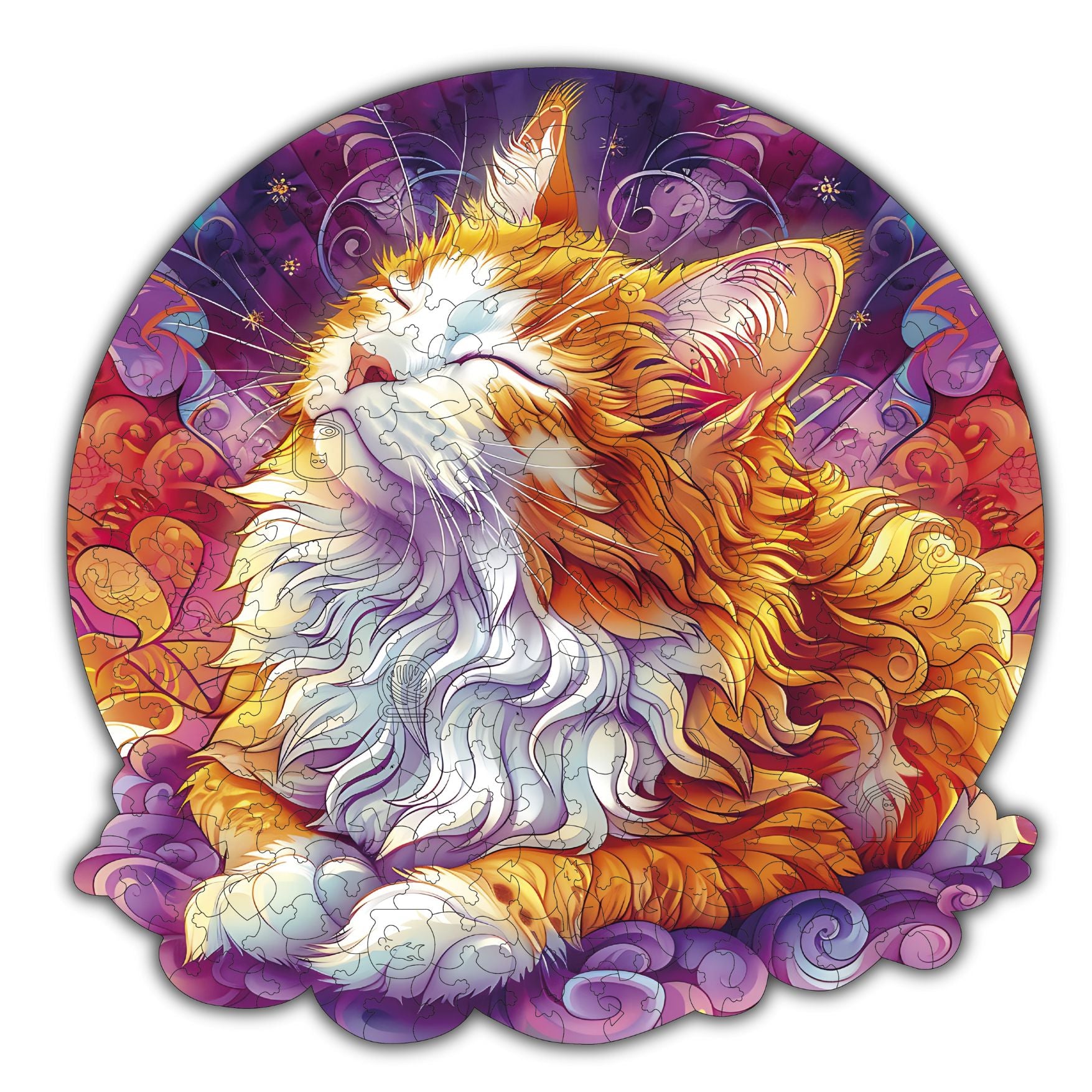
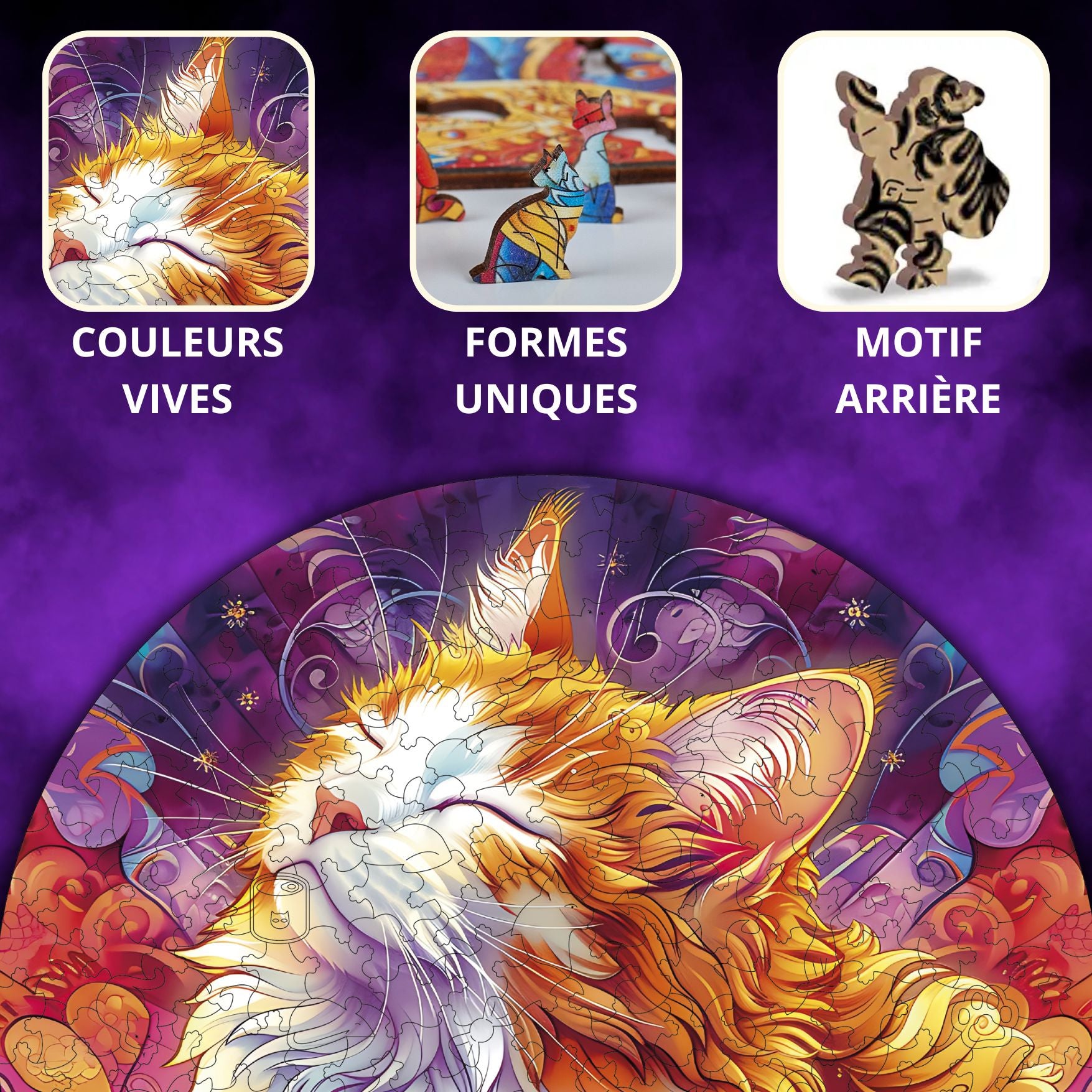
The Koala Mandala and the Zen Cat both place a painted animal over a patterned ground, and both sit at 250 pieces on a 28 cm disc. The koala keeps its mandala geometric and dark, the cat replaces it with cloud and light. If you want the pattern without the animal, the lotus is the one.