







Wood Paint Kits
Filters
10 products
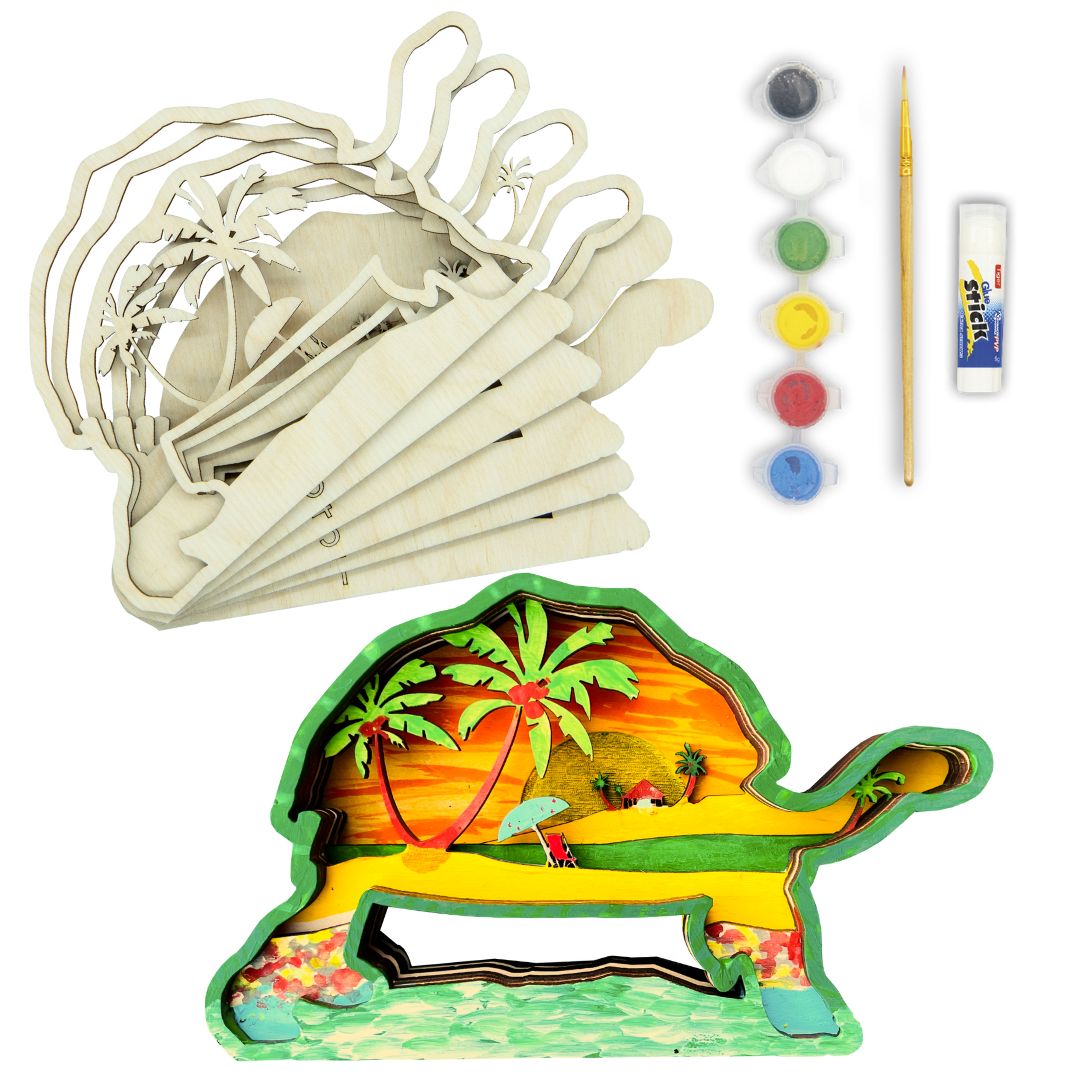
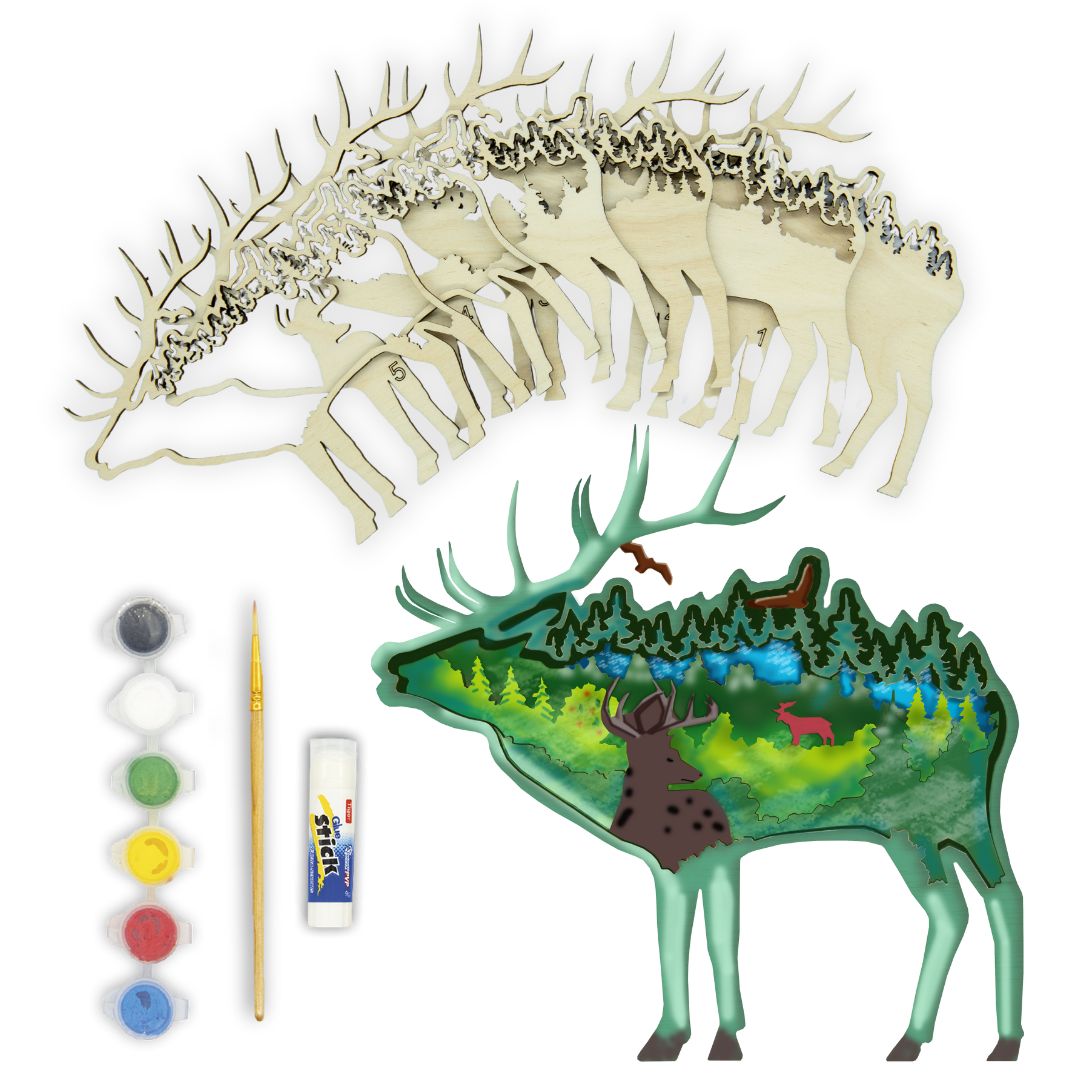
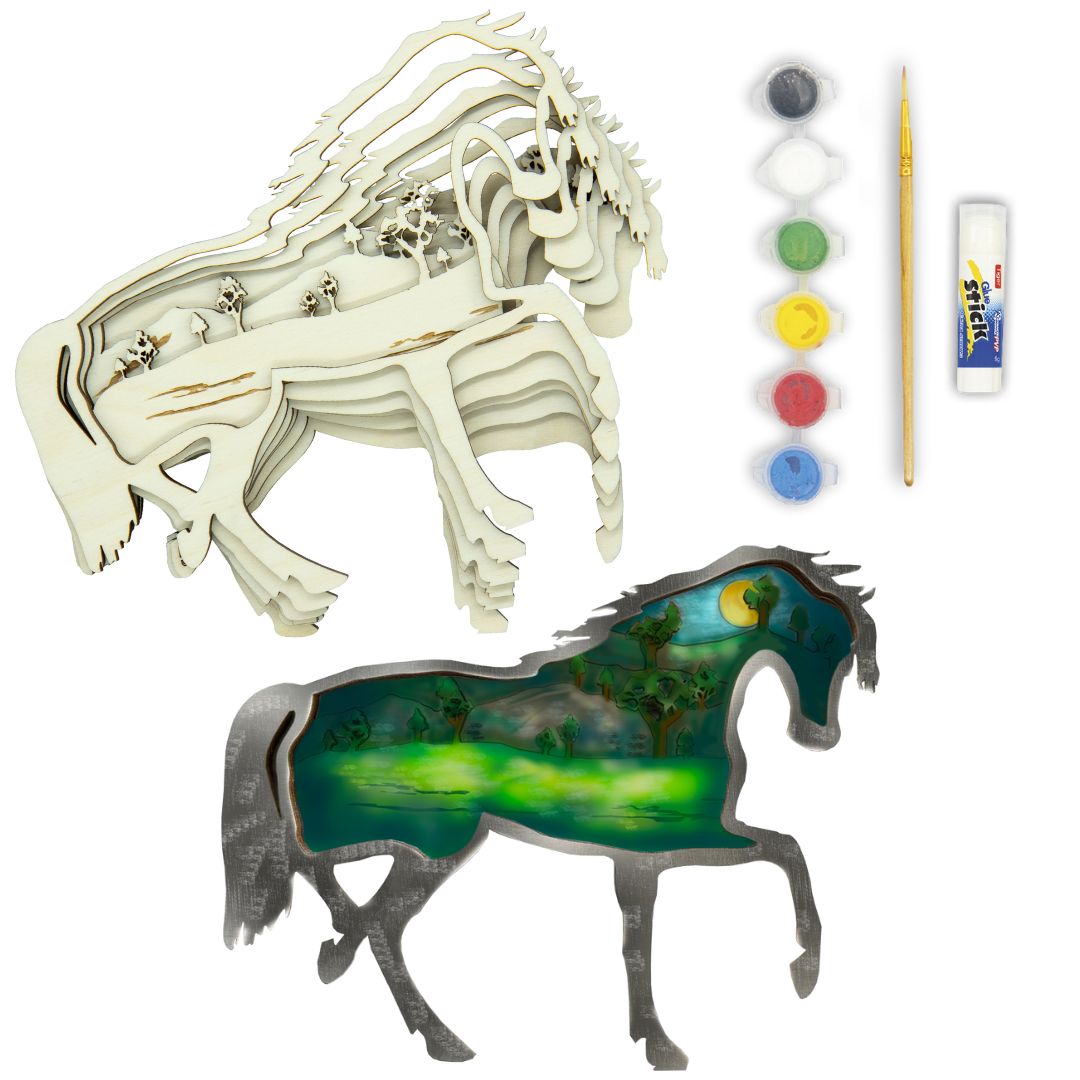
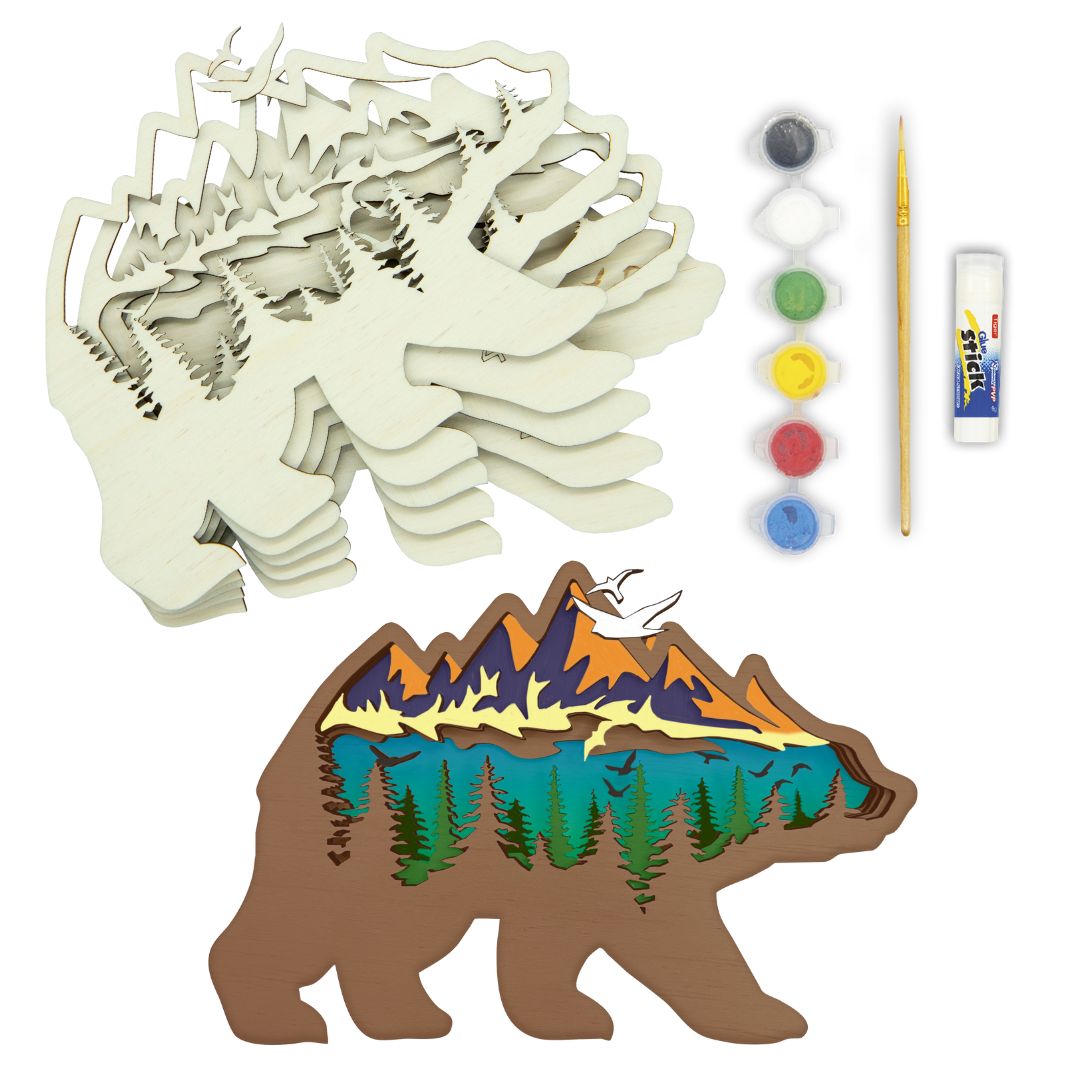
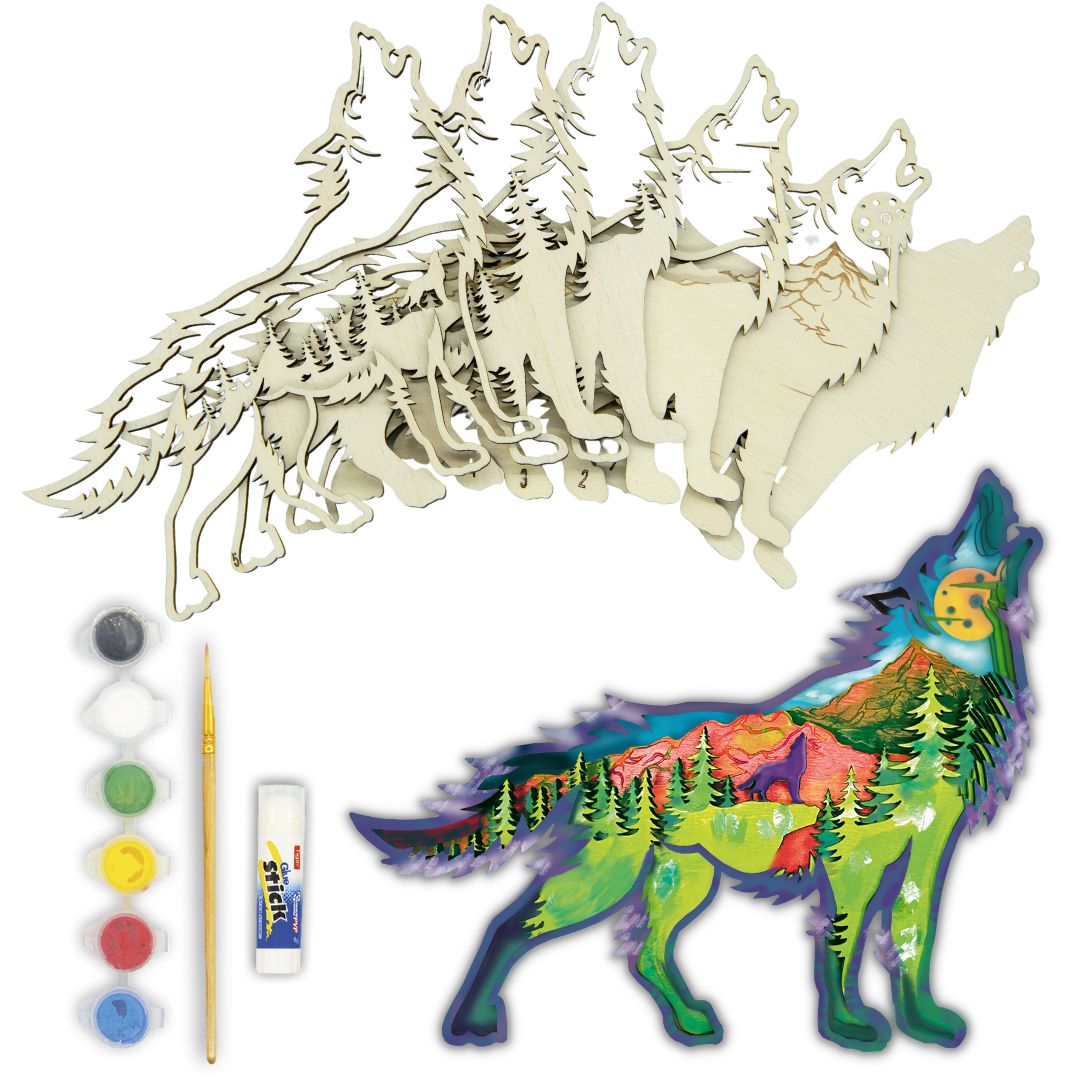
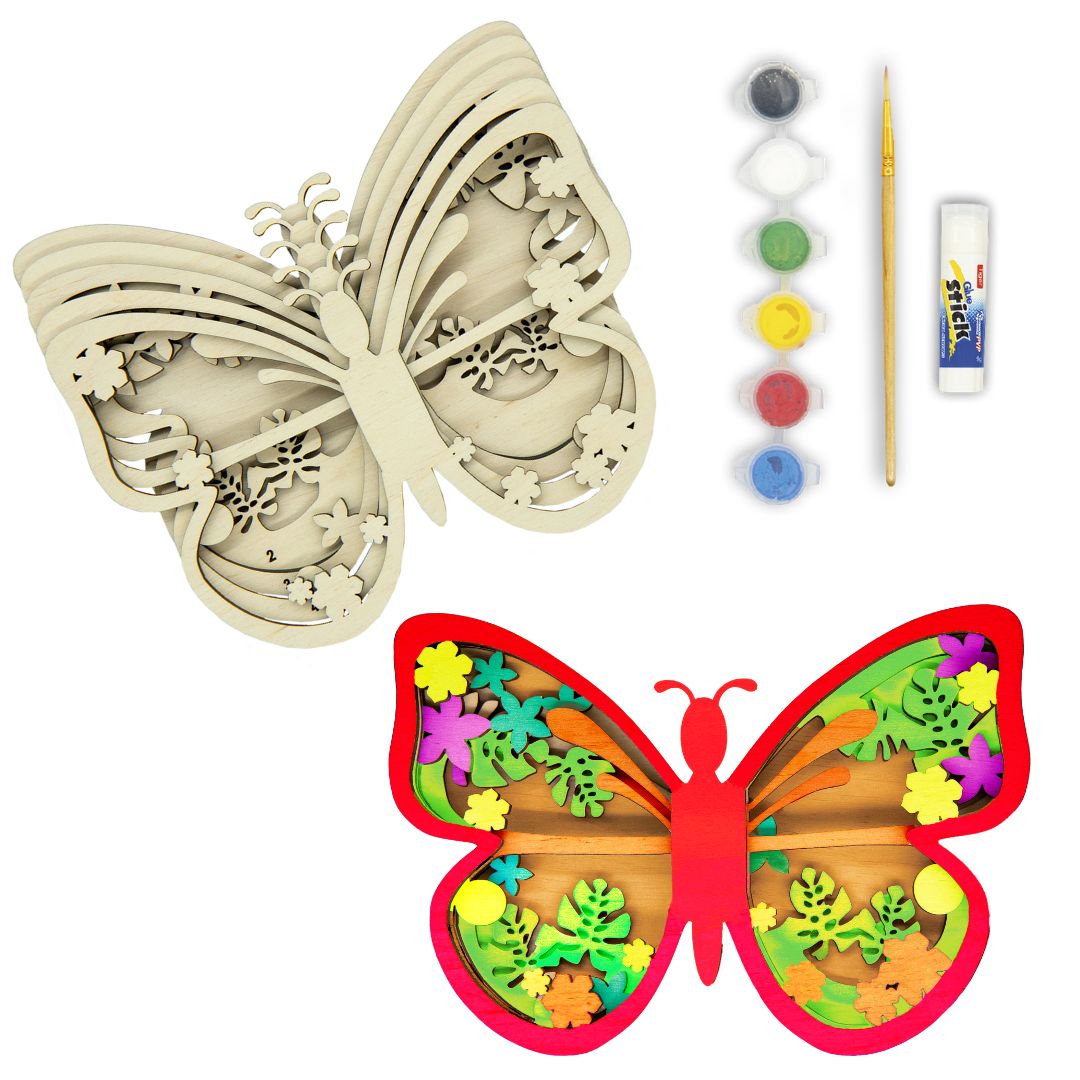
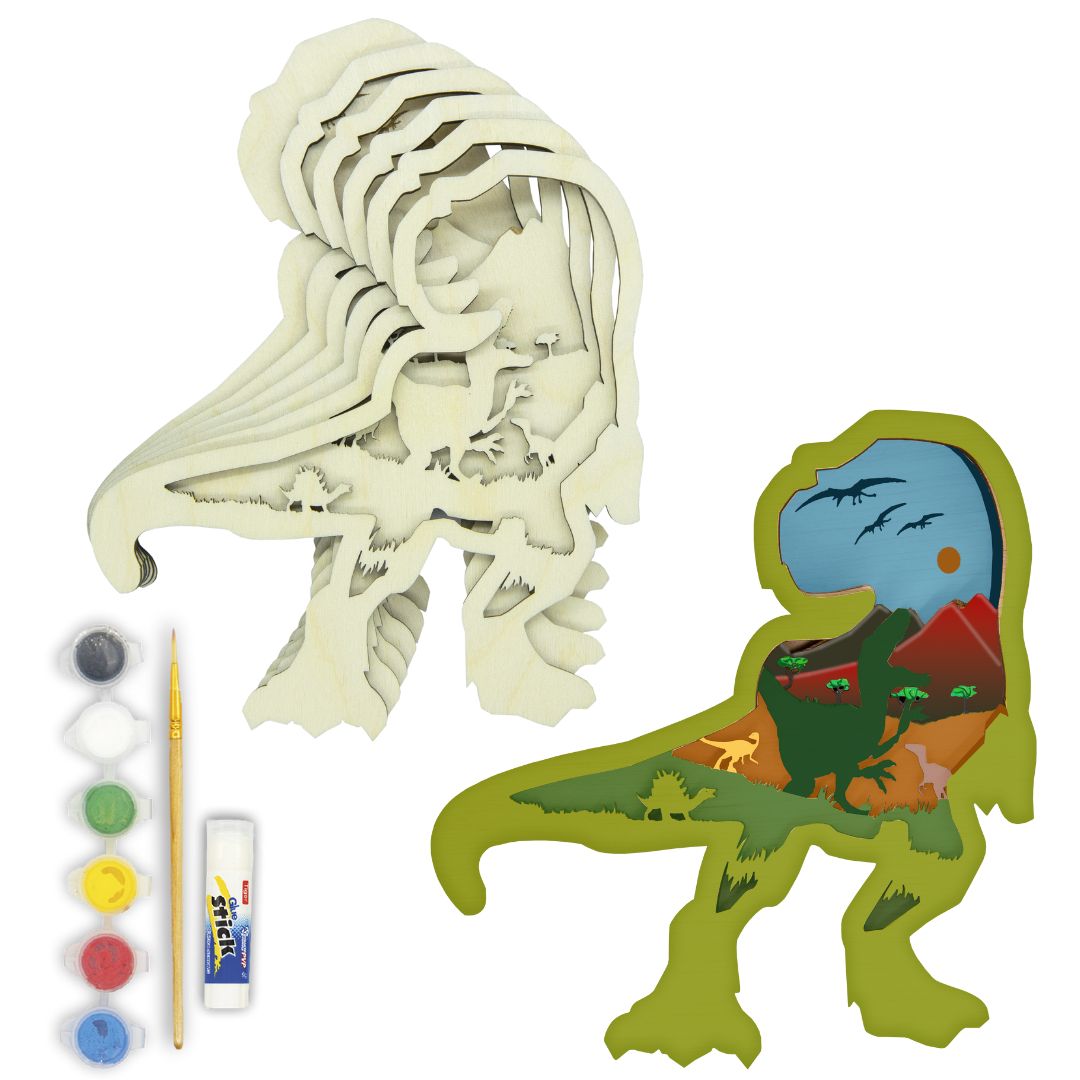
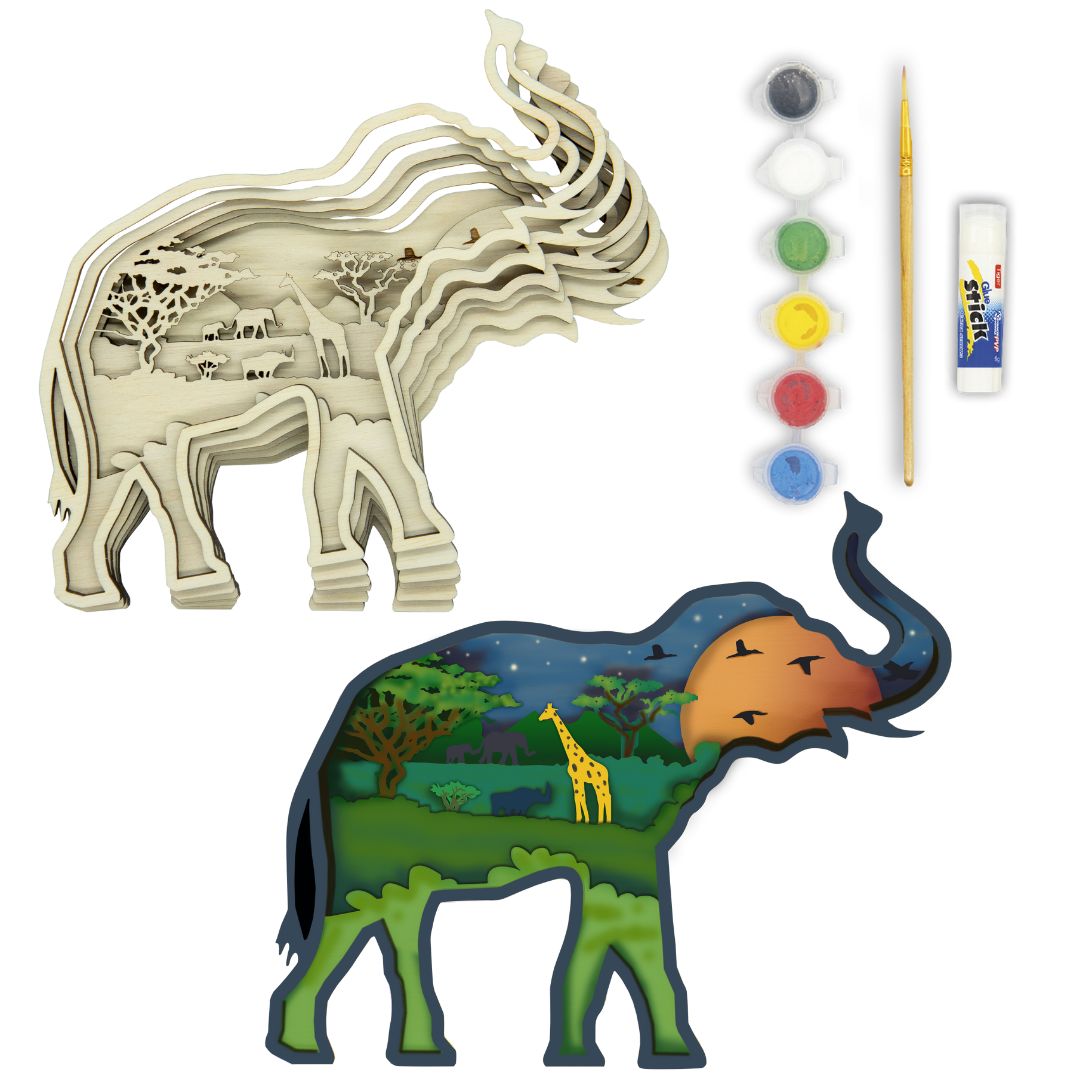

The animal is a window, not a figure
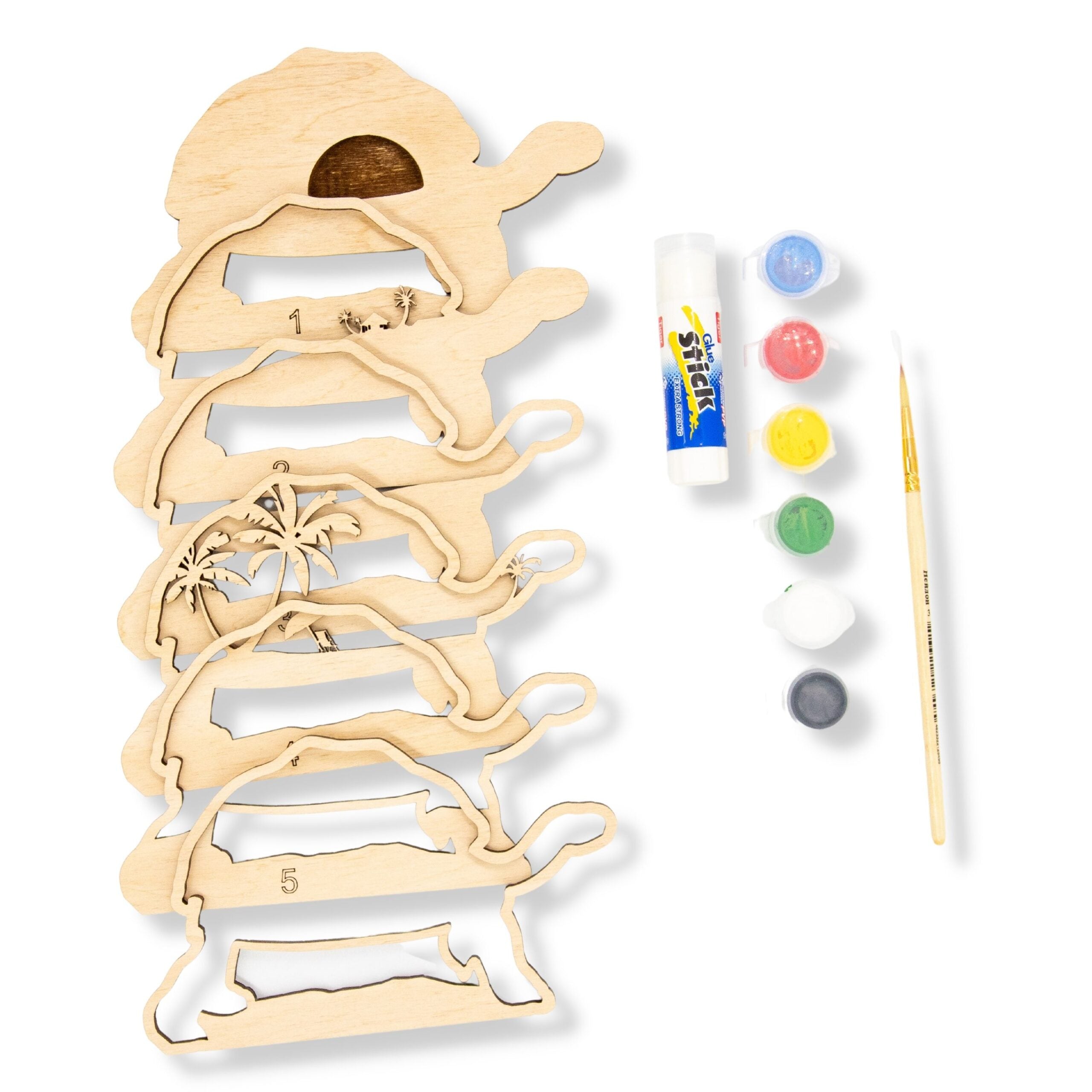
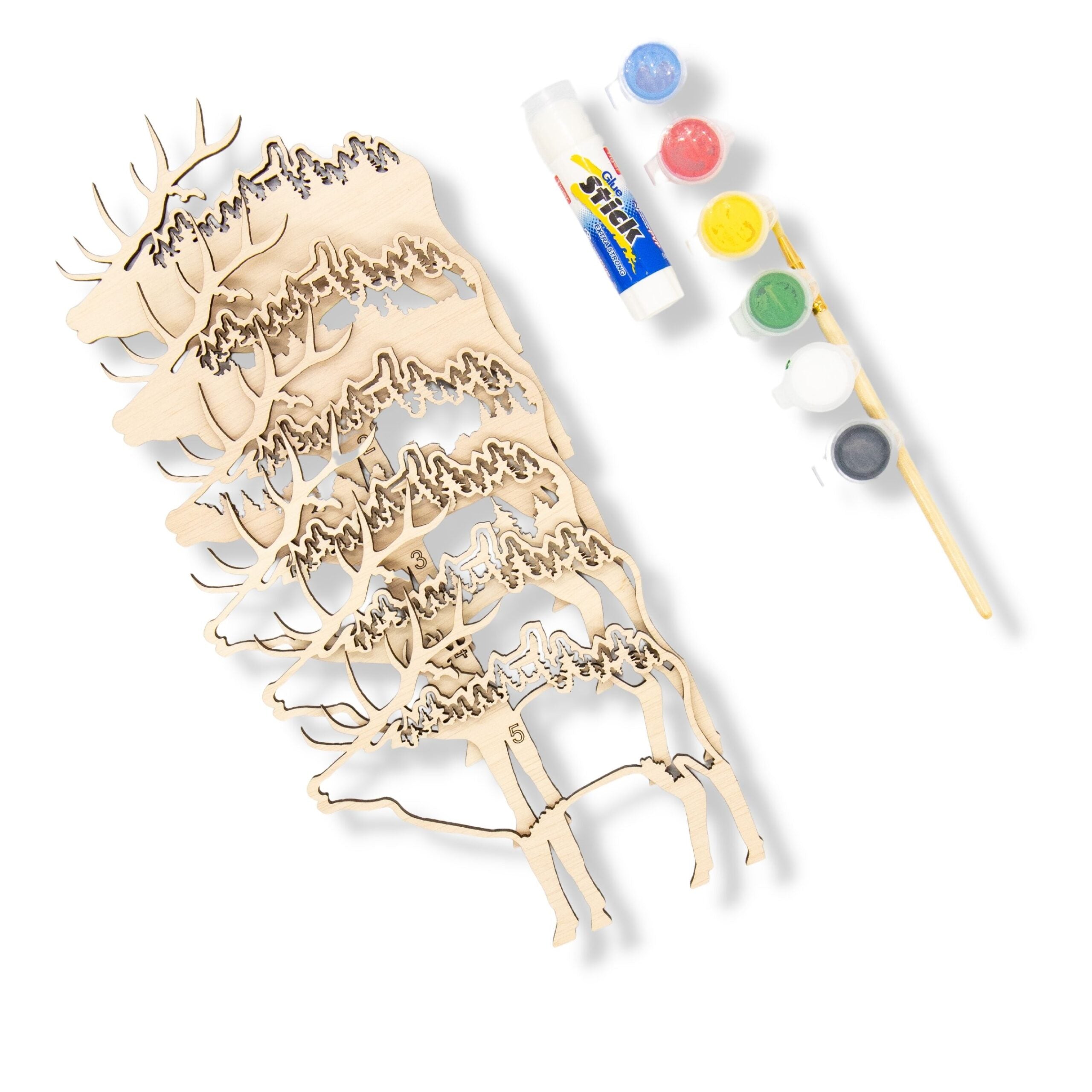
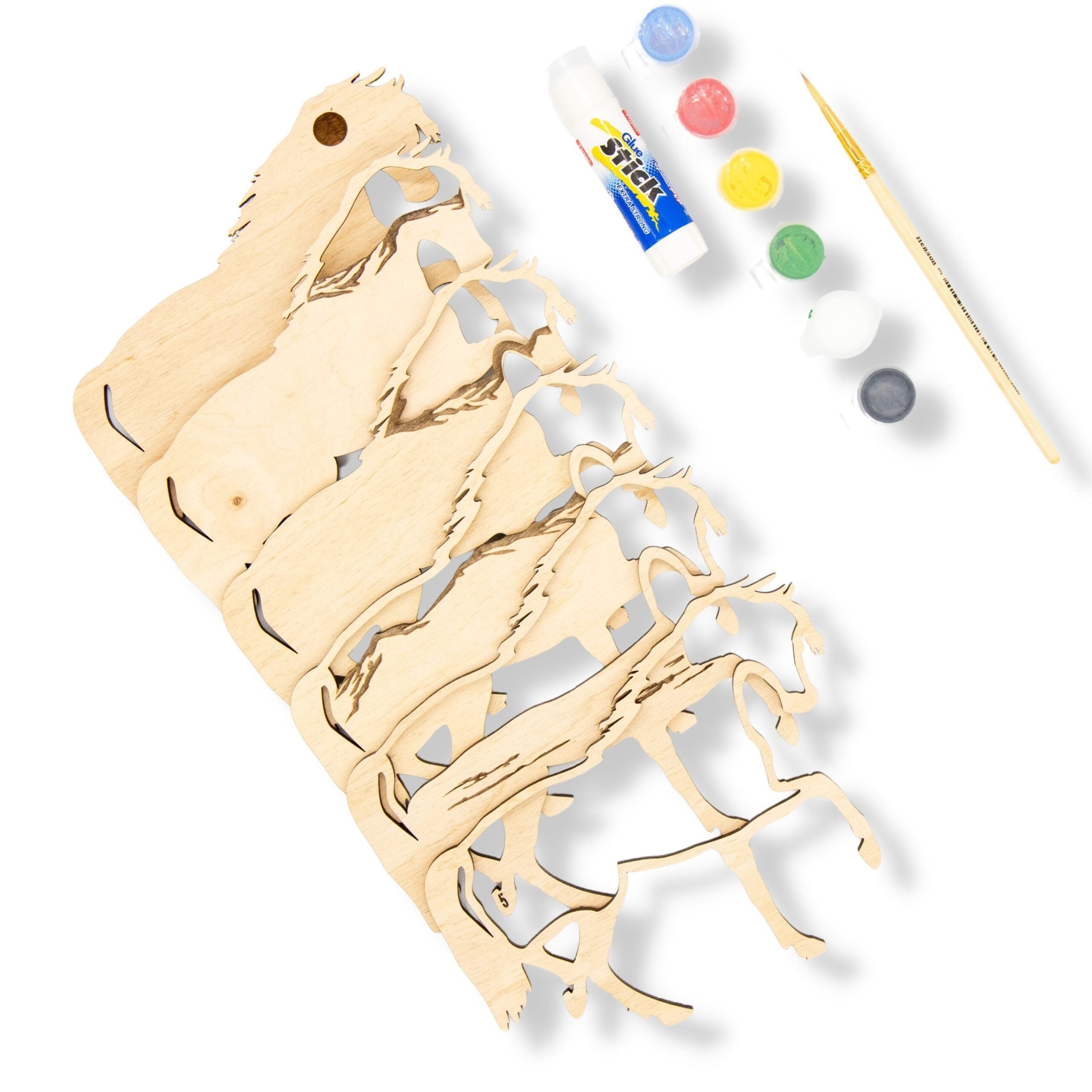
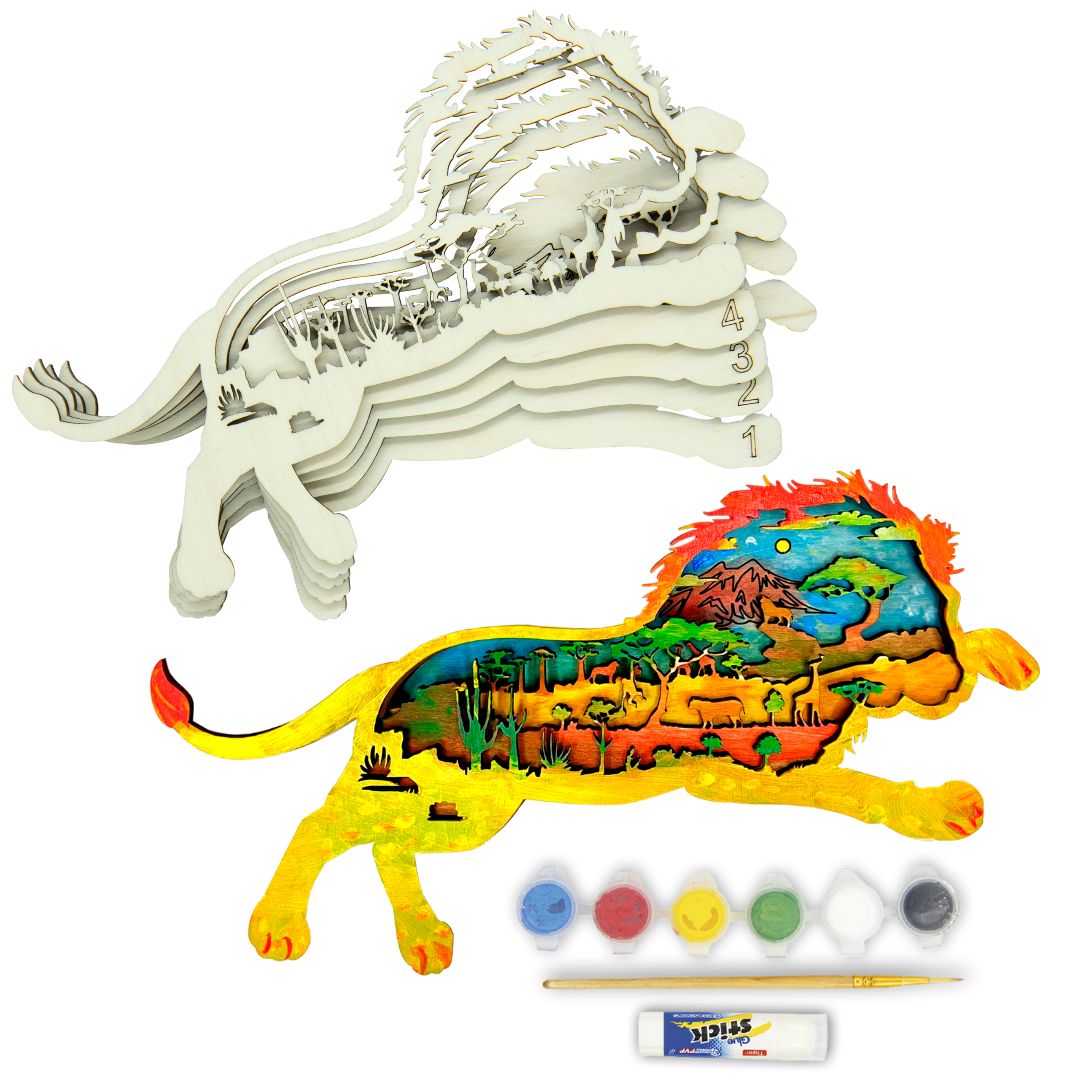
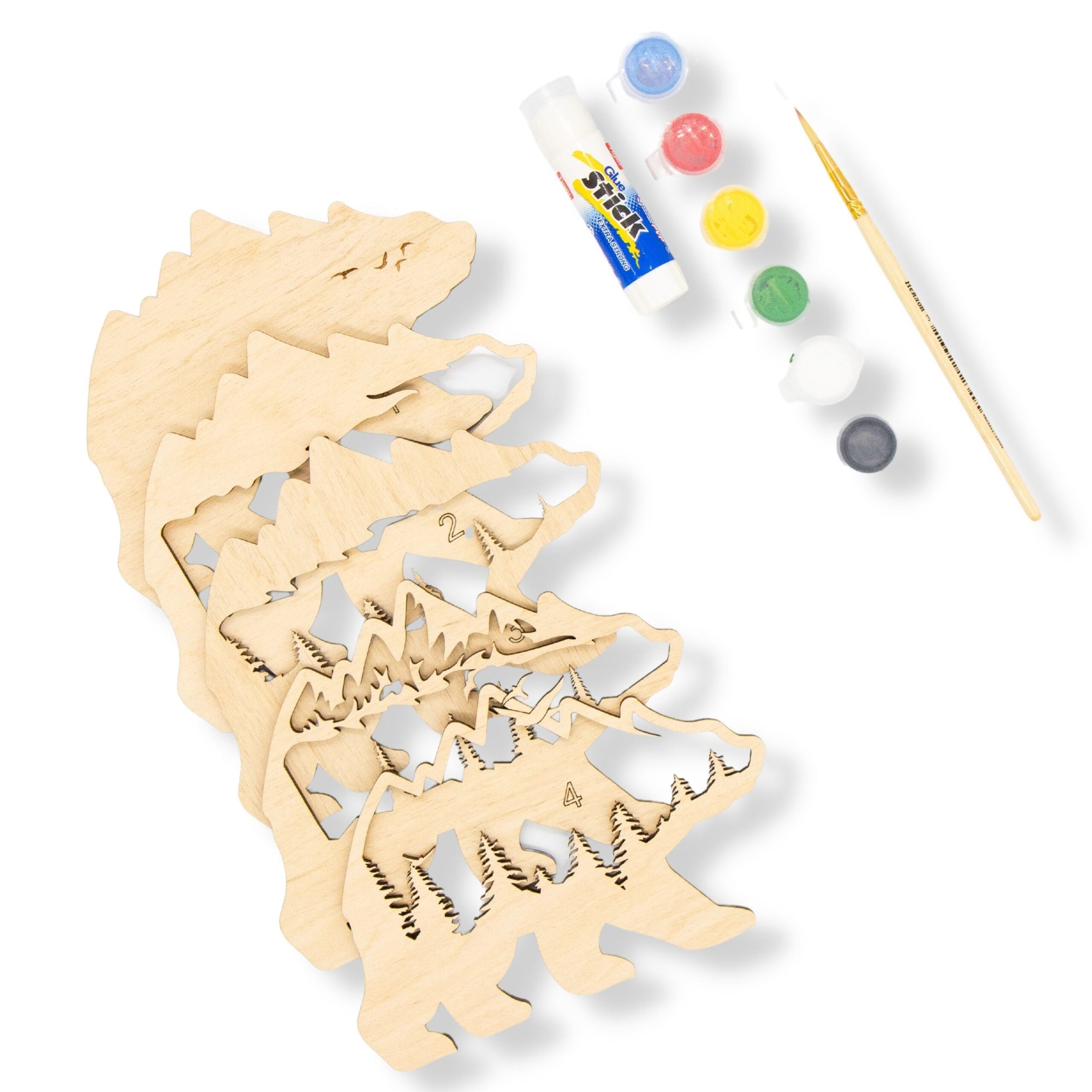
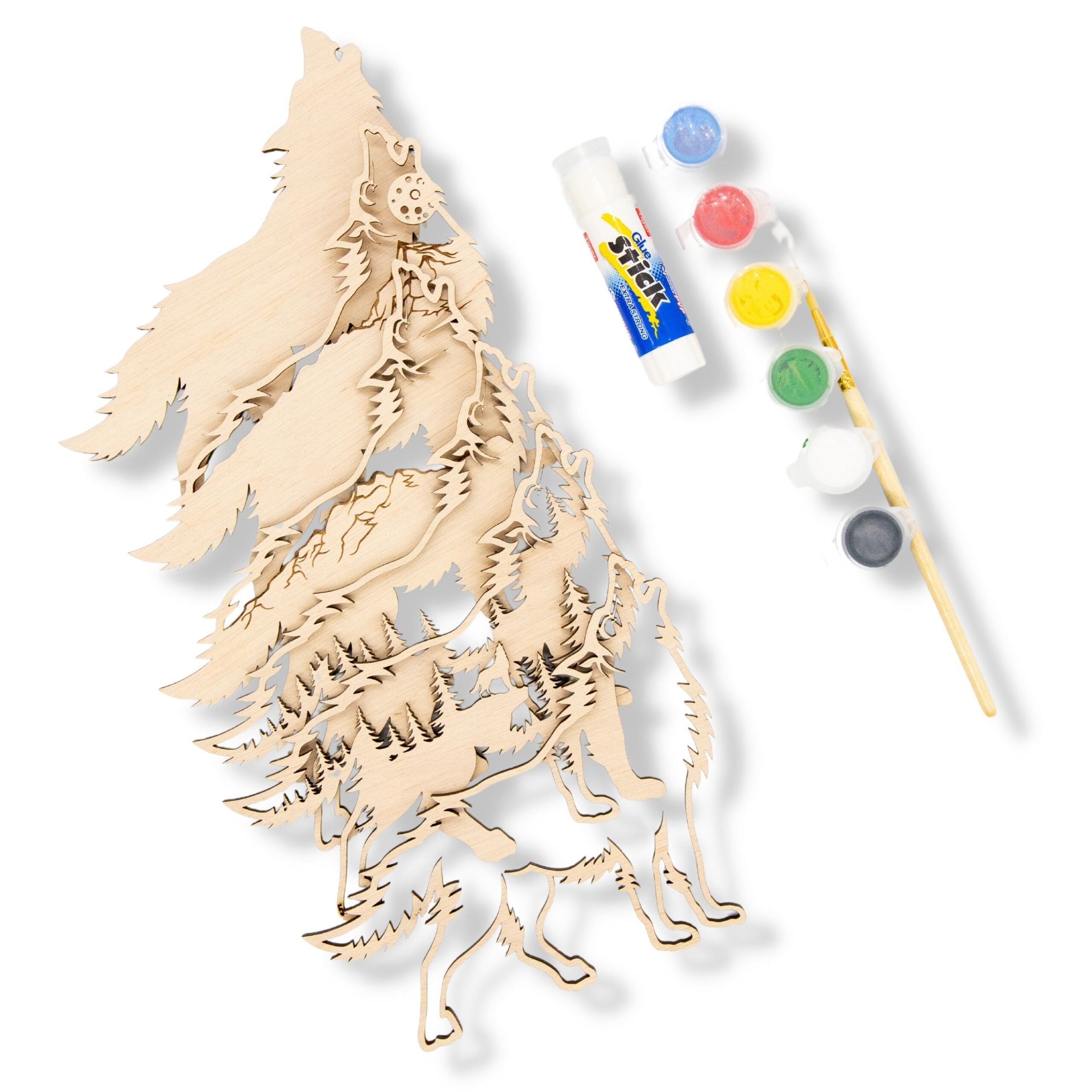
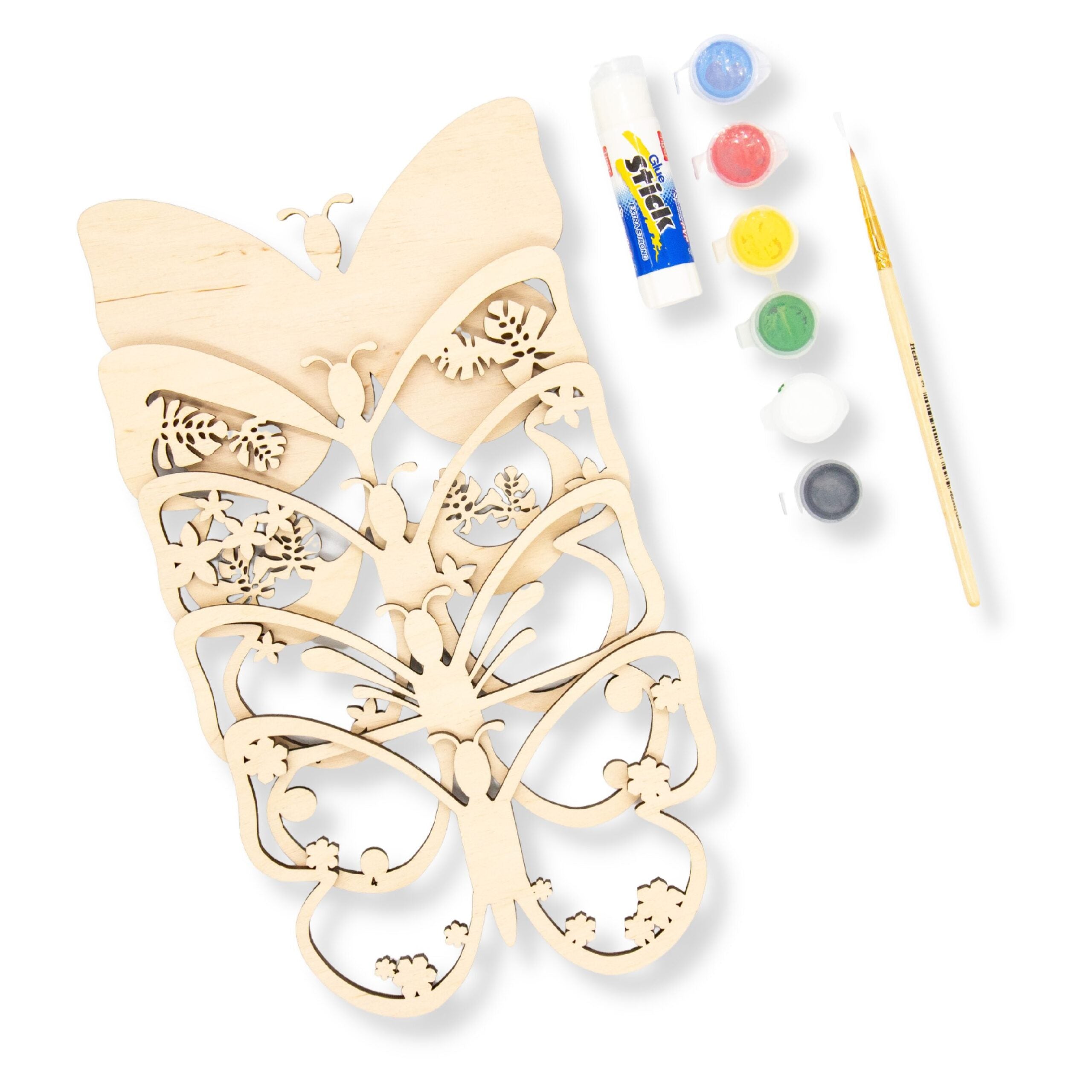
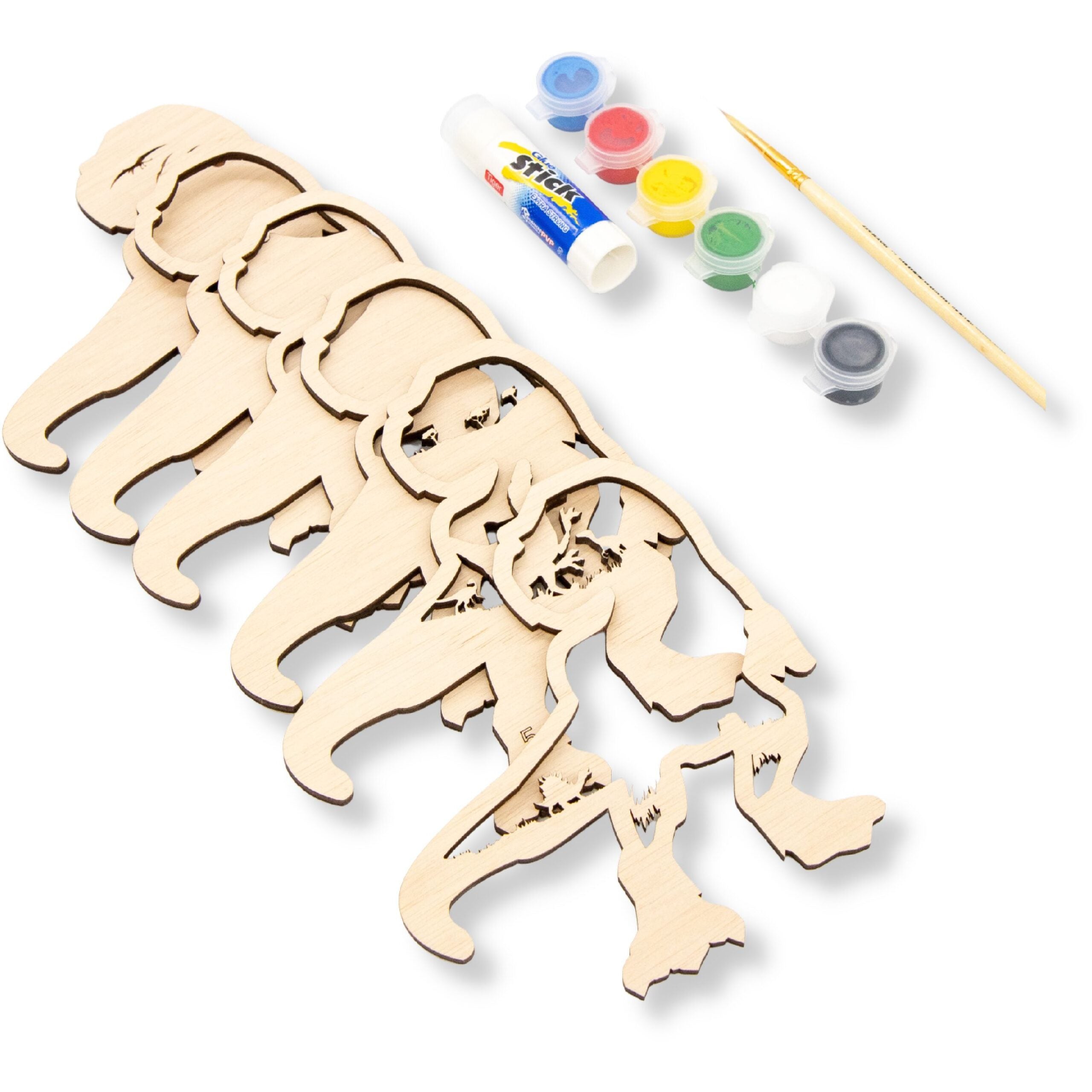
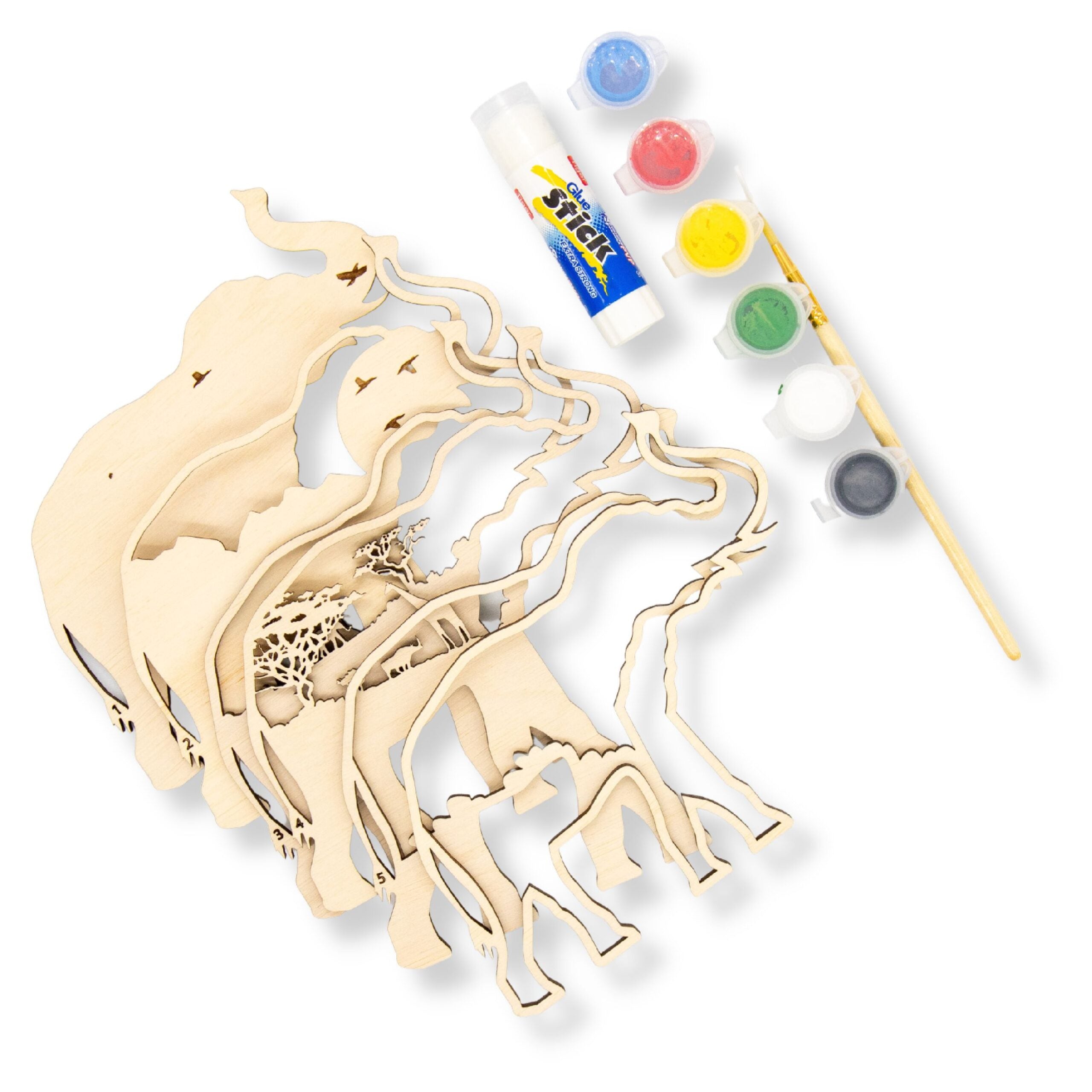
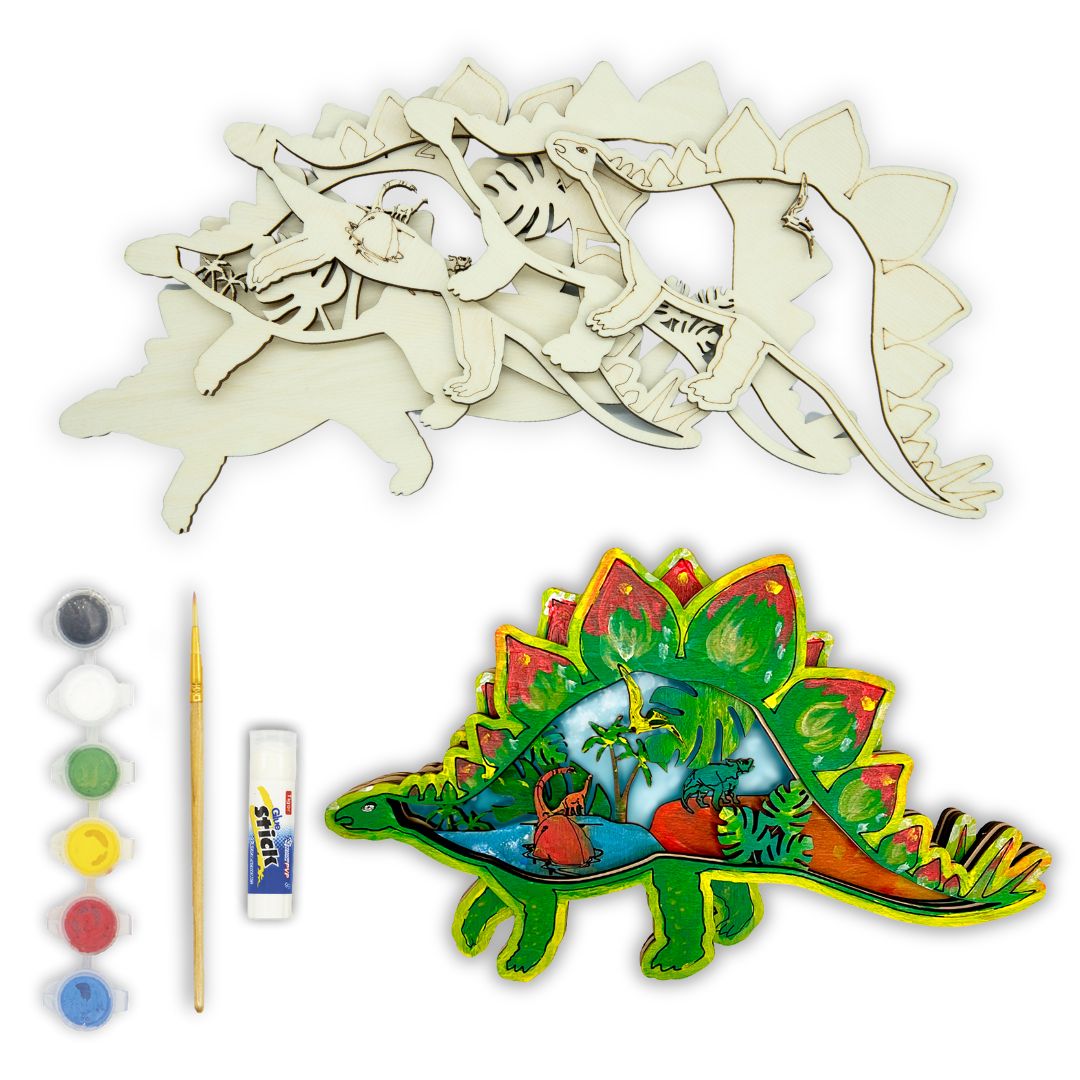
Each kit is a stack of laser-cut wooden layers rather than a single flat shape. Assembled, the layers sit at different depths – building up to about two centimetres where they all overlap – and the animal's silhouette frames a landscape behind it: forest and mountains inside the wolf, a savannah at dusk inside the elephant, a beach with palms inside the turtle's shell.
That is the whole idea. You are not colouring in an outline. You are painting a scene that has depth, in a frame shaped like the animal that belongs there.
What comes in the box
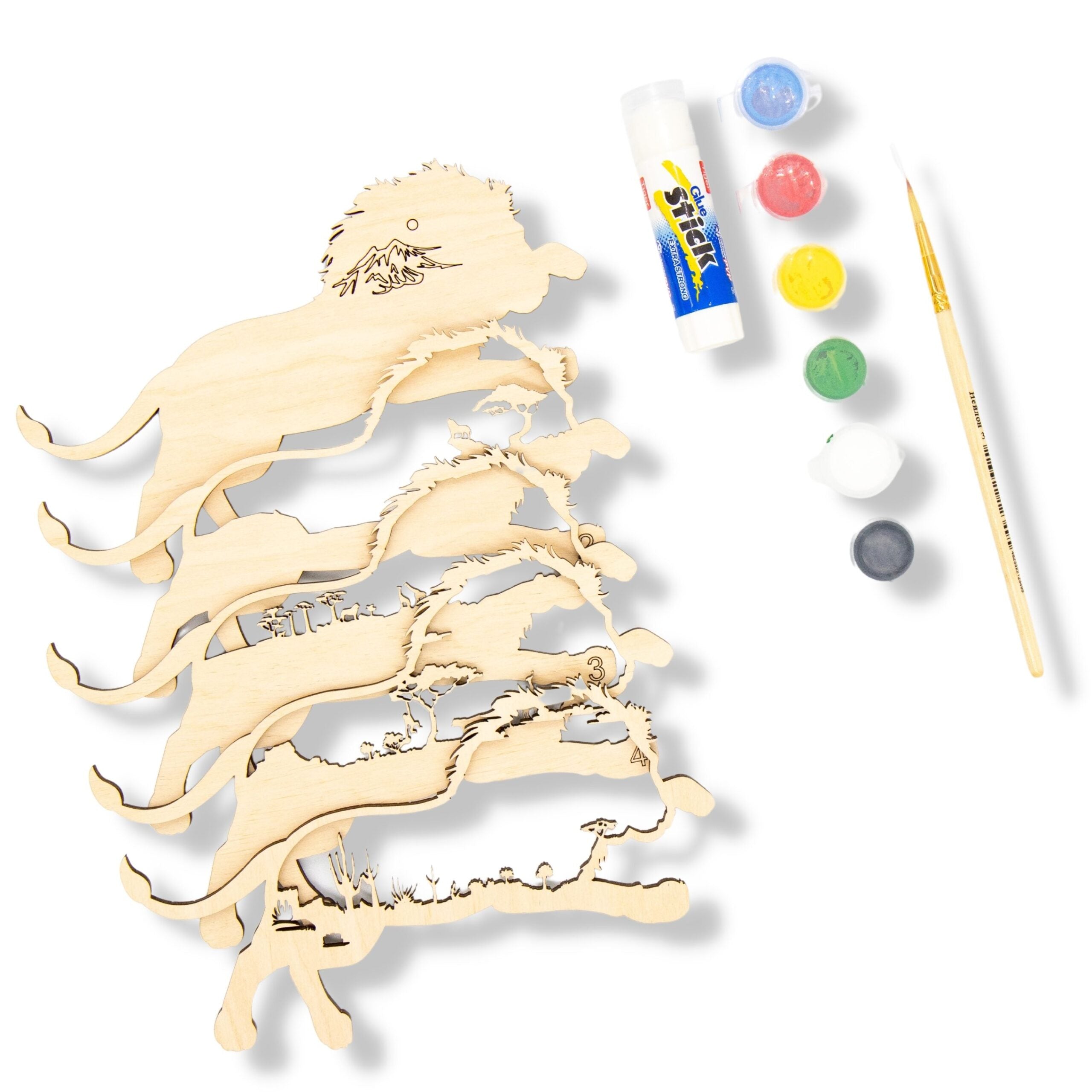
Five or six wooden layers depending on the design, six pots of paint, a brush and a glue stick. Nothing else is needed, and there is nothing to buy separately.
Six colours may sound few. They are black, white, red, yellow, blue and green, which is a primary set plus the two that let you mix everything else. Green is included because you will use a lot of it.
Paint first, then build
Each layer is painted flat on the table, and the stack is glued together only when everything is dry – that is what the box means by "paint every layer". Once assembled, the windows narrow layer by layer, and the deepest parts of the scene are out of any brush's reach.
Two habits make it work: keep paint off the faces where the layers touch, so the glue stick grips bare wood, and save a little of each colour for touching up the outer edges after assembly. The layers are numbered, so the build order is never in doubt.
The box rates the whole project at about 40 minutes. The gluing takes a fraction of that; the painting is the part worth stretching.
Being honest about the photographs
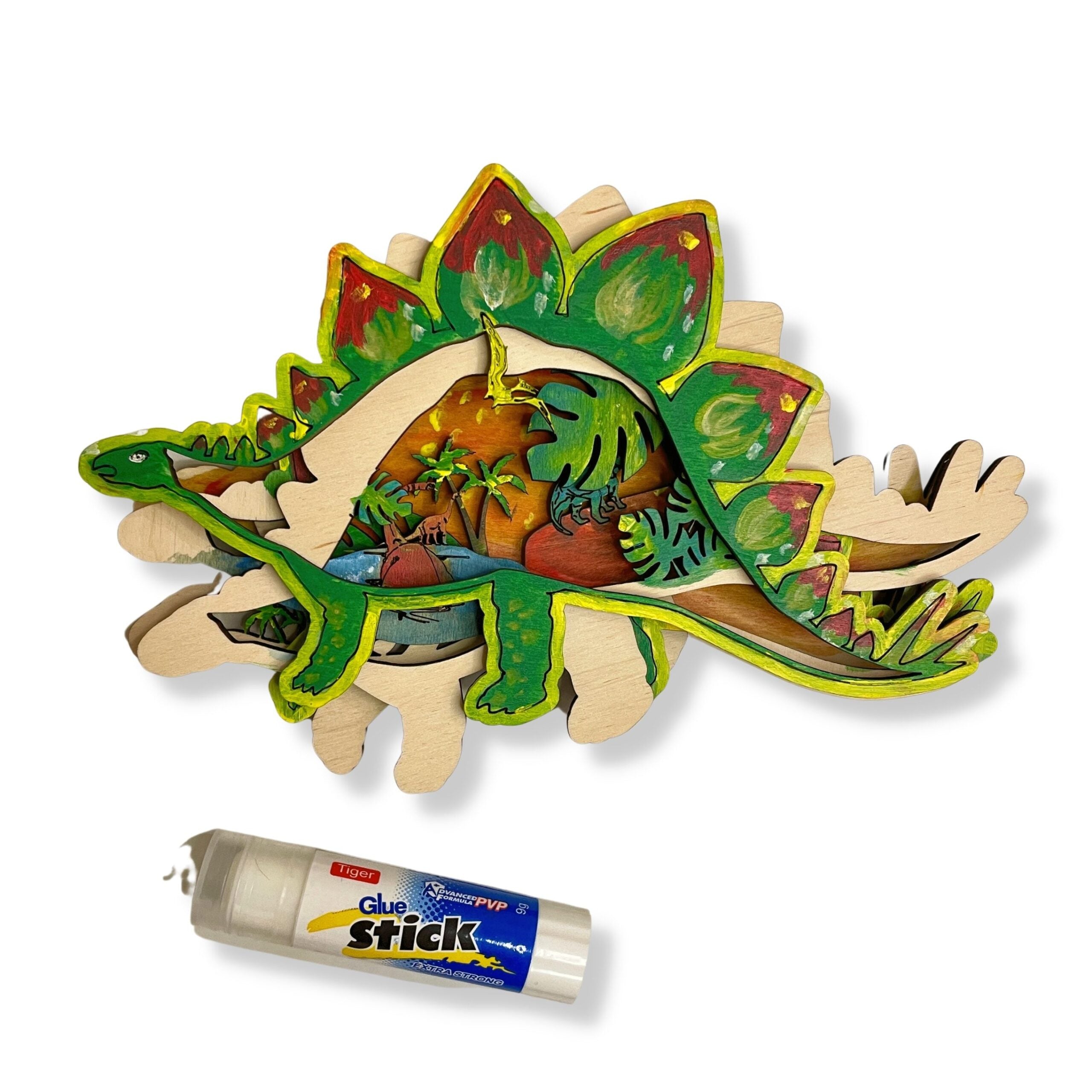
The painted examples in our photographs were done by an artist. A seven-year-old's version will not look like that, and it is not supposed to. What the kit provides is a shaped surface with built-in depth, which flatters almost any paint job, because the shadows between layers do half the work regardless of what is painted on them.
The finer details – birds, the sun, branches – are engraved into the wood by the laser, so the drawing is already there. What you add is the colour.
Where they end up
These stand rather than hang. The base is cut wide enough to keep each piece upright on a shelf – even the butterfly, which stands on the lower edge of its wings – and at 13 to 18 cm across they take up about as much space as a paperback lying down.
Recommended from 7. The layers are large enough to handle, the glue is a stick rather than a liquid, and the paint washes off skin and out of clothes while it is still wet – dried acrylic holds on, so roll up sleeves.