







Bird Wooden Puzzles
Filters
11 products
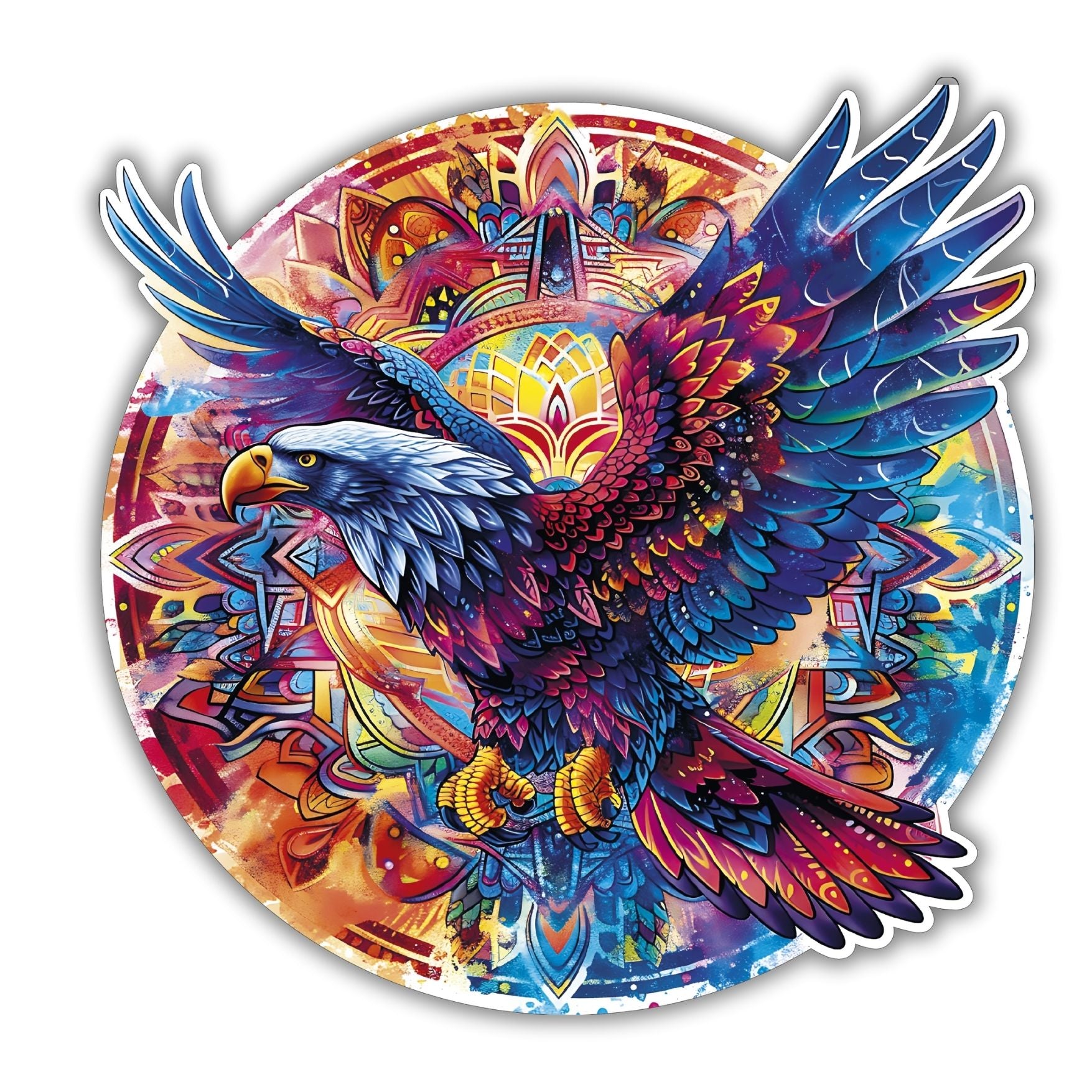
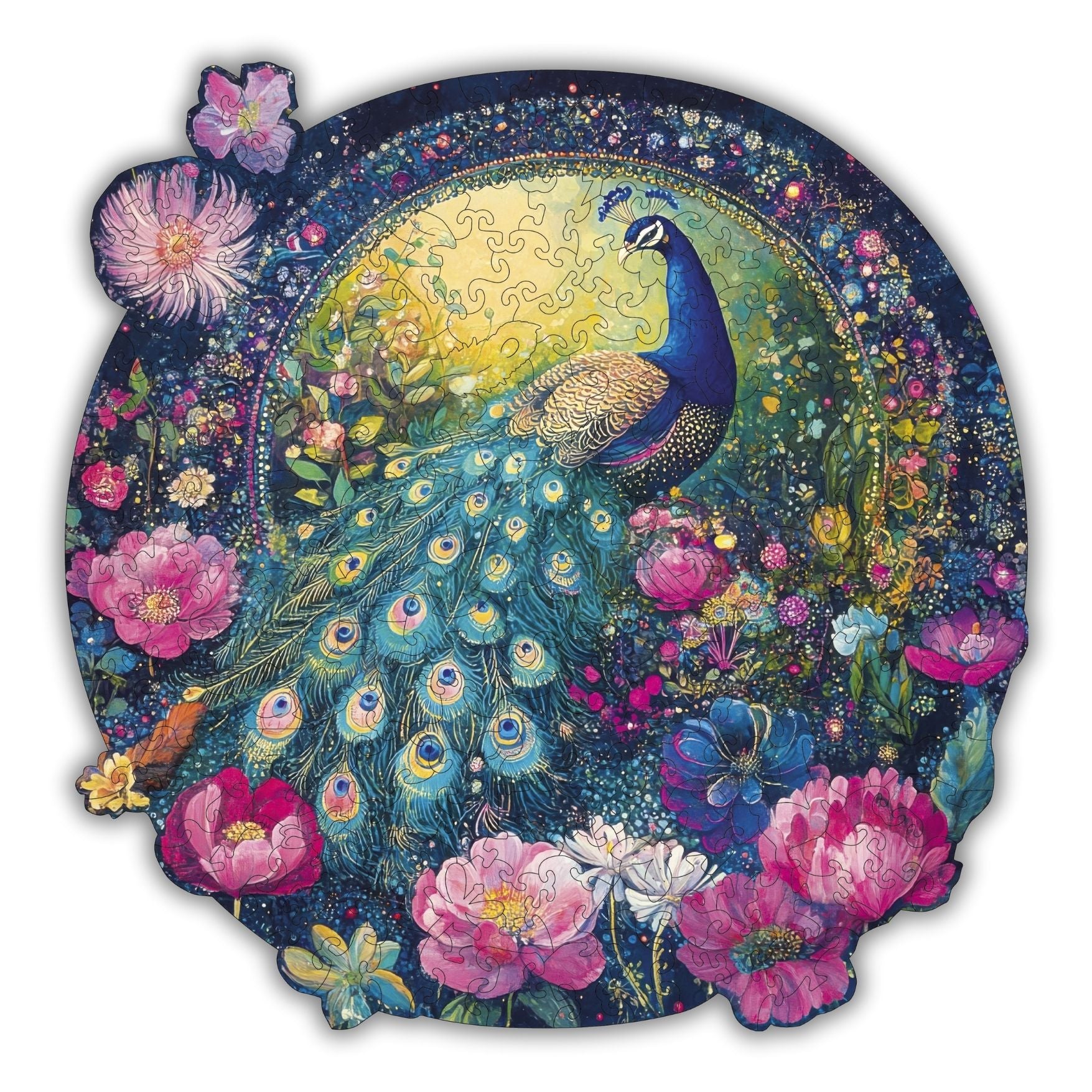
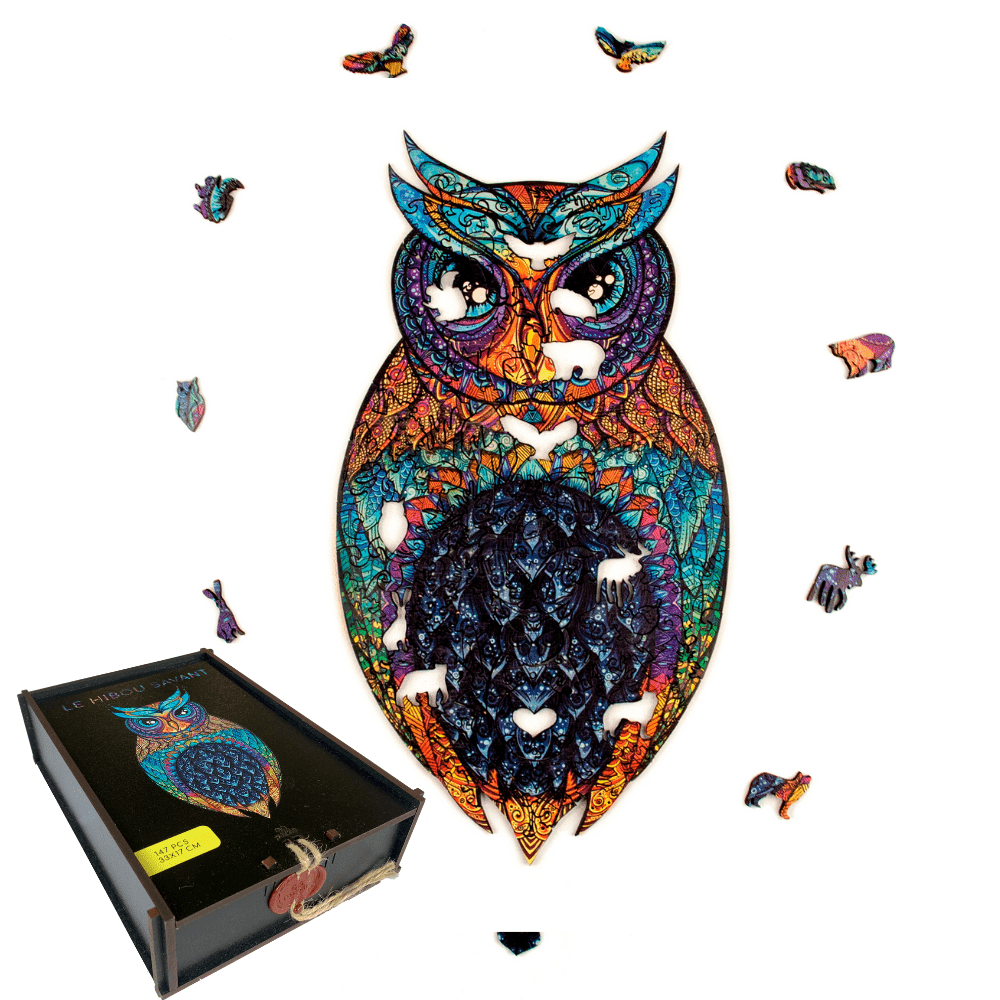
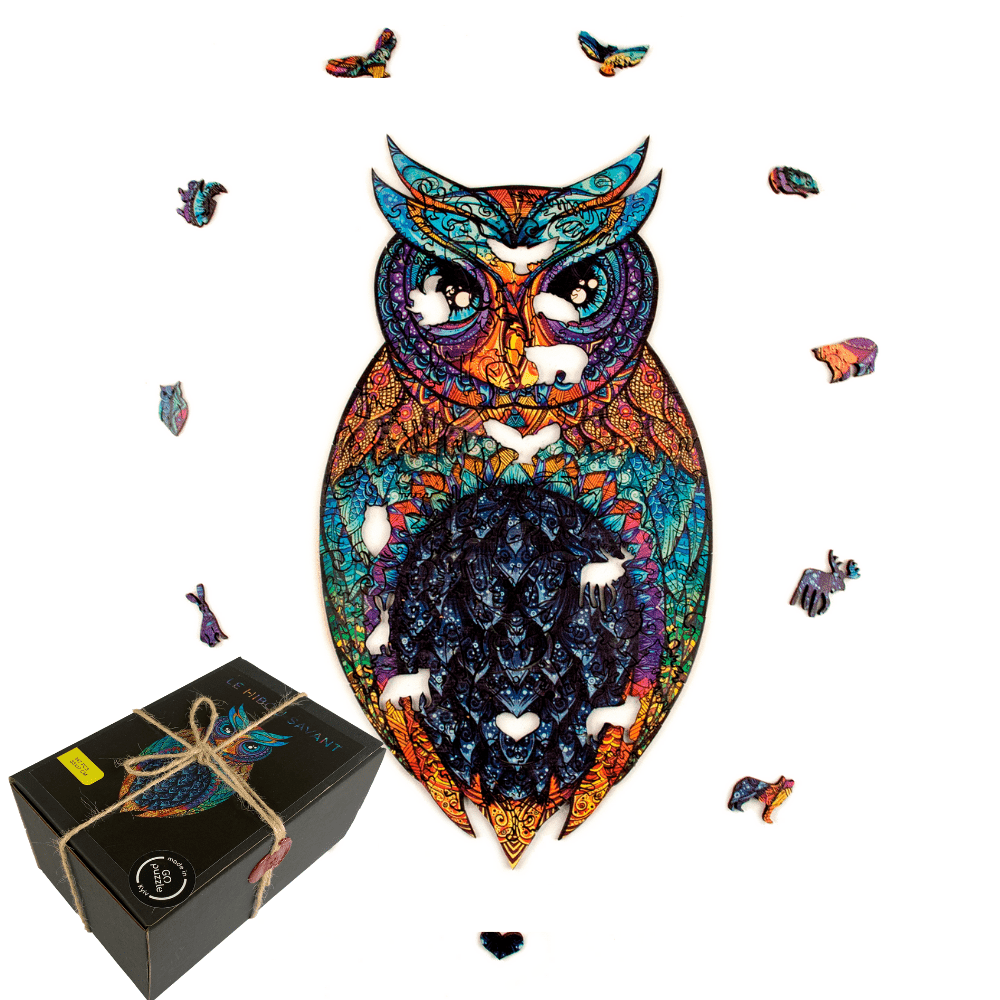
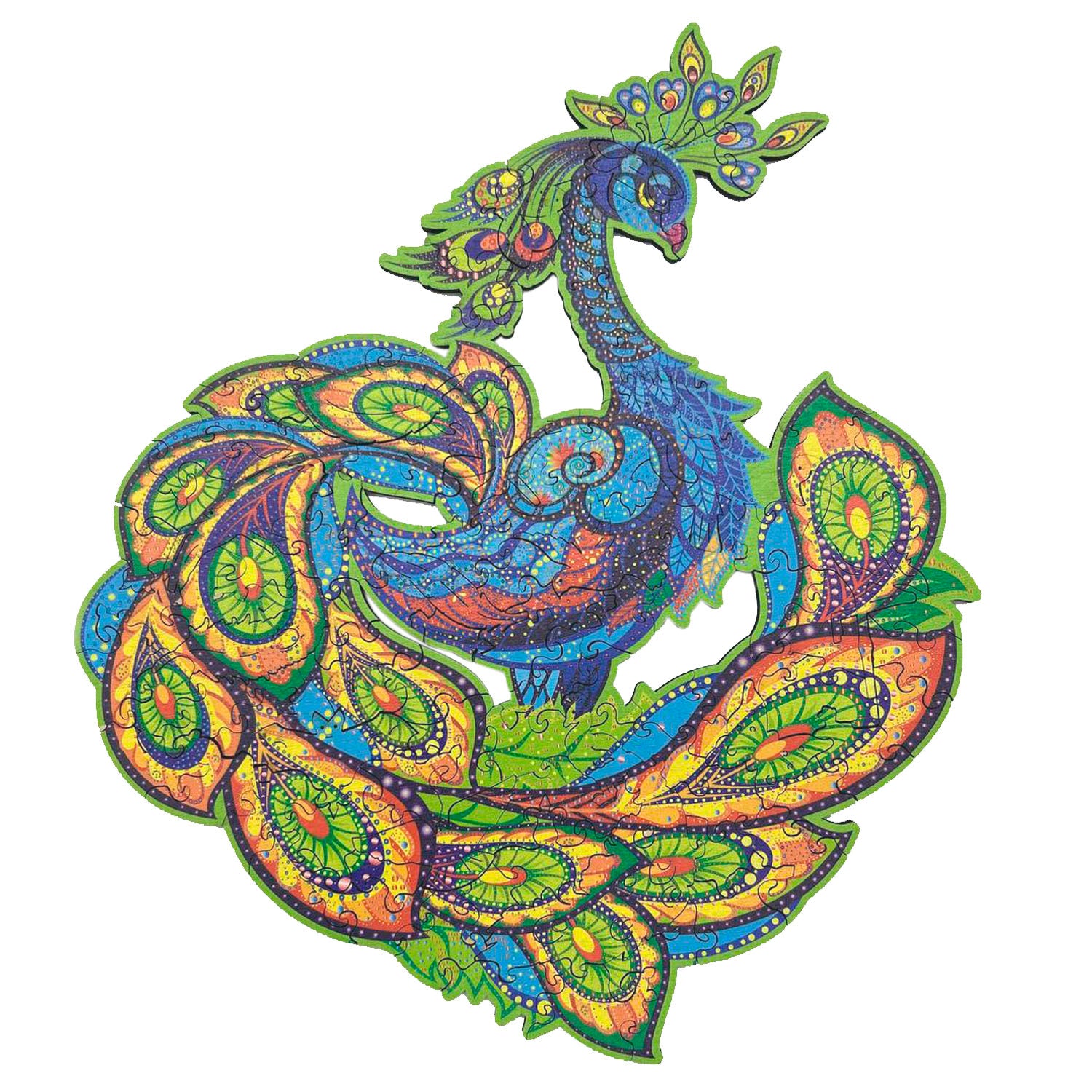
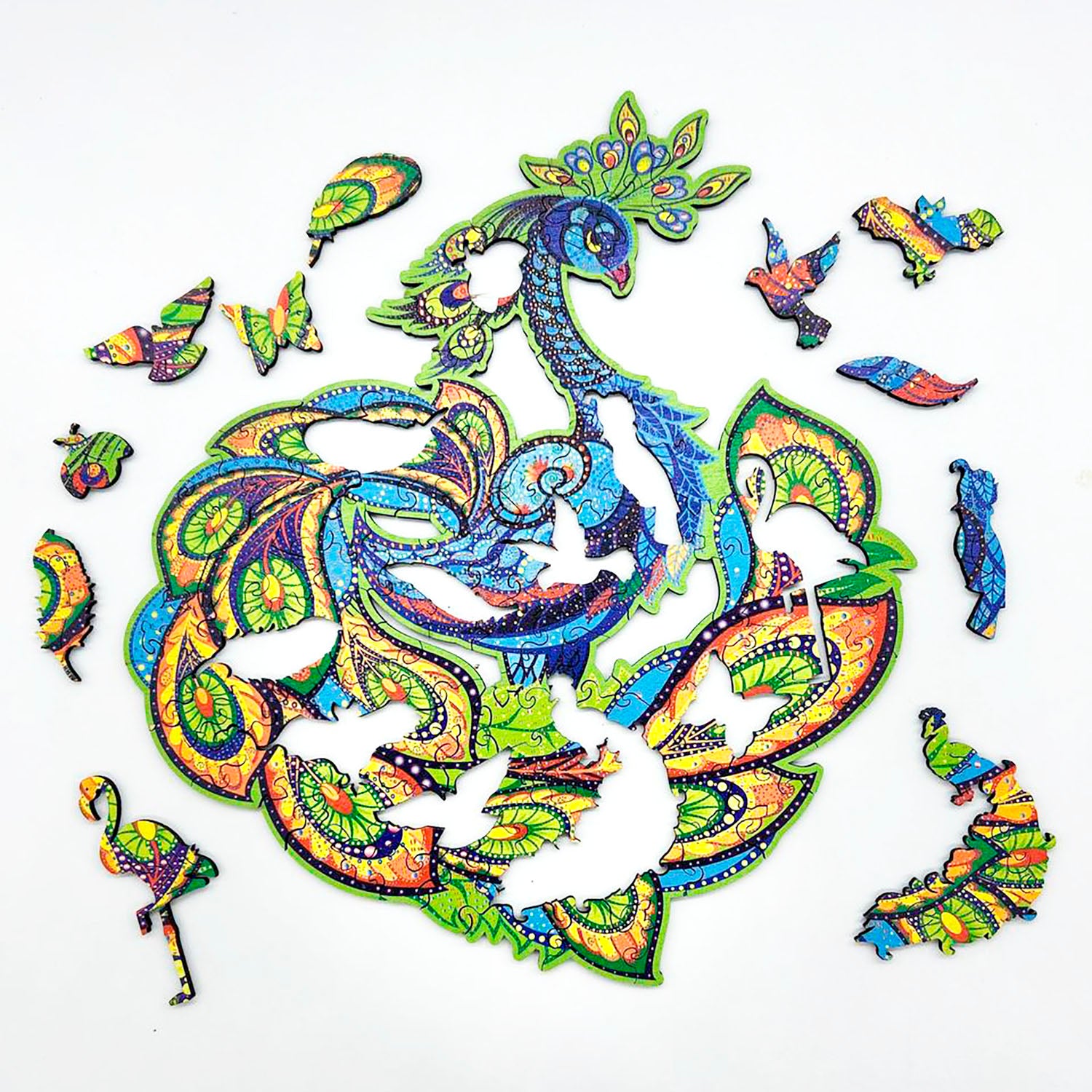
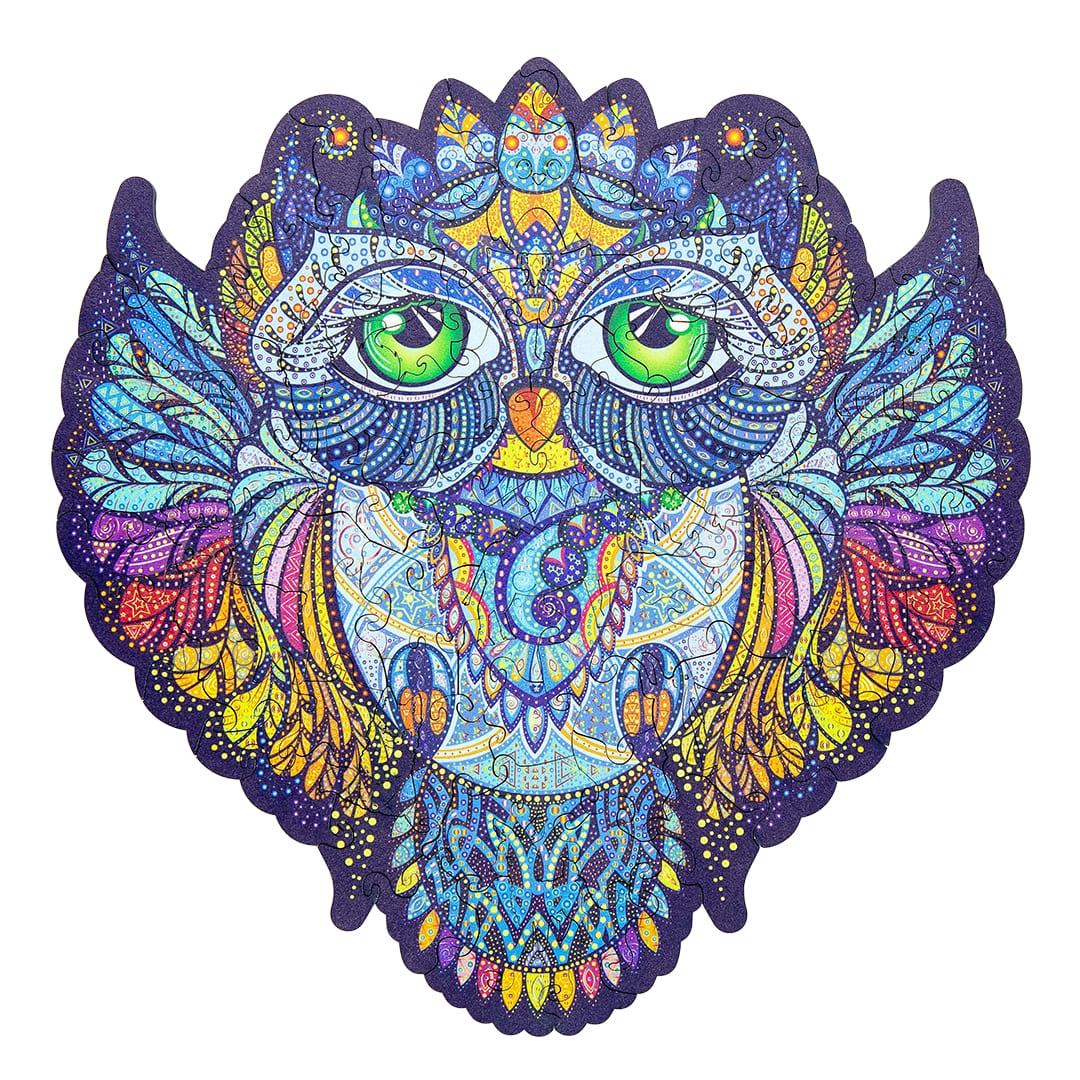
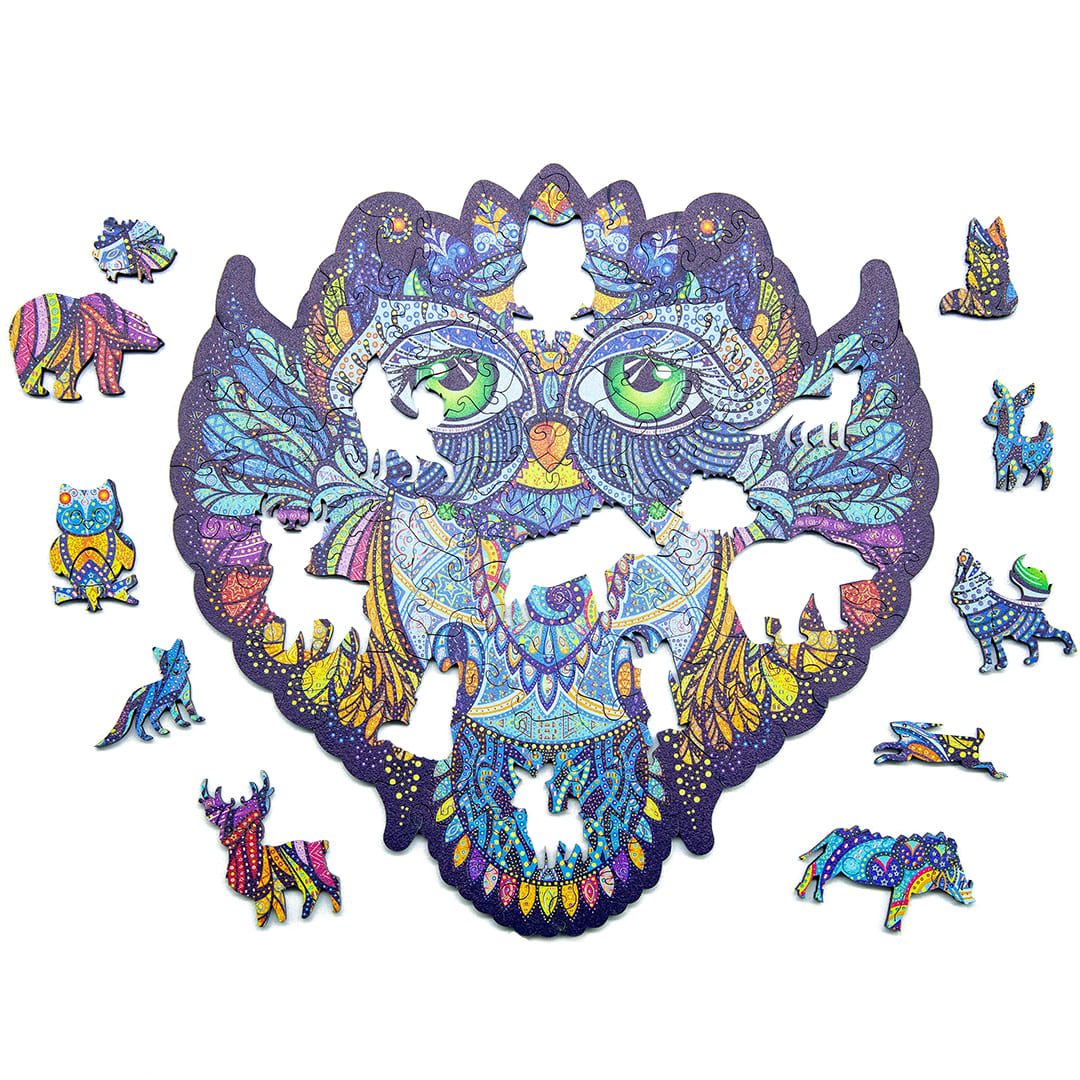
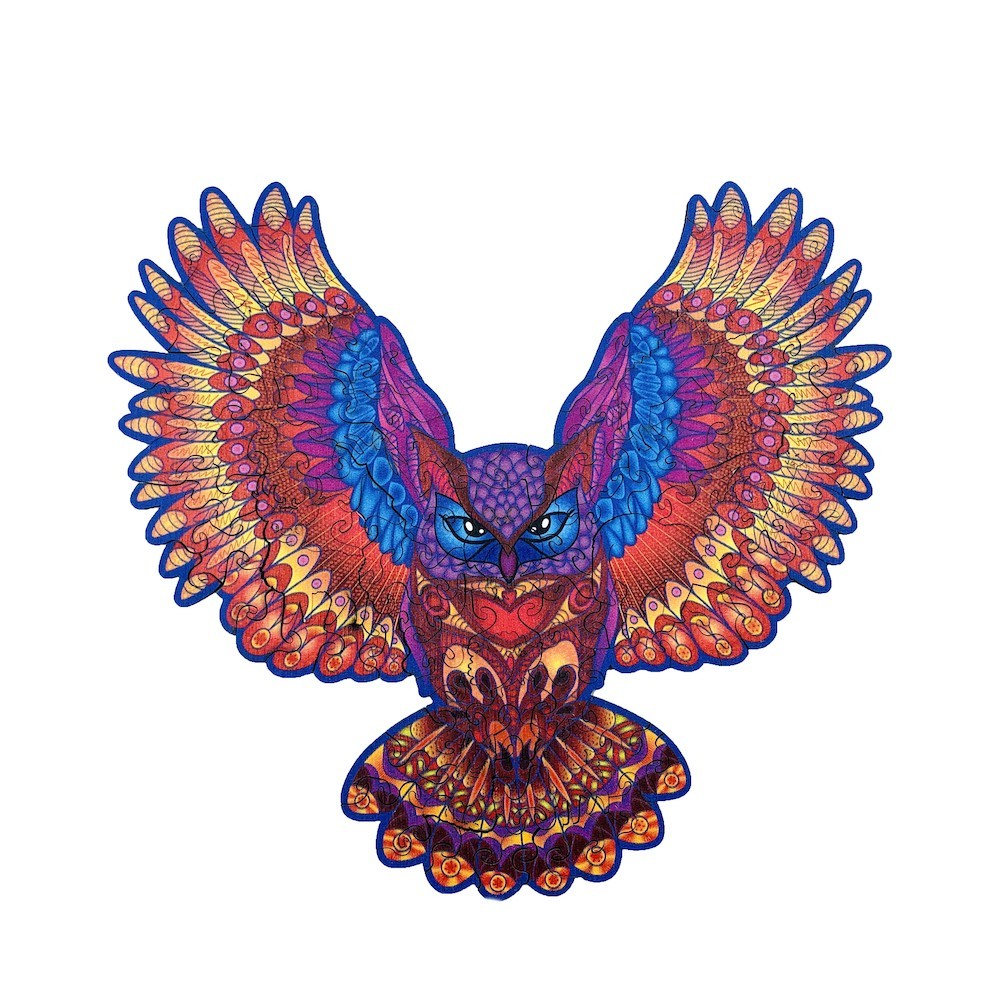
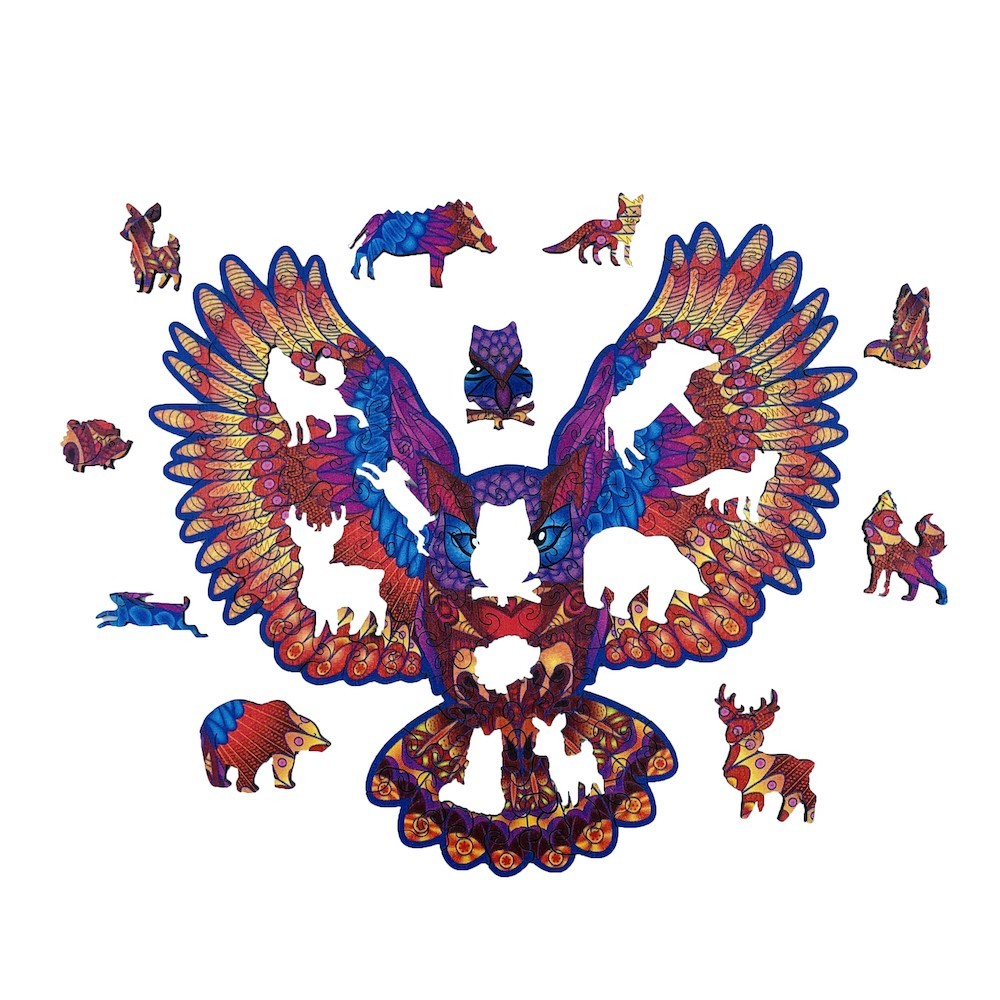
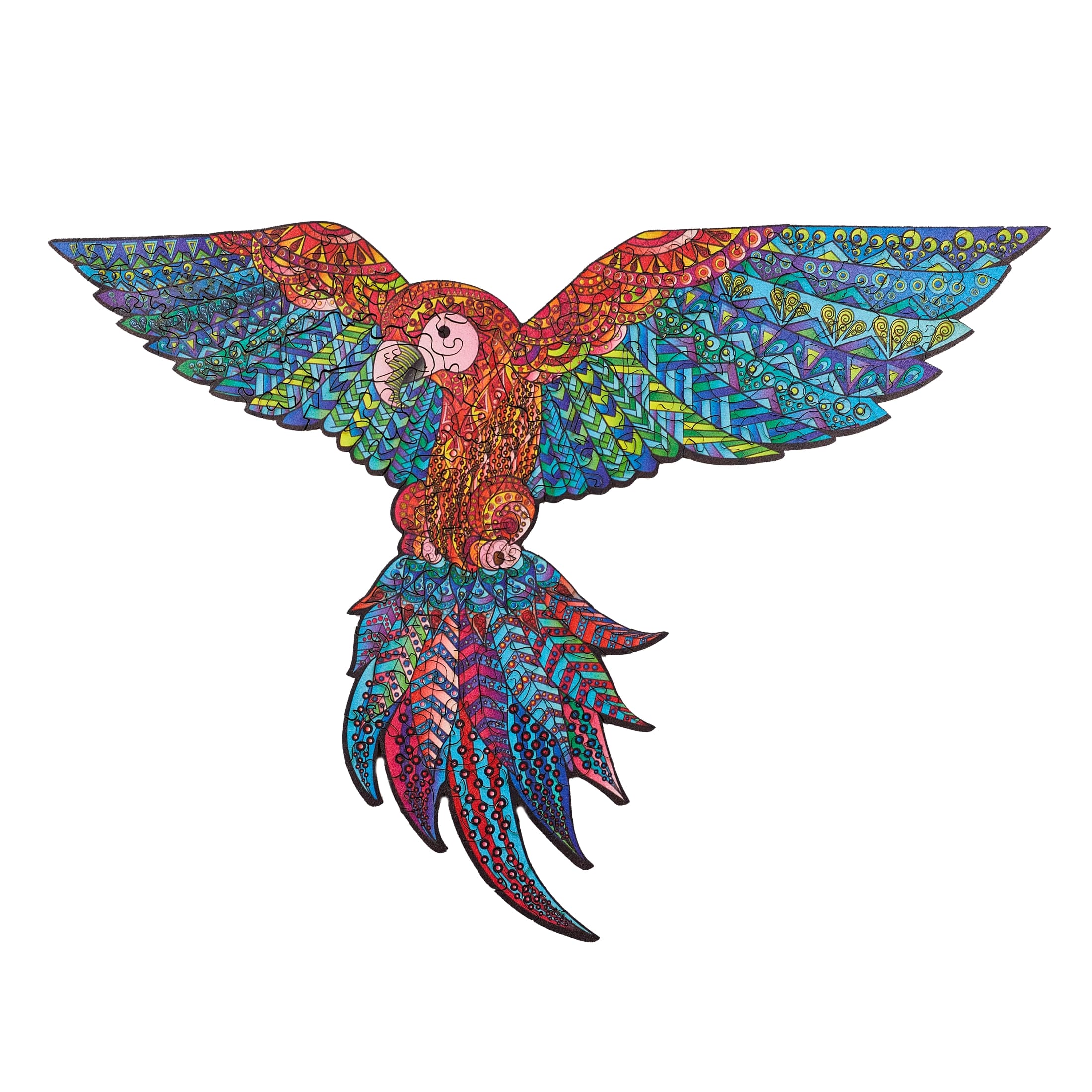
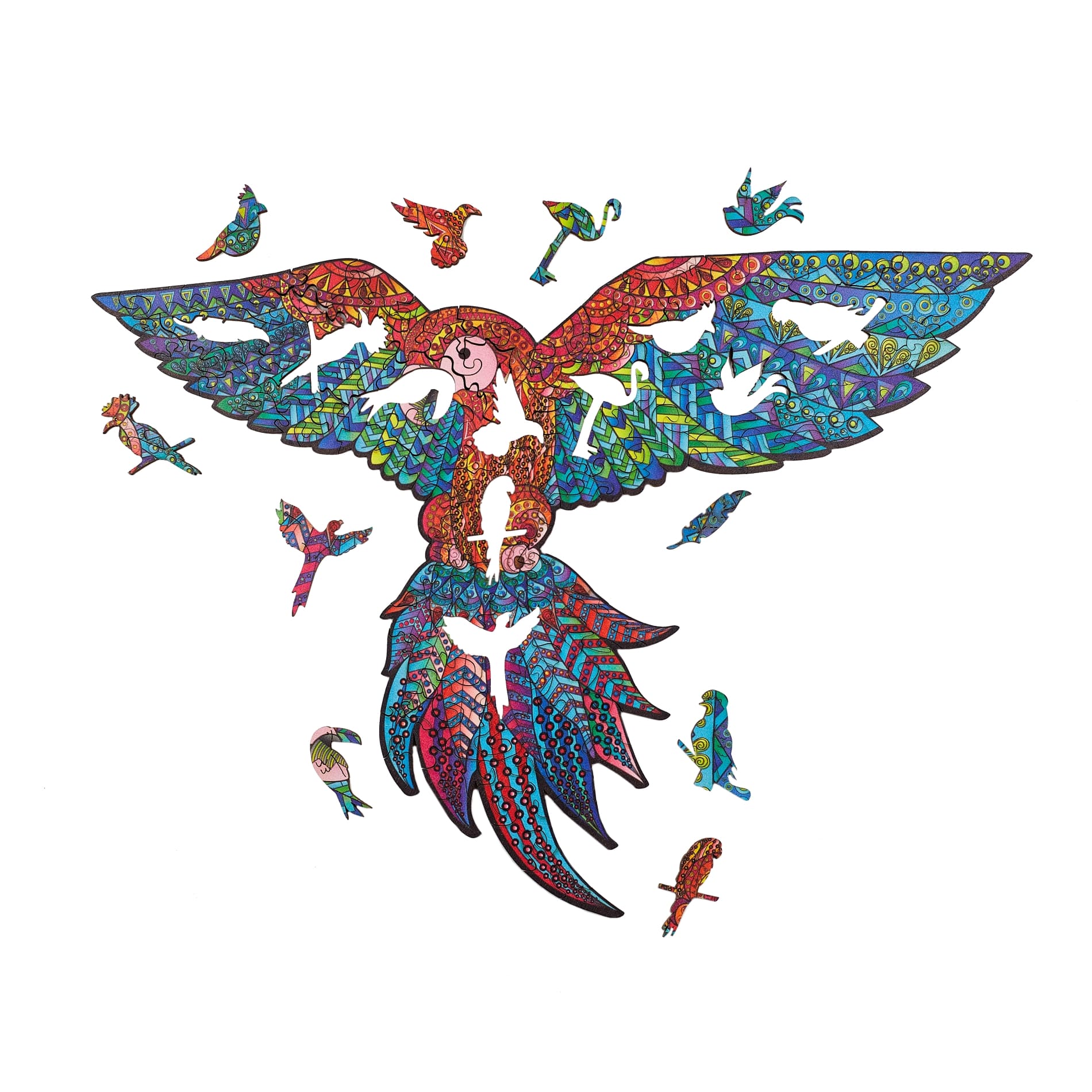
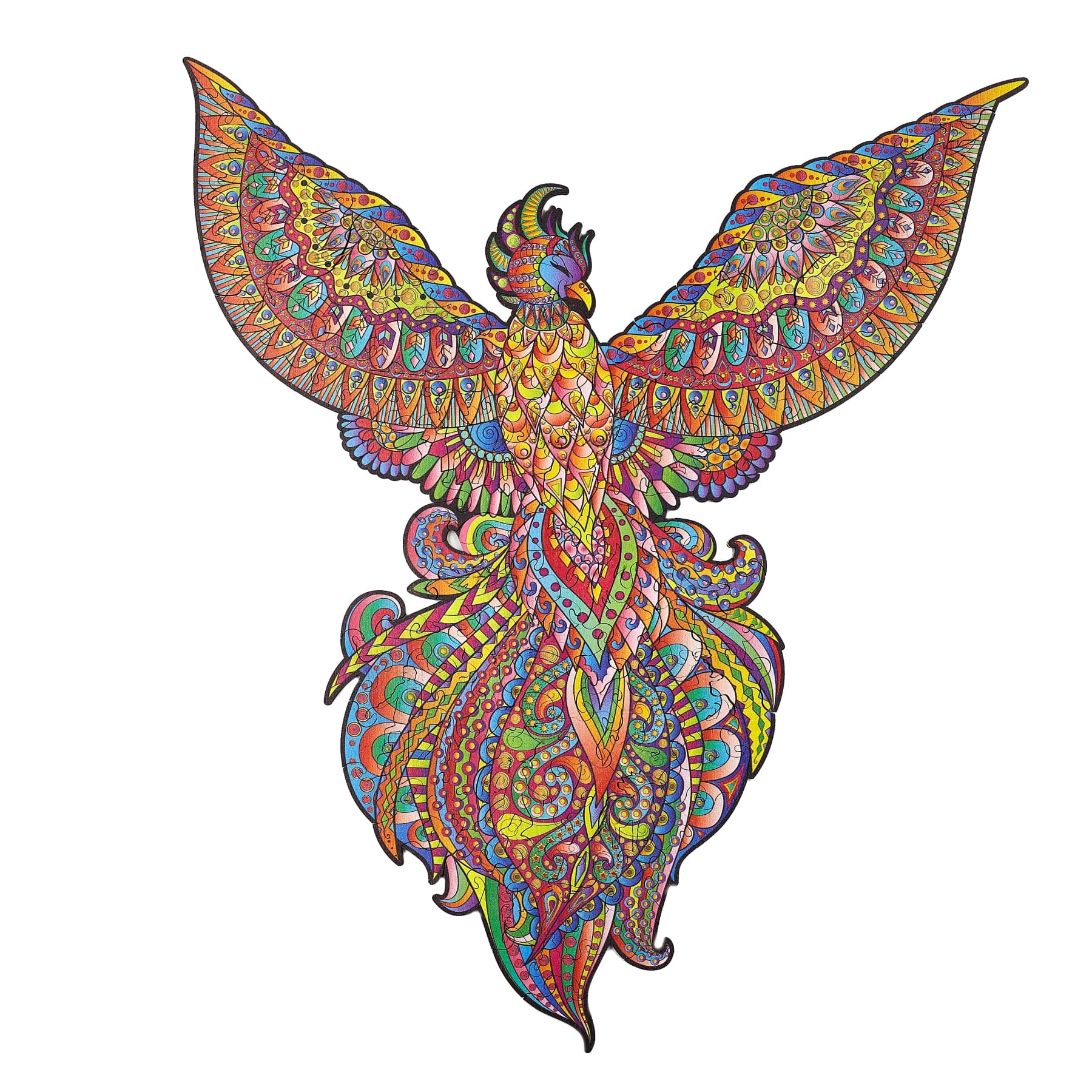
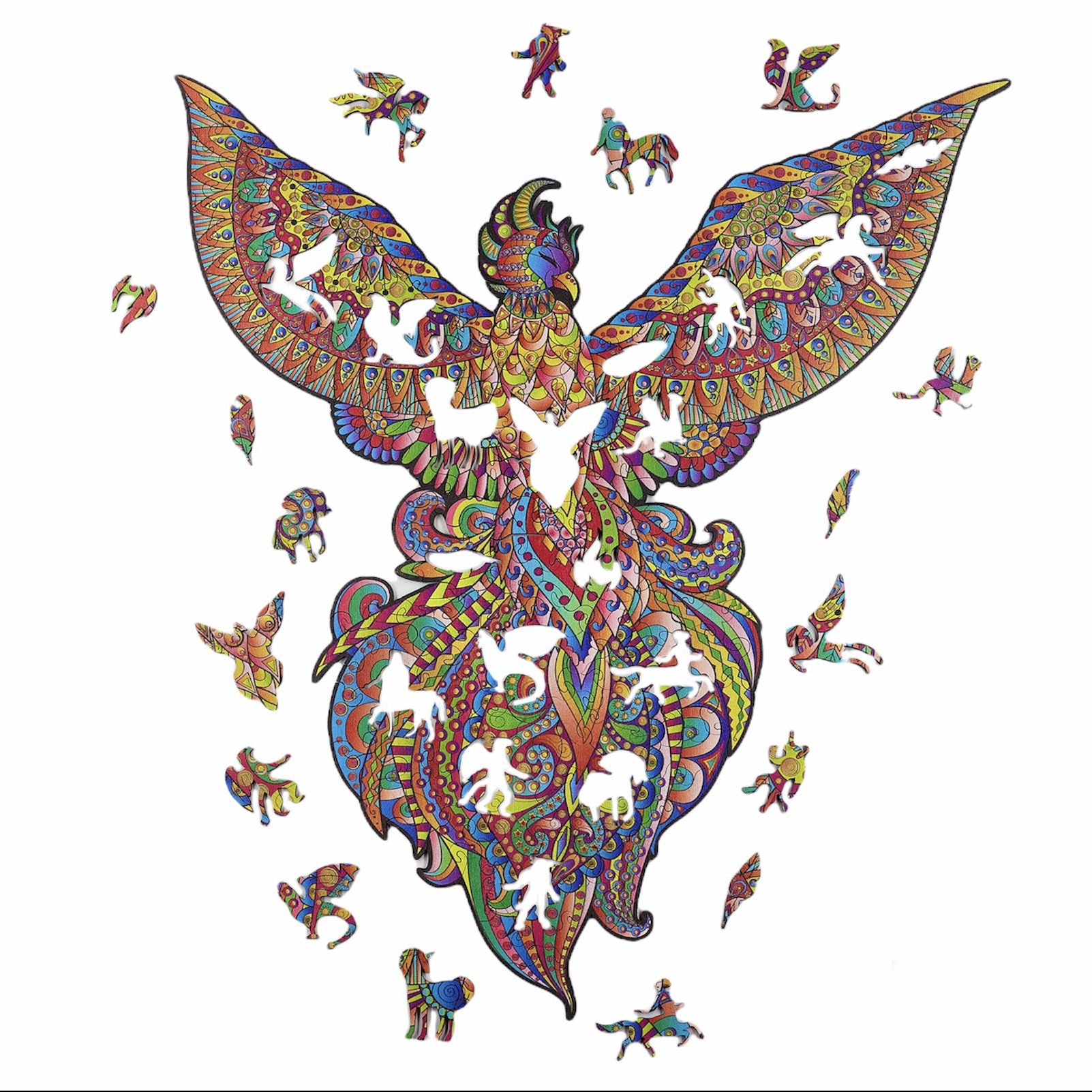
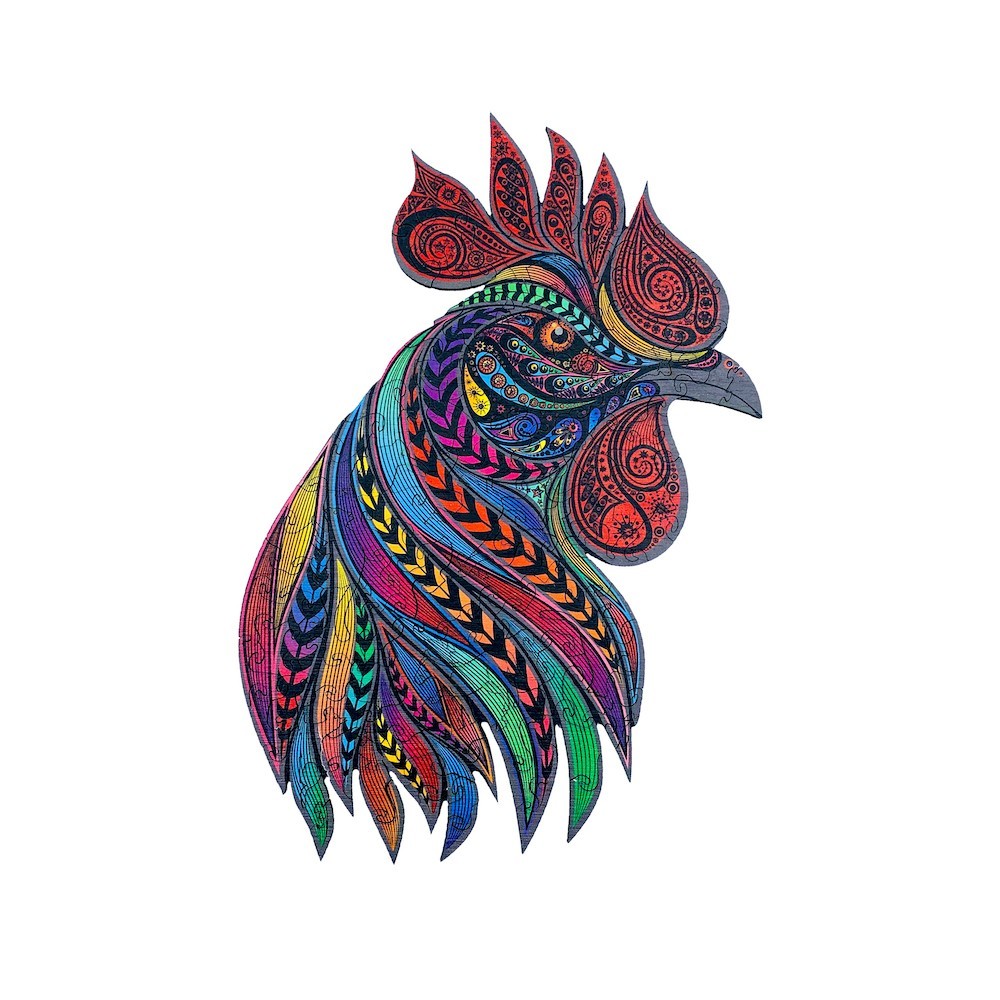
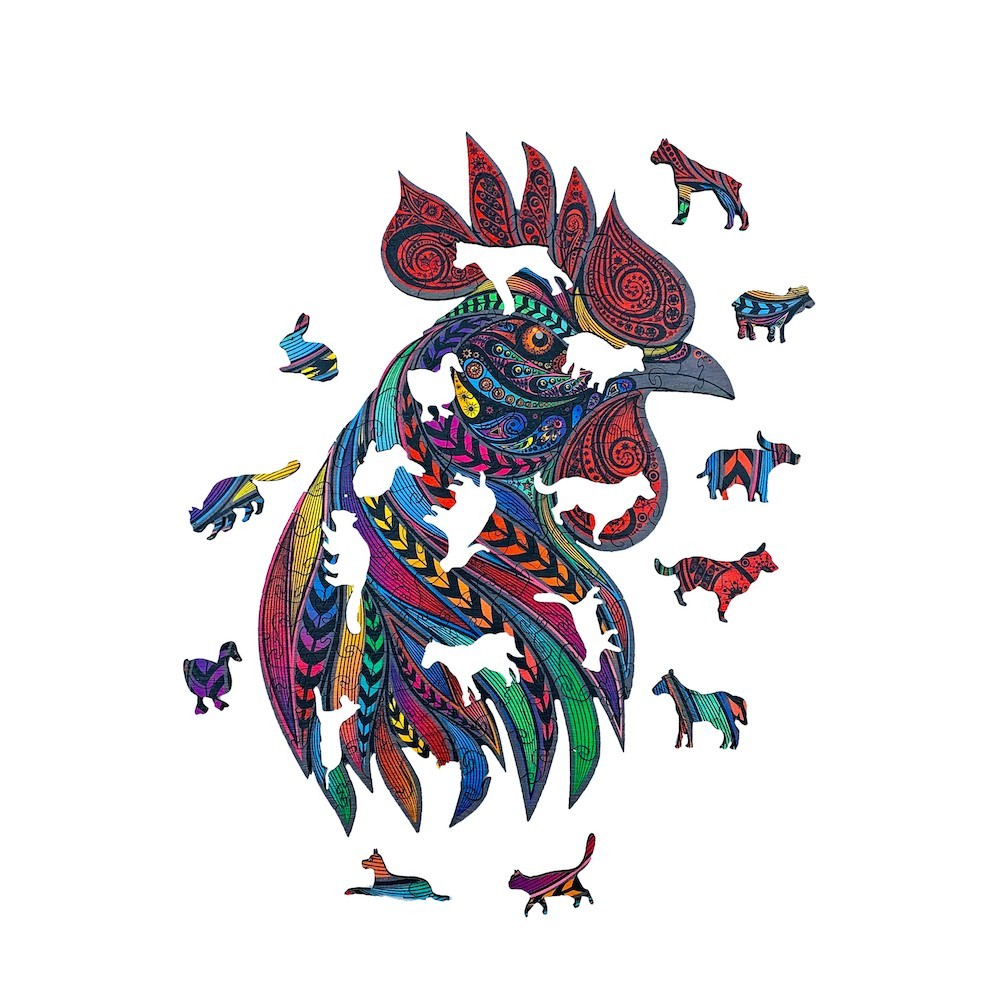
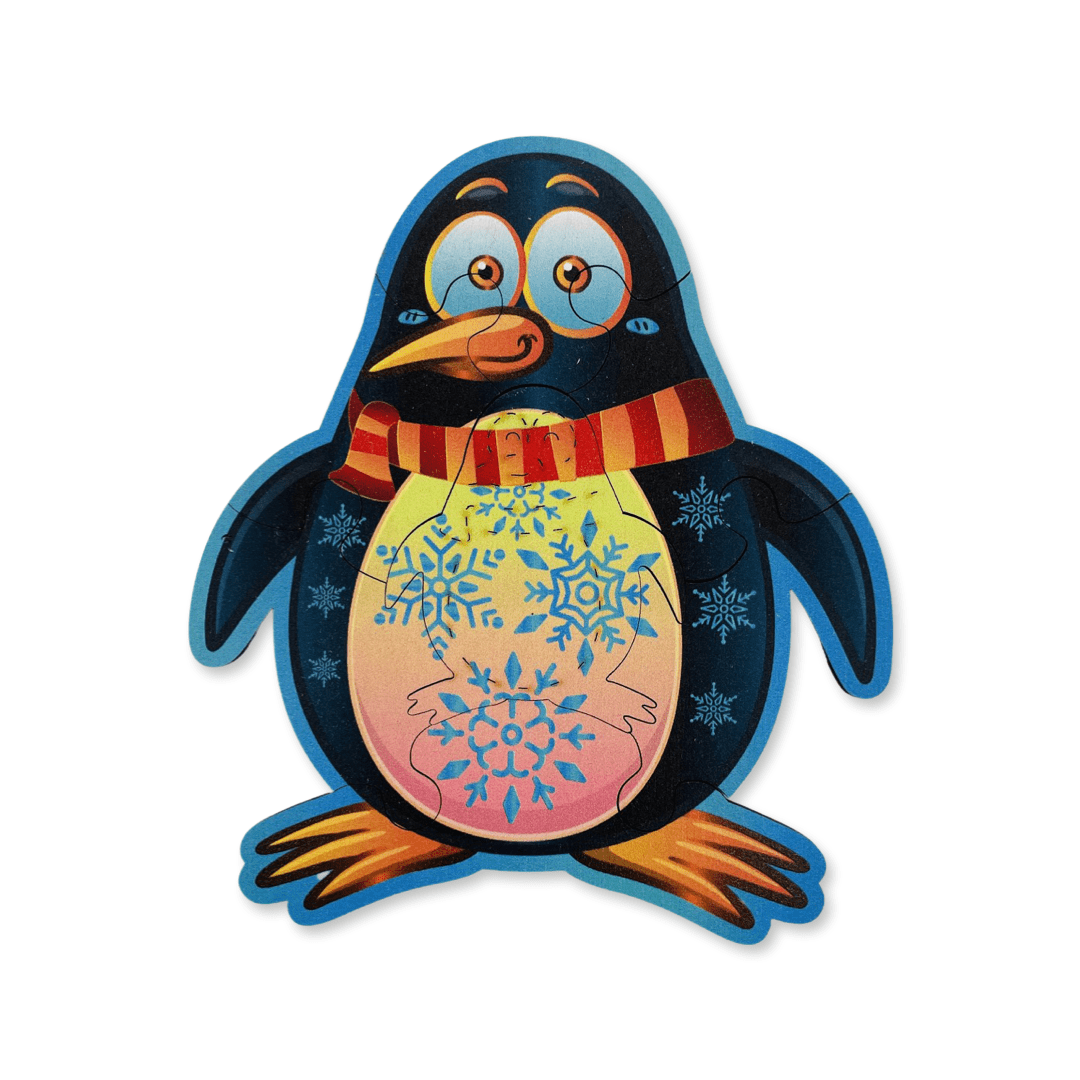
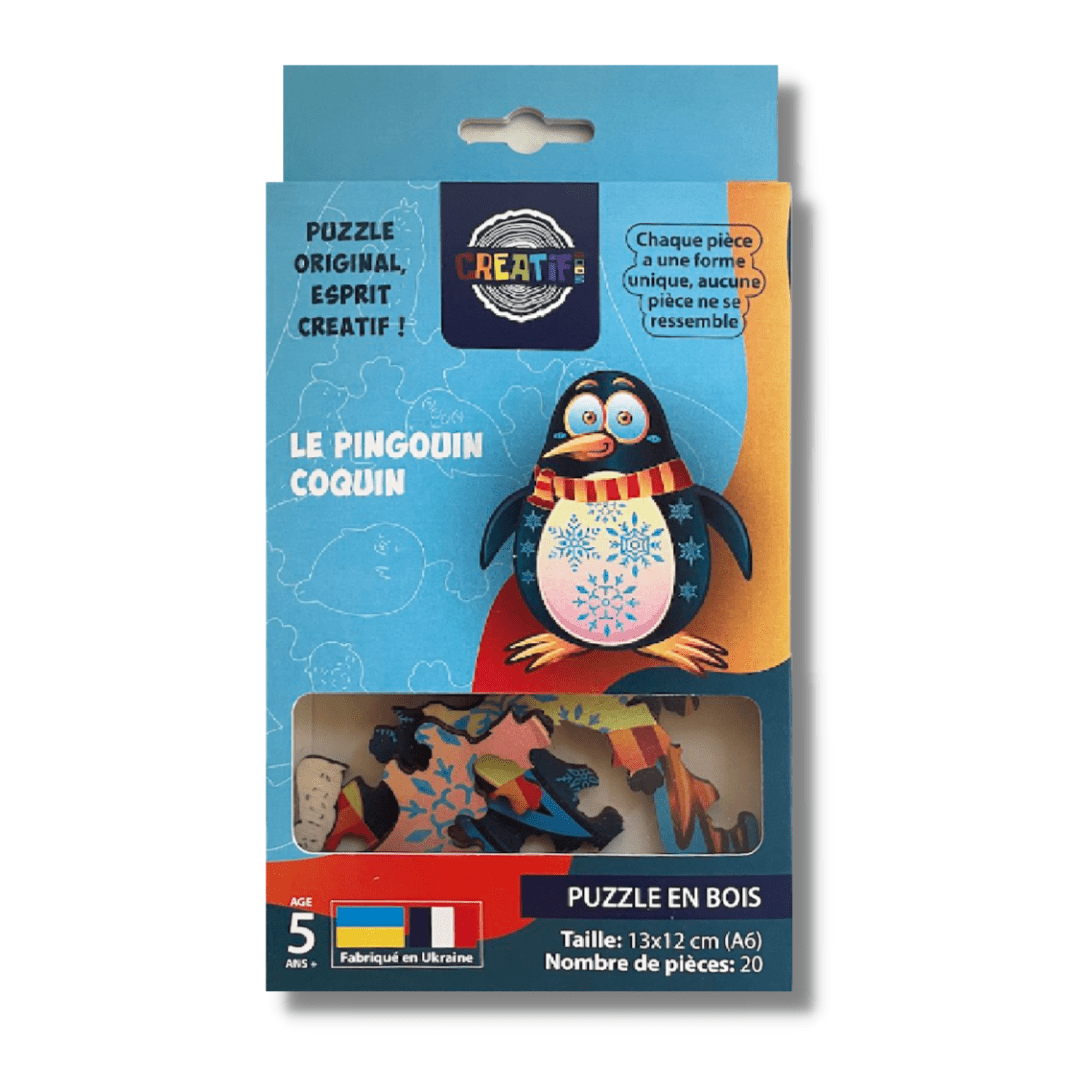
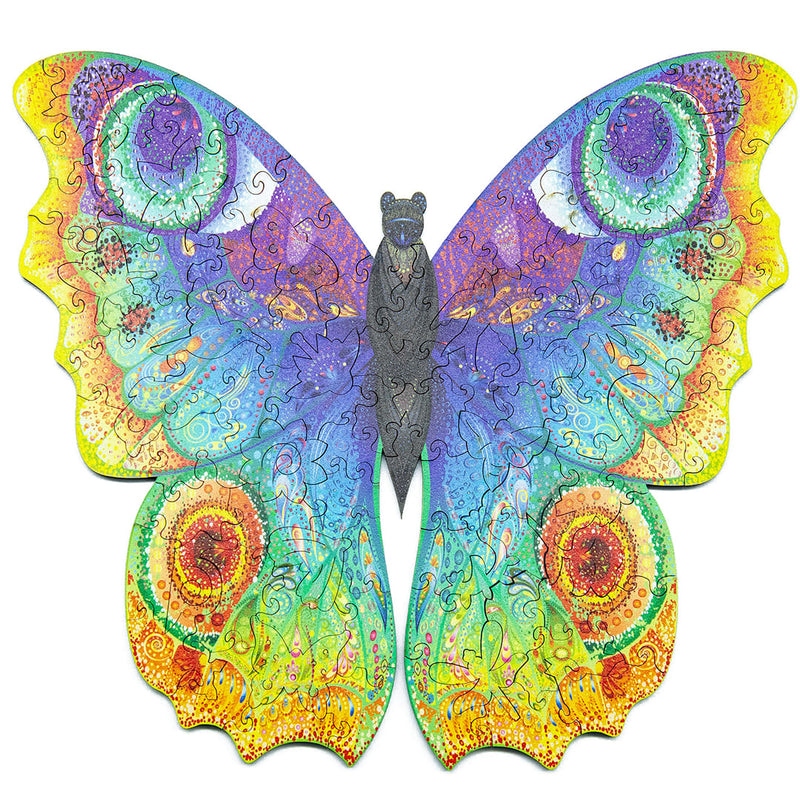

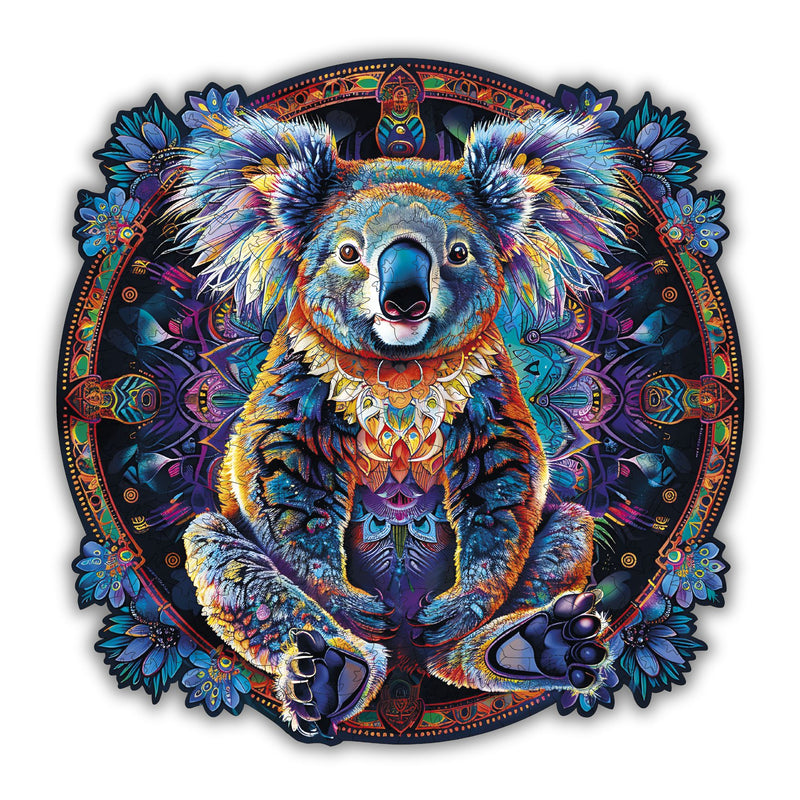
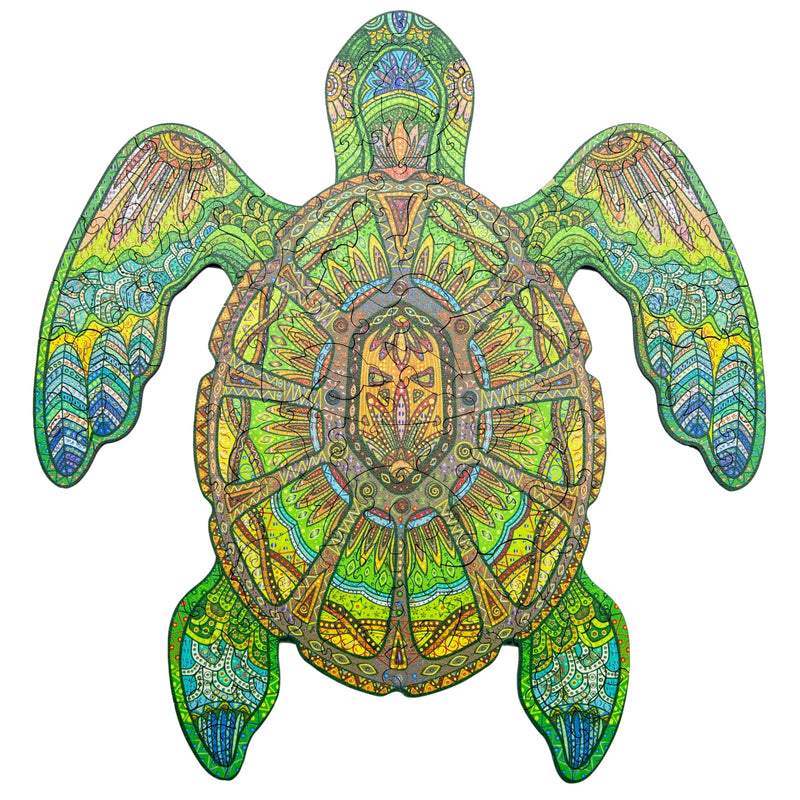
Birds in flight, birds at rest
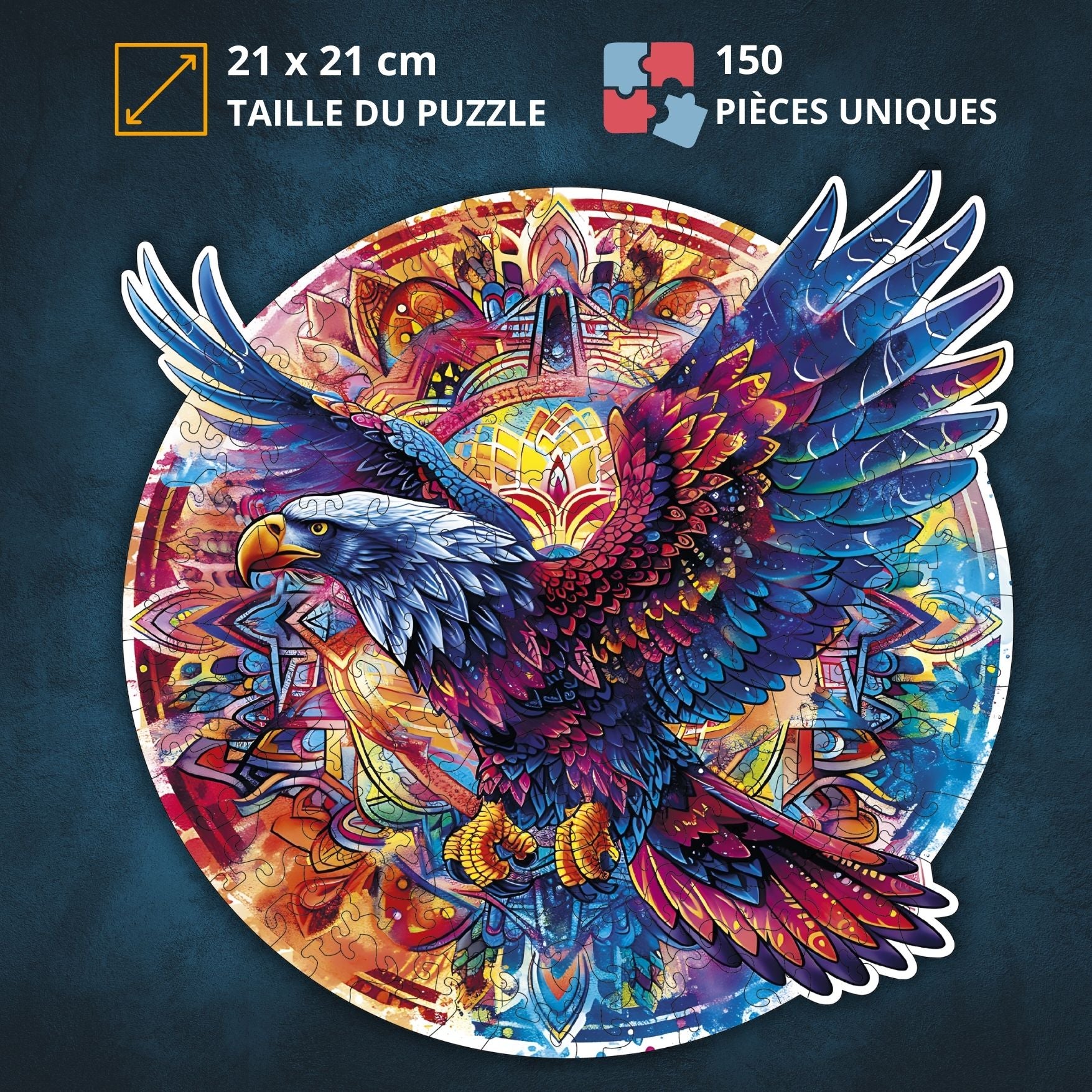
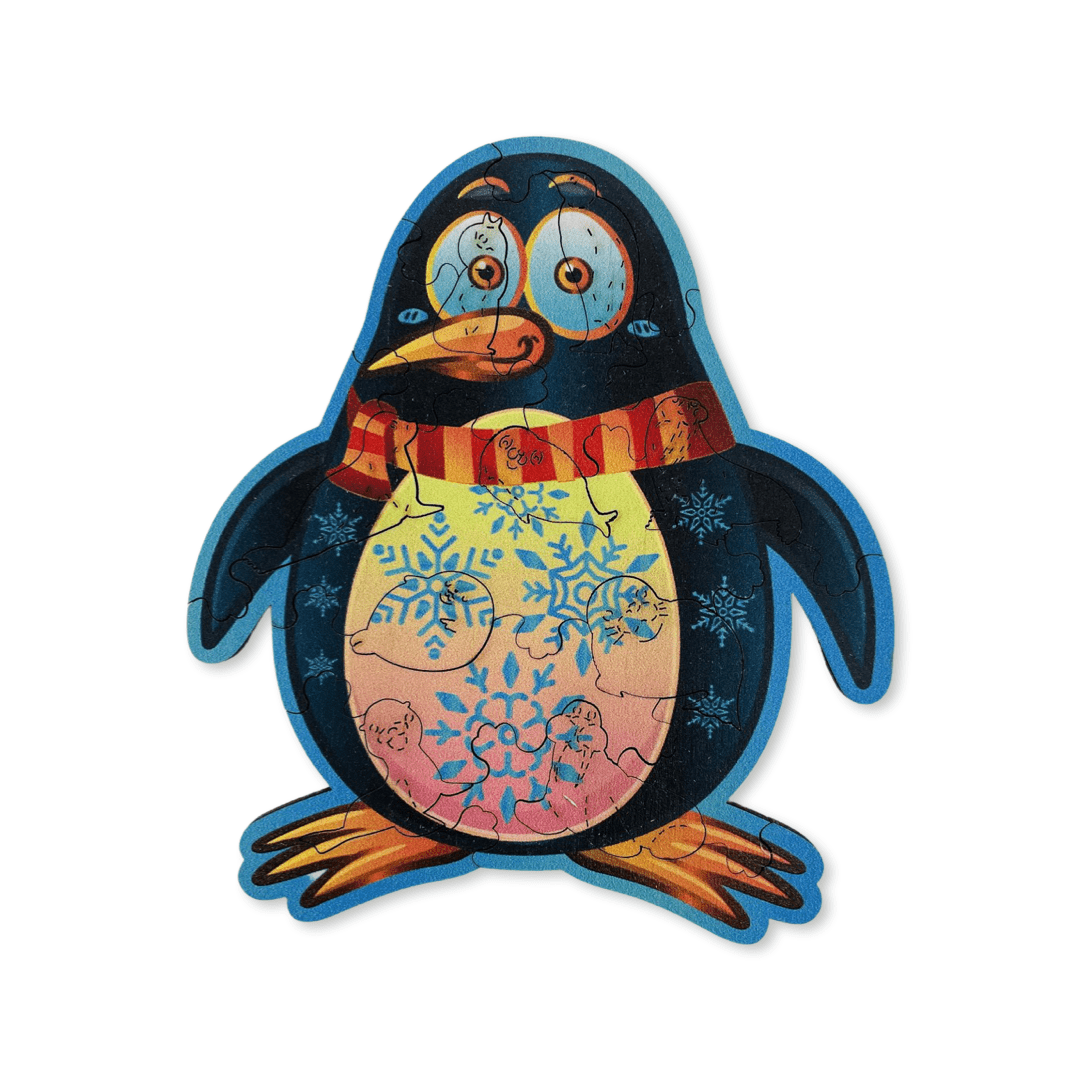
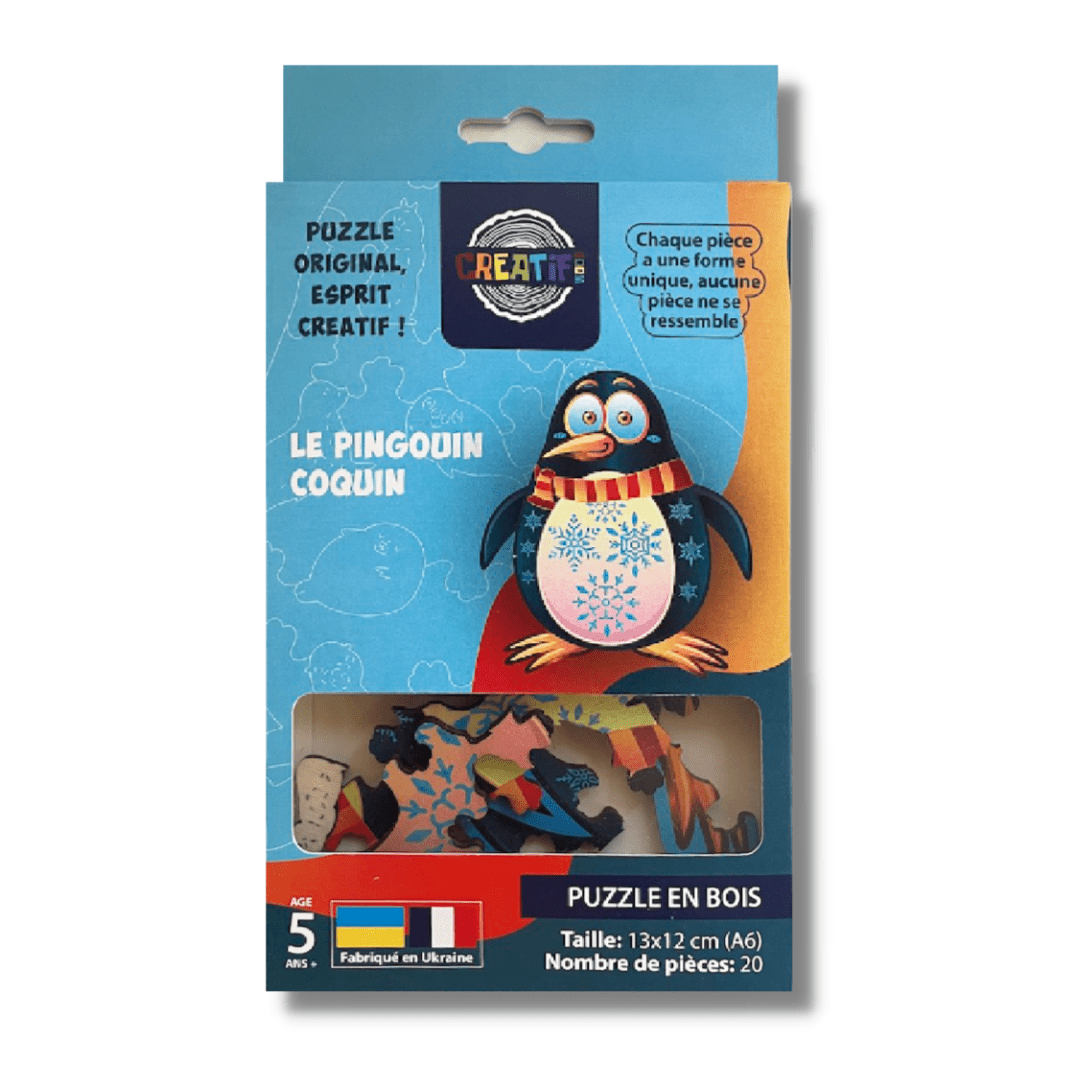
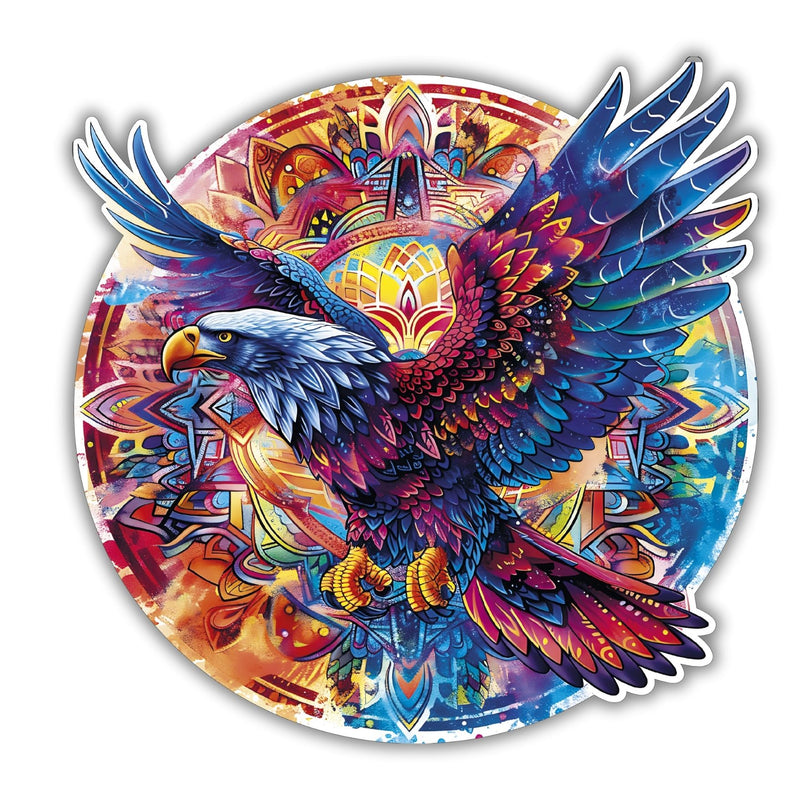
The category splits down the middle. Four designs are caught with wings open – the phoenix rising, the owl swooping with wings thrown wide, the parrot flaring to land, the eagle spread across its disc – and they carry the widest, most irregular outlines we cut. The rest are portraits and postures: a rooster drawn as a head in profile under a cascade of neck feathers, two peacocks trailing their trains, perched owls, and a pair of small cartoon penguins for children.
An open wing produces an outline a seated animal never will: a leading edge that runs unbroken for most of the board's width, and feathers laid in rows along it.
What do the feathers do to the cut?
Ornamental plumage is the common vocabulary across these designs. Each feather is drawn as a separate segment with its own pattern inside, and the segments repeat along the wing in rows that change gradually rather than abruptly.
This is the reason bird puzzles behave differently from, say, a big cat. On a lion the difficulty is a mane of near-identical strands; on a bird the feathers vary in size and angle as they run outward from the shoulder, so they can be ordered by position along the wing rather than sorted into a single pile. It gives you a direction to work in that most of our other designs do not.
How do people build the winged designs?
On the flight designs, builders work the two wings as parallel tasks rather than one after the other. Because the body sits between them and the wings mirror each other roughly but not exactly, a piece rejected on the left is immediately tried on the right, and both sides grow at similar speed. Pieces get passed from one side to the other rather than returned to the pile.
The head and the eye go in first on every design here, being the only area with hard features on a board otherwise made of pattern.
How big are the bird puzzles?
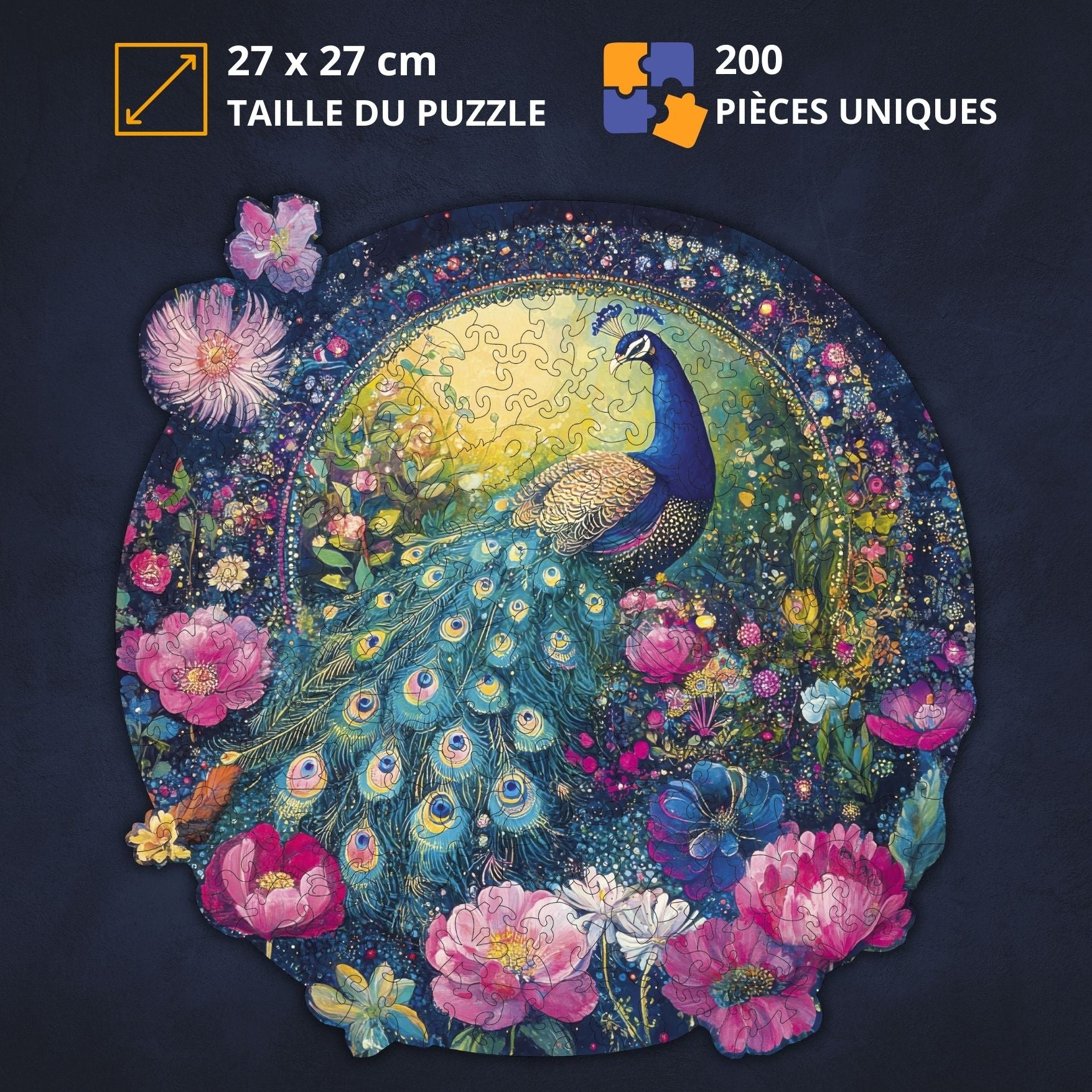
These designs span from a seven-piece penguin that fits in two hands to a phoenix of nearly two hundred pieces and over forty centimetres across. The visual style gives no clue about the size, so check the piece count and dimensions on each product page rather than assuming.
Two of the birds are round boards – the Liberty Eagle and the Peacock Garden – where the bird lives inside a disc rather than standing free.
Why are there three owls?
The owl appears more than once in this collection, in different treatments. Its symbolism is genuinely split rather than settled: in Greek tradition it is the companion of Athena and stands for patient watchfulness, while Roman and mediaeval European sources treat it as an omen of death, and parts of Africa, India and Anatolia read it the same way. Both readings are well documented. If the puzzle is going to someone as a gift, the wisdom reading is the one most European recipients will have.
How do they look on the wall?
The flight designs are the hardest silhouettes in the collection to place badly. The outline is wide and roughly symmetrical, so it centres naturally over a bed, a desk or a doorway, and the projecting wingtips keep it from reading as a solid block.