









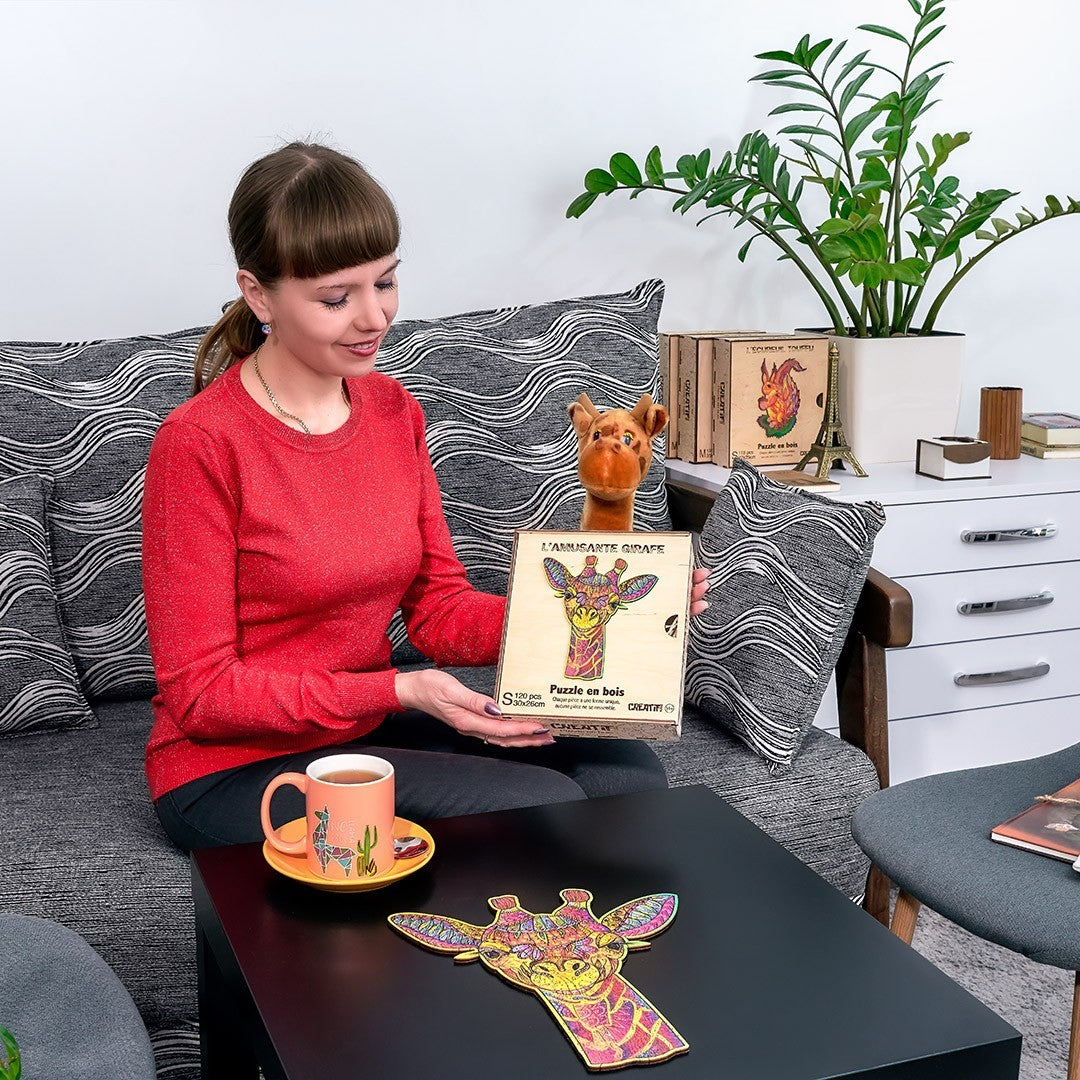

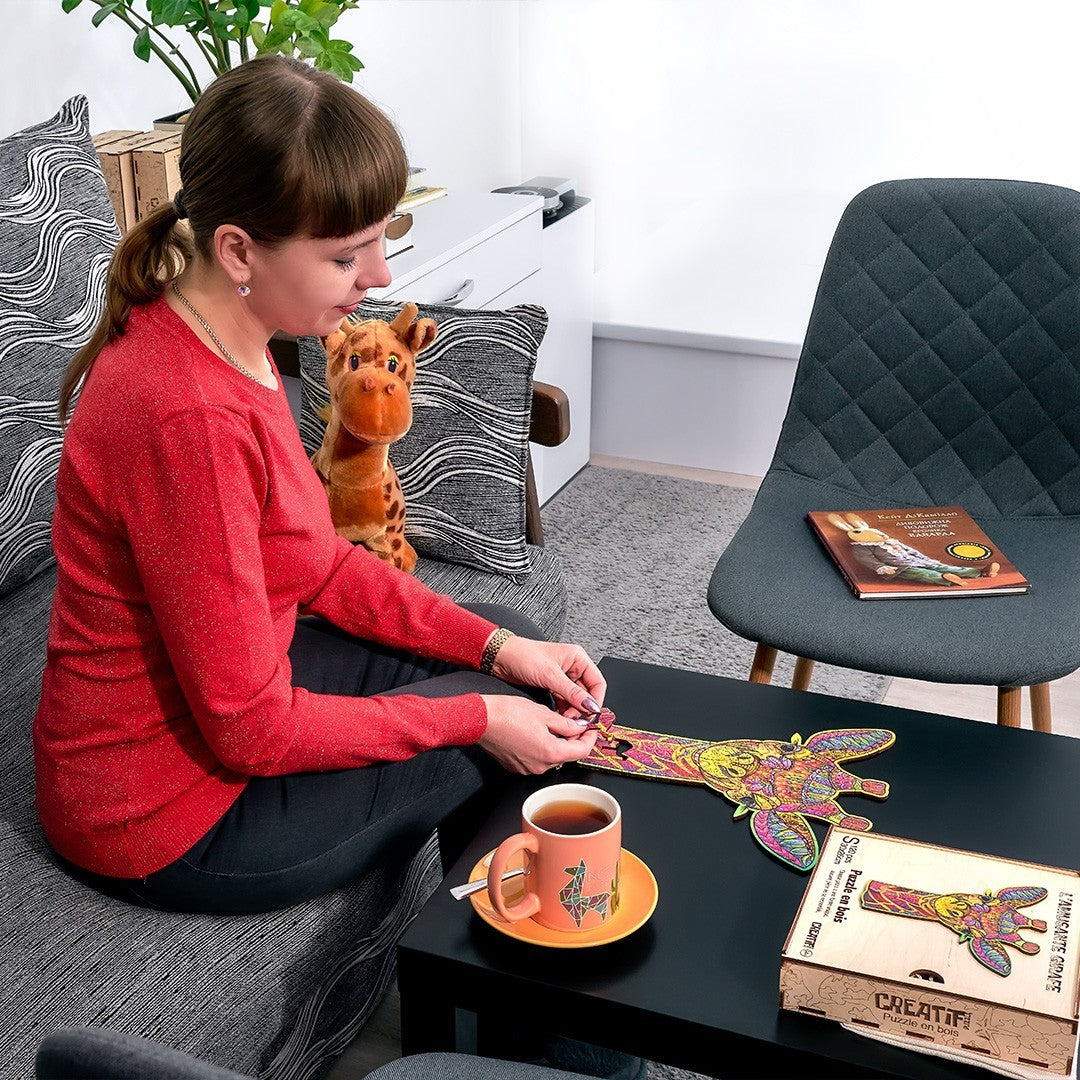


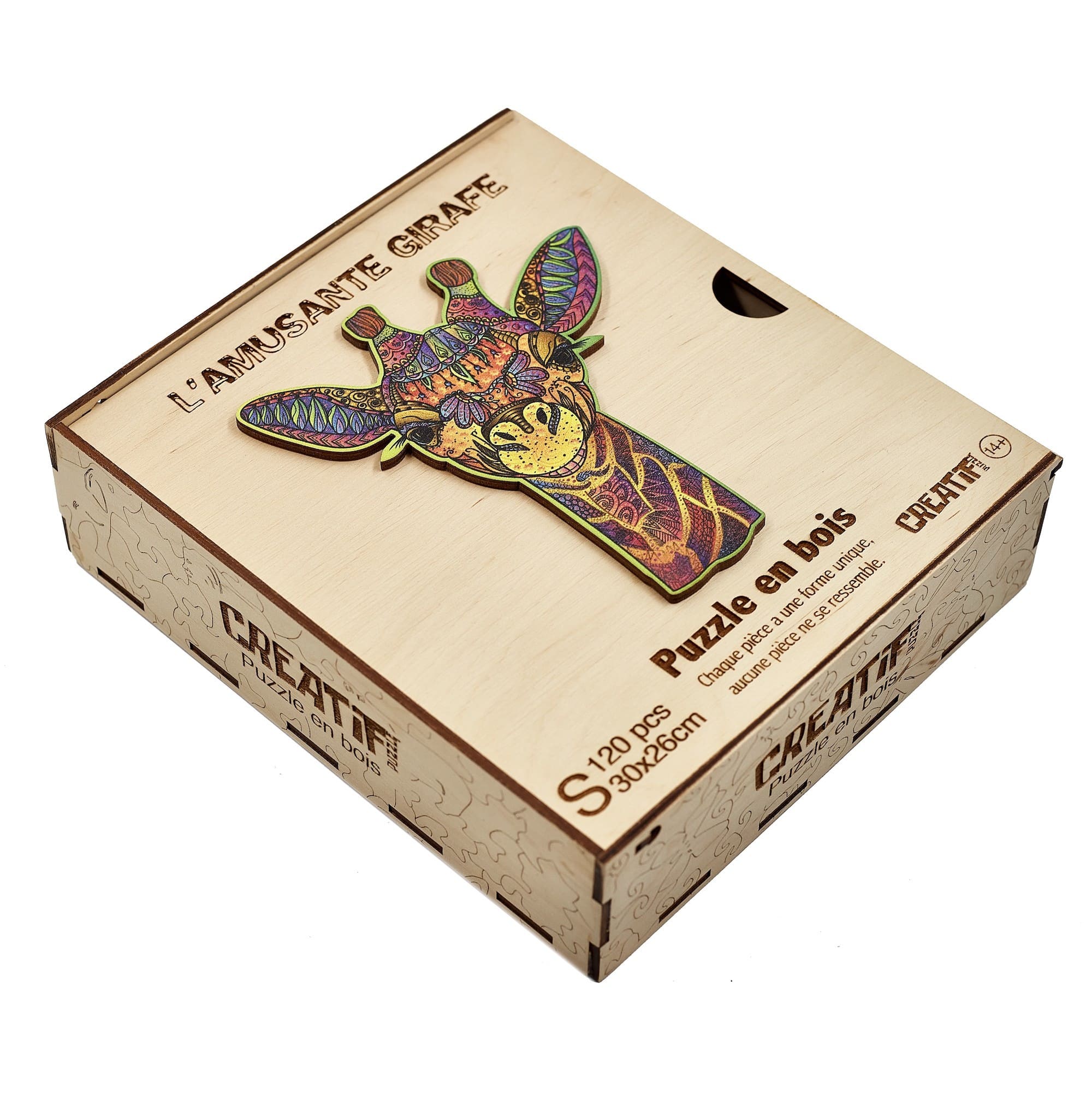
The Funny Giraffe Wooden Puzzle
A giraffe leaning down to look at you – 120 pieces with the savannah hidden in its head
Specifications
| Material | Wood |
|---|---|
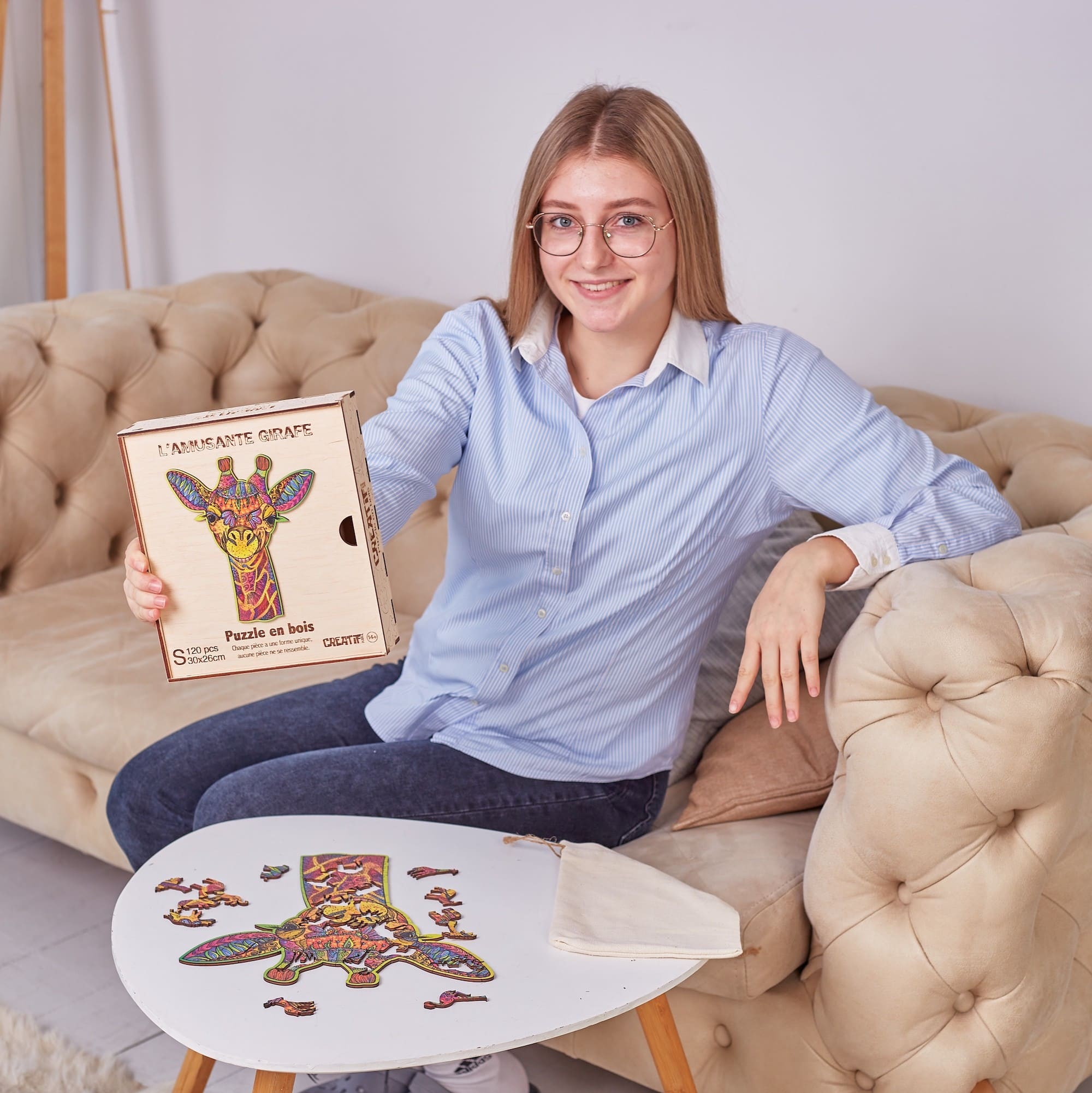
| Dimensions | 30 × 26 cm |
| Thickness | 4 mm |
| Pieces | 120 |
| Recommended age | 14+ |
| Made in | Ukraine |
Shipping
Every order ships from our fulfilment centre in France – never dropshipping. Orders are dispatched within 24 hours on working days; order before 10:30 and it leaves the same day. You’ll receive your tracking number by email at dispatch.
France: 2–4 working days – free home delivery from €40.
Rest of Europe: 2–10 working days, depending on destination.
Returns
You have 14 days from delivery to change your mind – no reason needed. Write to us first at info@creatifwood.com, then send the product back unused, in its original packaging.
Return shipping is at your charge; we refund the full order amount within 14 days, to your original payment method.
Received a damaged or wrong item? Contact us within 14 days with photos – we’ll make it right.
About this product
A giraffe looking down at you
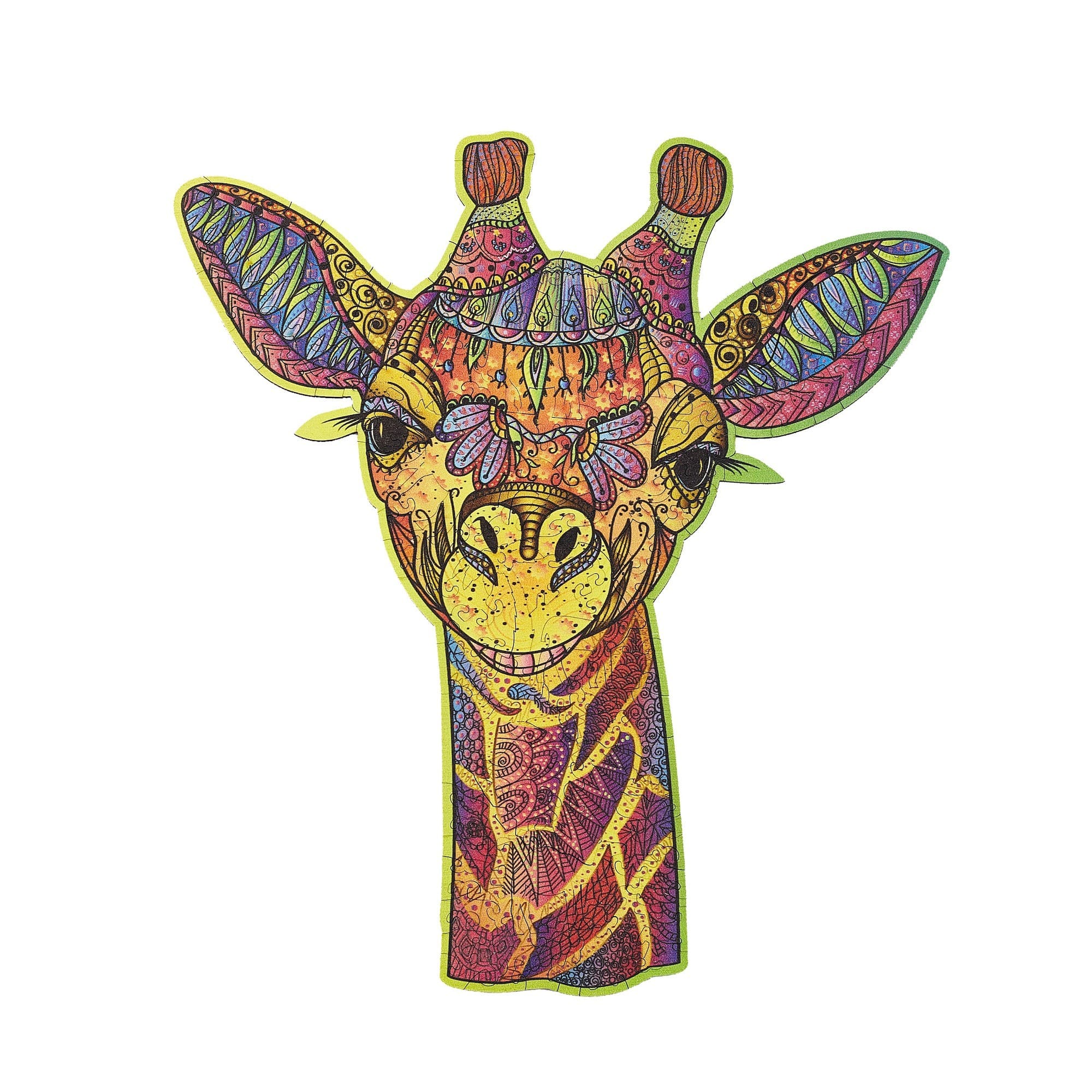
The head is frontal but tilted, so the animal appears to be leaning down rather than standing level. The ears splay wide to either side, worked in rose, lavender and teal, while the face runs gold and ochre with a burgundy neck below.
The eyes are the giveaway. They are drawn with long lashes and dark rims, and there is a distinct crease around the mouth that reads as amusement, which is where the name comes from.
Three treatments on one board
The ears carry long feathered strokes in cool colours. The face is dense zentangle in warm ones, crowned by a beaded band across the brow with pendant drops hanging from it and a flower at each temple. The neck below is different again: broad burgundy patches separated by gold lines, which is the giraffe's actual coat pattern rather than ornament.
Those three areas sort apart immediately, and each is built with a different method.
A savannah inside the head
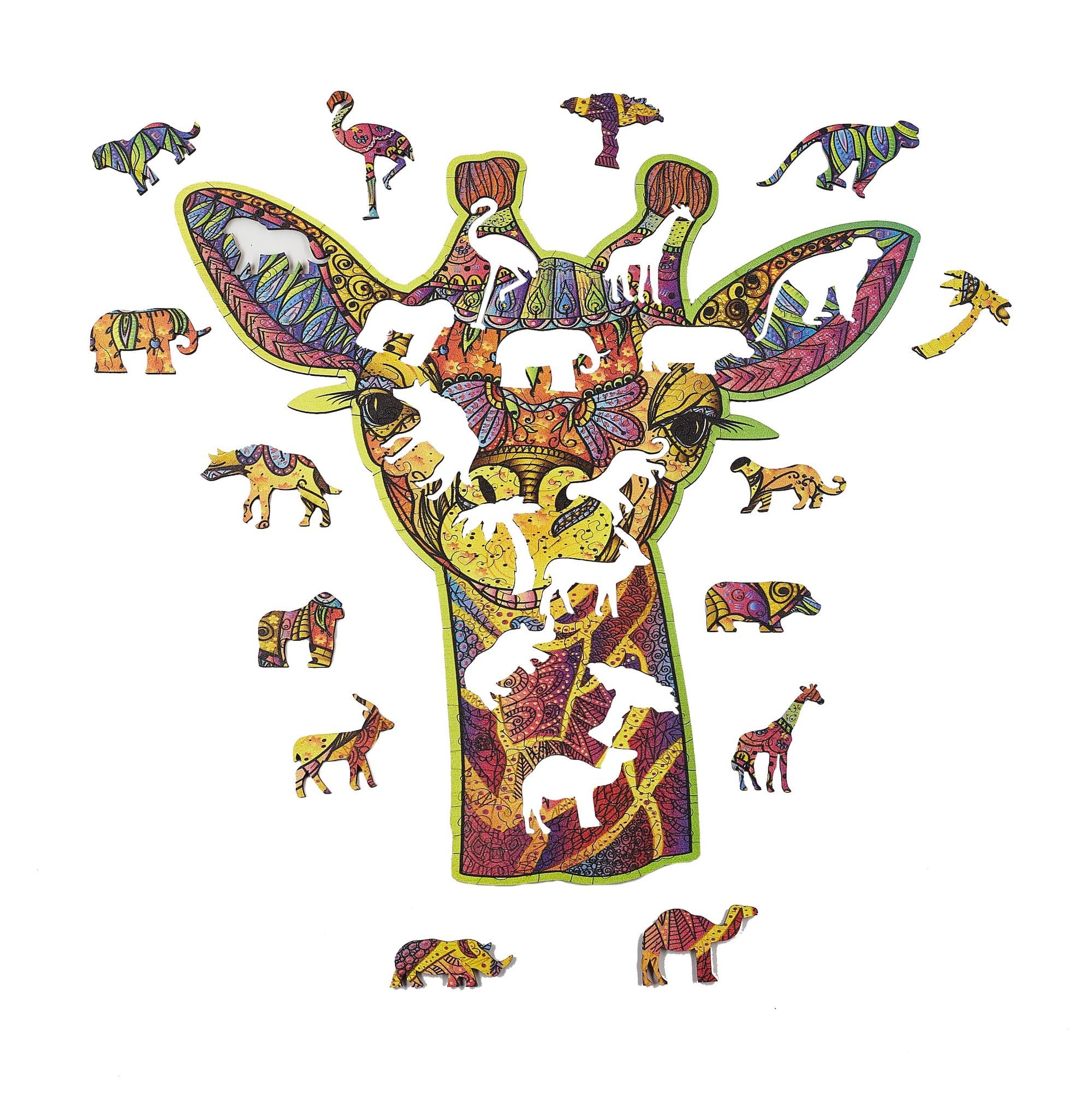
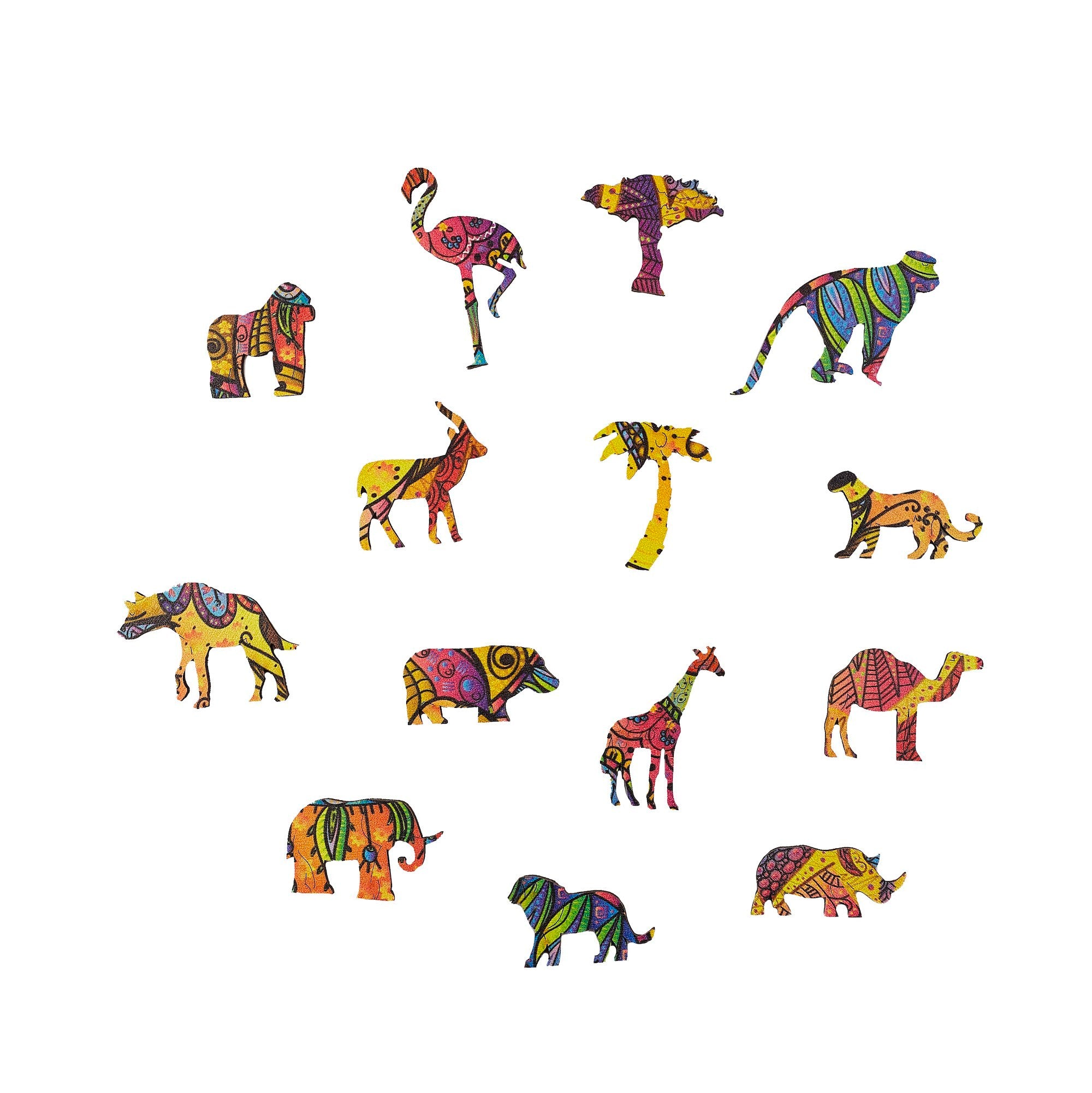
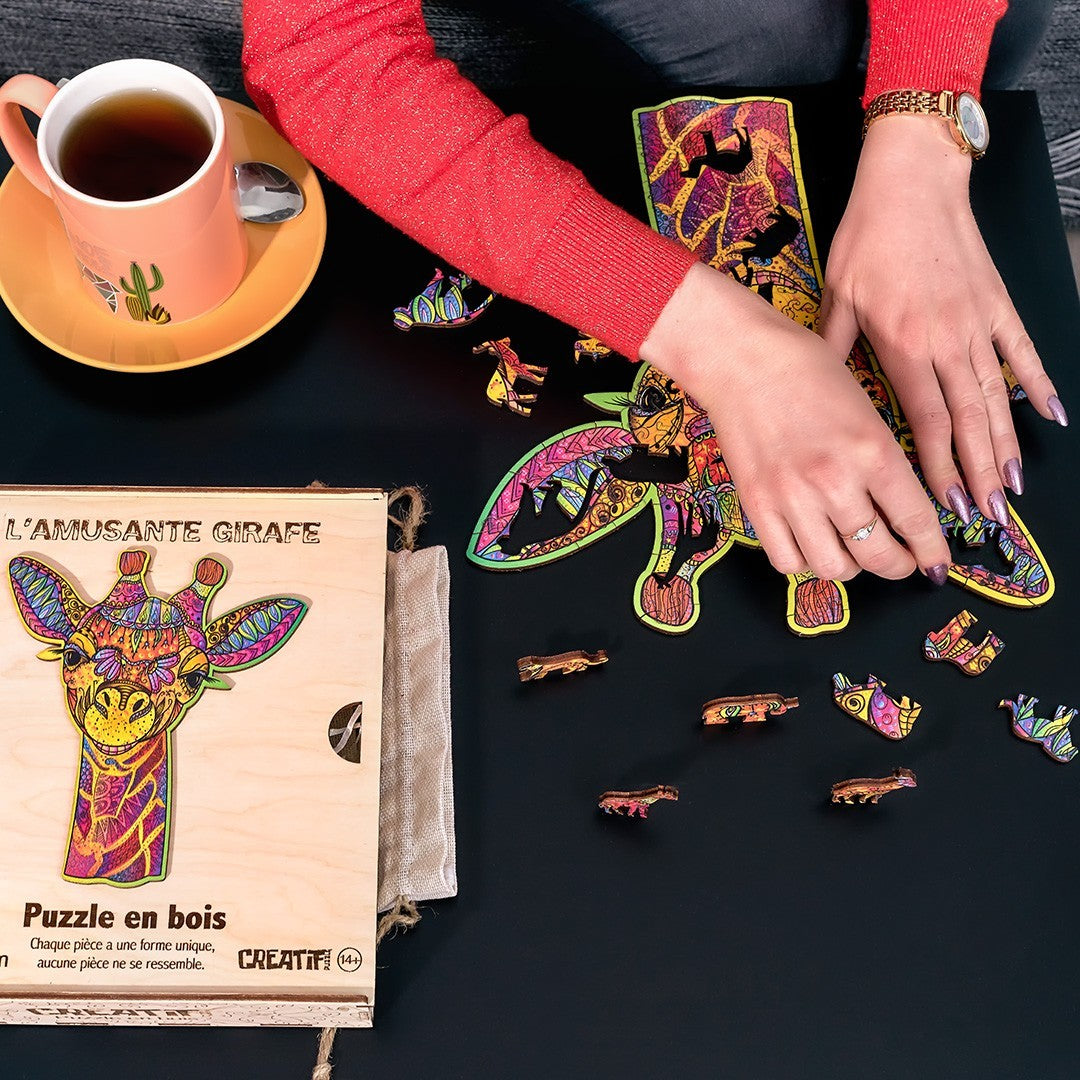
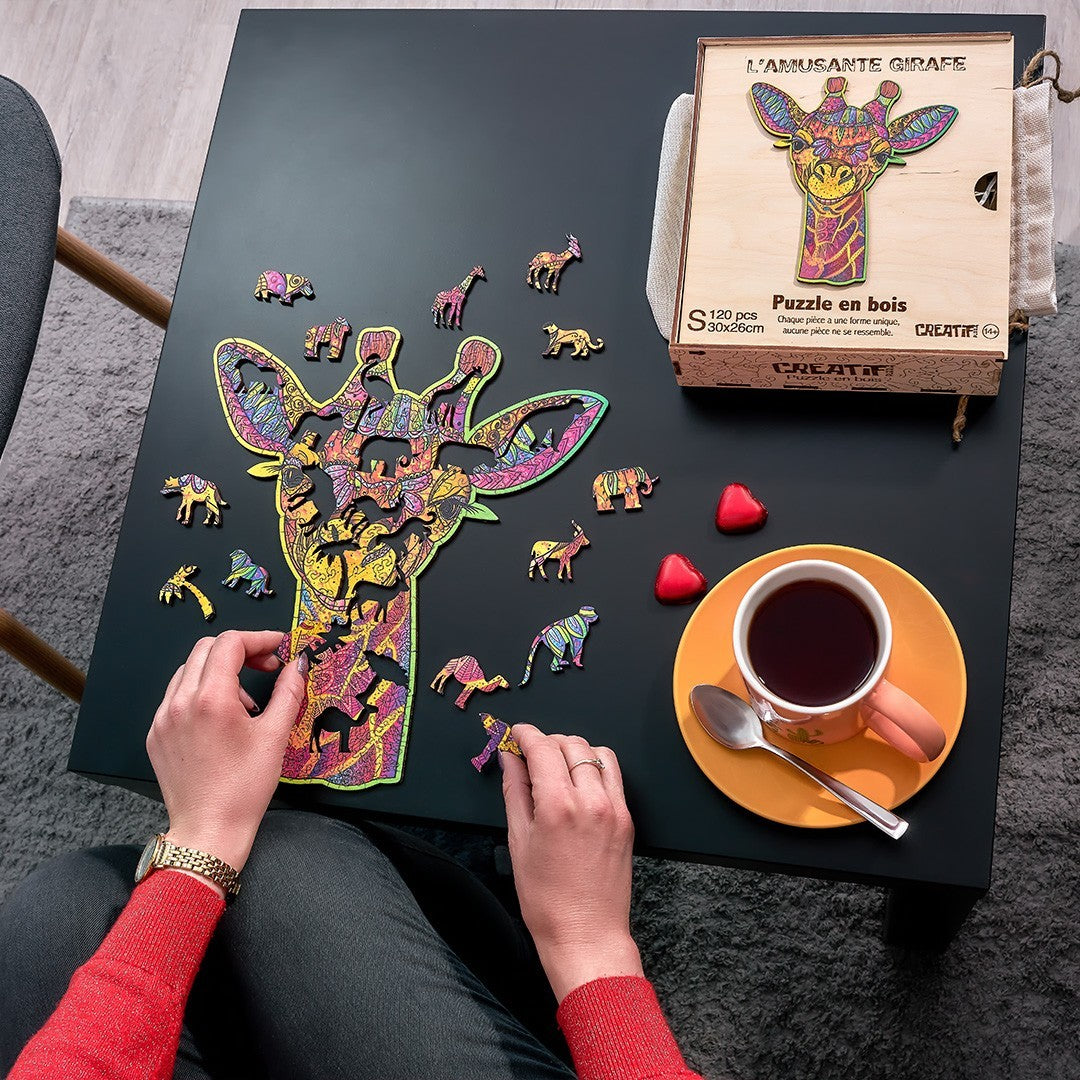
The figural pieces are the animals a giraffe shares ground with: a gorilla, a monkey, a rhinoceros, an elephant, a hippo, an antelope, a flamingo, a hyena, a camel, a palm tree, and a smaller giraffe.
They sit across the face and the neck rather than around the edges, and lifting them leaves clean silhouettes in the pattern – the half-built board reads as a giraffe full of holes shaped like the rest of the savannah.
Where it slows down
The neck. The coat pattern repeats: burgundy patch, gold line, burgundy patch, all the way down, and the patches are similar enough in shape that pieces from different rows are interchangeable at a glance.
The ears have the opposite problem – they mirror each other almost exactly, so a piece from the left will sit convincingly on the right until the direction of the strokes is checked.
Where to start
The eyes and the muzzle. They sit on the centre line, carry the only asymmetric detail on the board, and fix the head before either the ears or the neck is attempted.
Our craftsmanship
Made by our family, piece by piece
Every creatifwood puzzle starts as a sheet of birch plywood in our family workshop. We laser-cut every piece into its own shape – no two are alike – check each set by hand, and pack it in a gift-ready box. No production lines, no shortcuts – just a small family that loves working with wood, and takes it personally that your puzzle brings people together around the table.
Meet the family behind your puzzleFrequently asked questions
Why does this puzzle have no straight edges?
The outline follows the shape of the design itself, so the usual approach of building the border first does not apply. Most people start from the area with the strongest contrast – in animal designs, usually the eye – and work outward from there.
What are the animal-shaped pieces for?
They are called whimsy pieces, a tradition that goes back to Victorian puzzle cutters who added recognisable shapes on a whim while working. Parker Brothers made it a standard in 1908. They do not interlock the way ordinary pieces do, so the pieces around them hold them in place.
Is this harder than a cardboard puzzle of the same size?
Yes, for three reasons. There is no straight border to anchor from, the ornamental patterning repeats so colour sorting barely helps, and the piece shapes are irregular rather than a uniform knob-and-socket grid.
How long will it take?
Honestly: longer than you expect. With no border to anchor from, repeating ornament and irregular pieces, a wooden puzzle takes noticeably longer than a cardboard one with the same count. We think that is part of the pleasure – it is made to be savoured, not raced.
Can I glue it and hang it on the wall?
Yes. Use a glue made for puzzles rather than a general craft adhesive: it runs into the joints and dries as a thin clear film that protects the face. We stock the Cléo'Puzzle glue-varnish, rated for cardboard, wood and MDF, with a precision nozzle for boards that have no straight edges. Work in thin coats and let each one dry. Gluing is permanent – if you would rather rebuild the puzzle one day, or keep the front matt, dry adhesive film on the back is the alternative. Once sealed, the board can be framed or hung as it is.
Why does it smell of wood when I open the box?
Laser cutting leaves a light trace of scorching on the edges. We clean the pieces before packing, but a faint smell of cut wood in the first days is normal and fades.
Which age is it suitable for?
It is shown on each product page under Specifications. Most designs in this range are marked 14+, and a few simpler ones are suitable from 3.
What if a piece is missing or broken?
Write to us with a photo and we will send a replacement. Details are on our Missing Pieces page.