







Insect Wooden Puzzles
Filters
7 products




Three butterflies and a handful of small creatures
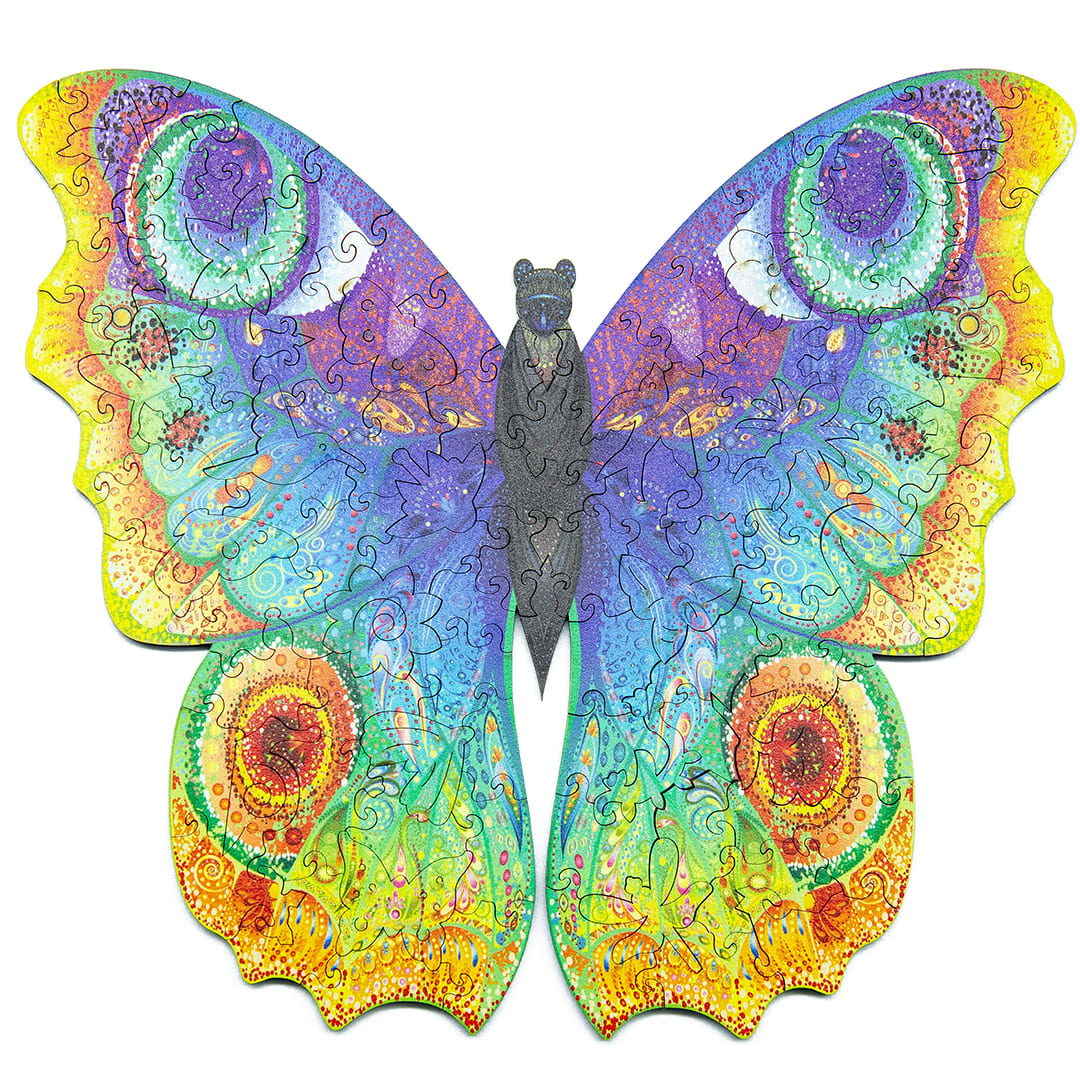
The butterflies are the reason this collection exists. An open wing is symmetrical, it is the widest shape an animal makes, and it is entirely pattern – which means a butterfly puzzle is almost pure ornament held in a recognisable outline.
Alongside them sit smaller designs drawn with faces rather than patterning, meant for younger hands. The two groups have very little in common beyond the subject, and the piece counts say so: from seven pieces up to a hundred and seventy-five.
Why is a mirrored butterfly harder than it looks?
Every butterfly here is mirrored down the centre. A piece from the left wing has an exact counterpart on the right, identical in colour and pattern, differing only in which way it curves.
They will not fit each other's slot, but they look interchangeable in the pile, and there is no way to tell them apart except by orientation. That is a slower kind of checking than colour sorting, and it is why a 175-piece butterfly takes longer than a 200-piece animal.
The body down the middle is the exception. It is the only part of the board with no mirror image anywhere, which makes it the place to start.
How do the three butterflies differ?
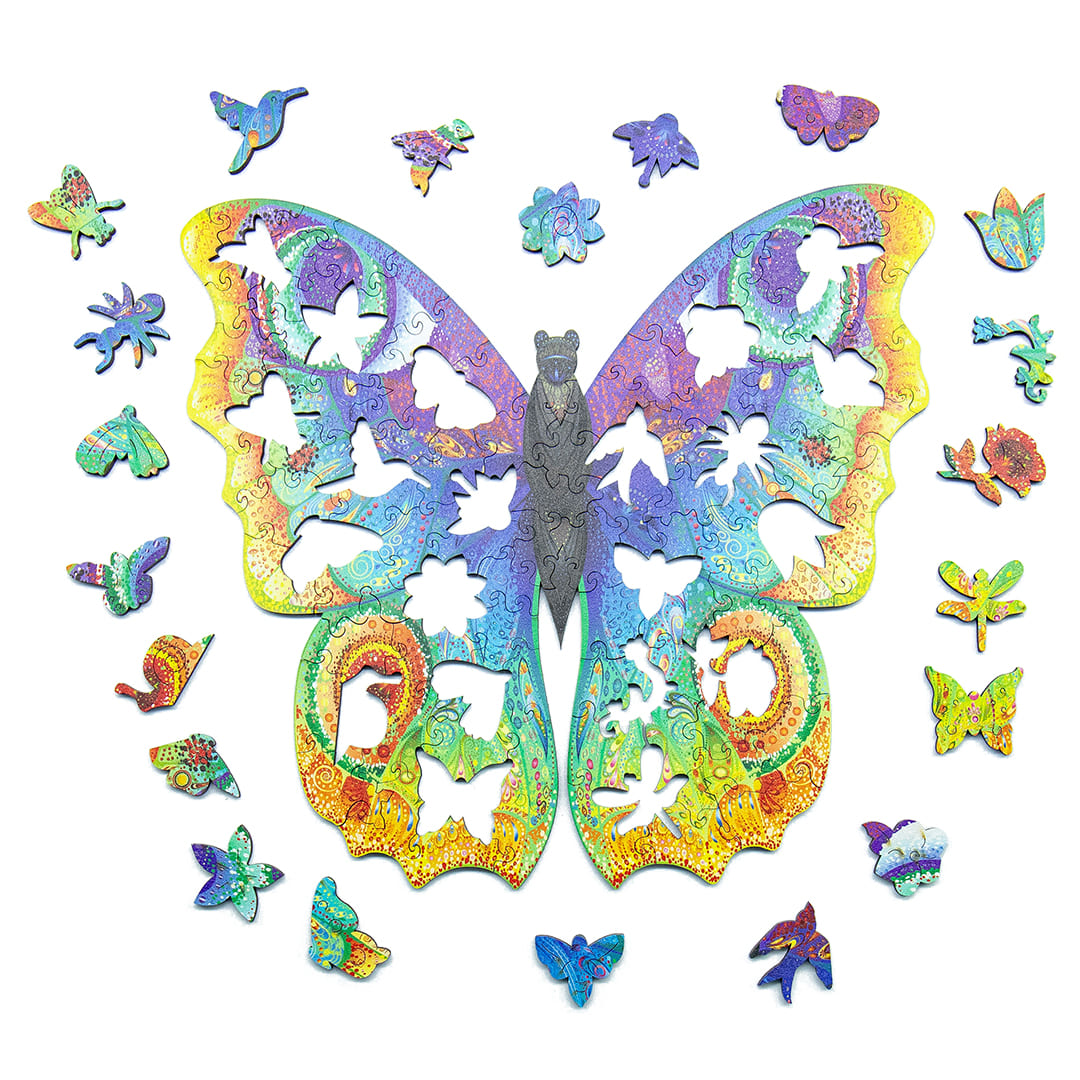
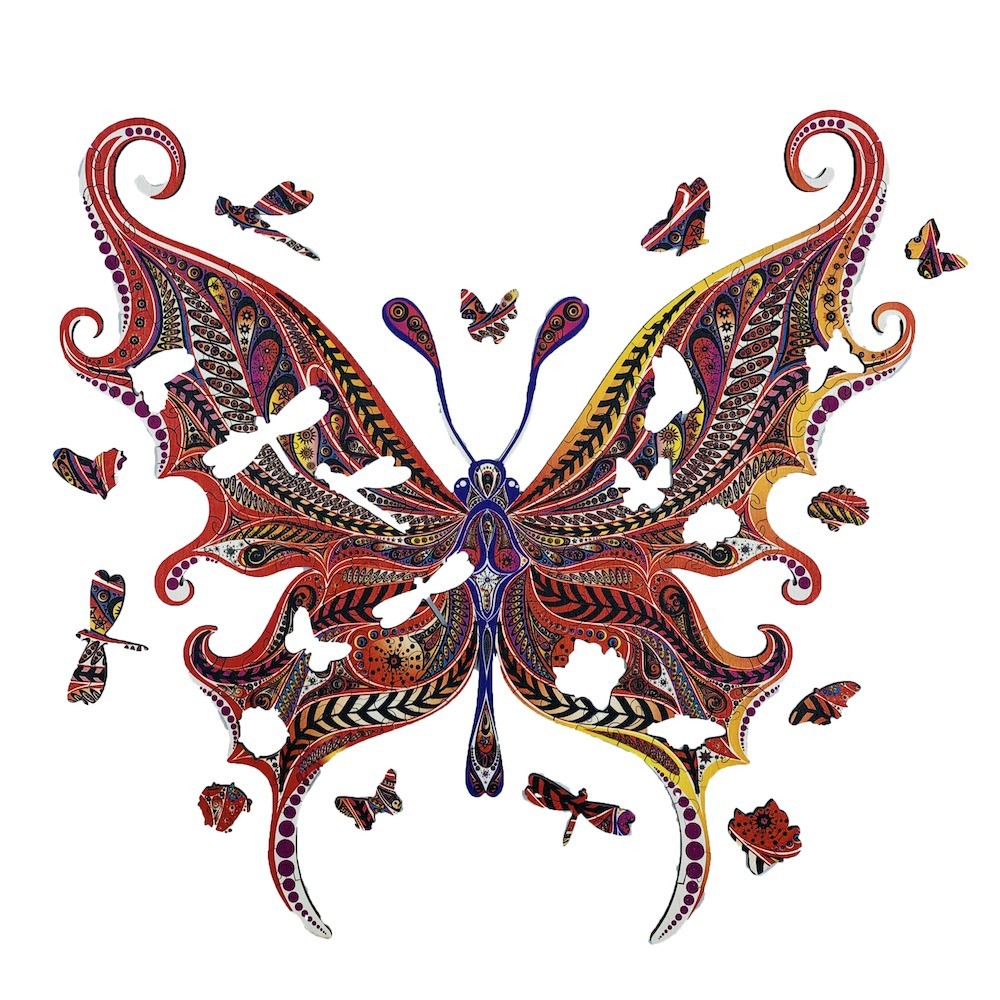
The Illusionist is the largest at 36 × 37 cm, and the most open: the wings are cut through with gaps so the outline reads as lace rather than as solid shape, with smaller butterflies and dragonflies scattered beyond the wing edges as separate pieces.
The Luminous Butterfly is dense where that one is open, with concentric eye markings and a full-colour spectrum running from yellow at the base through green and blue to violet at the tips.
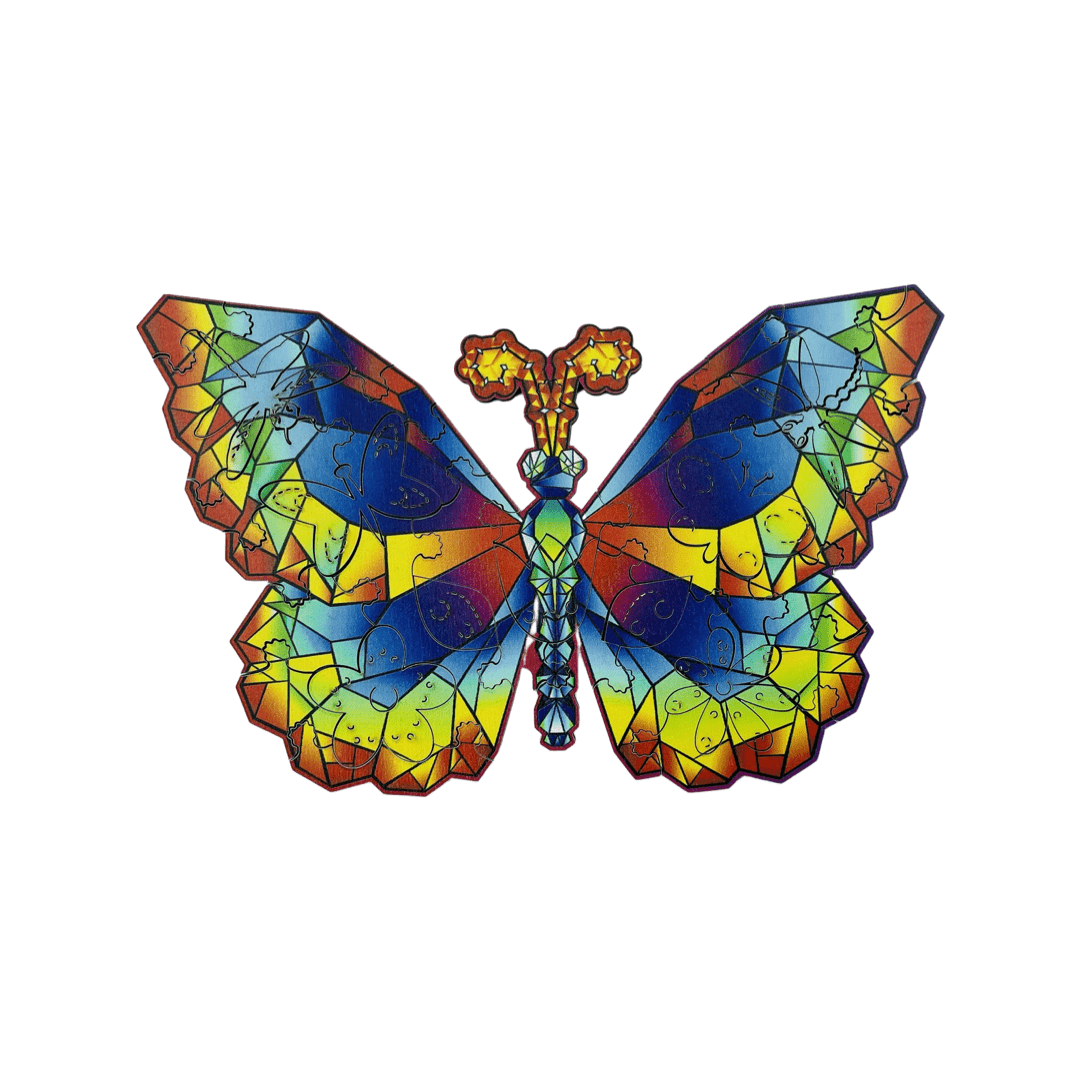
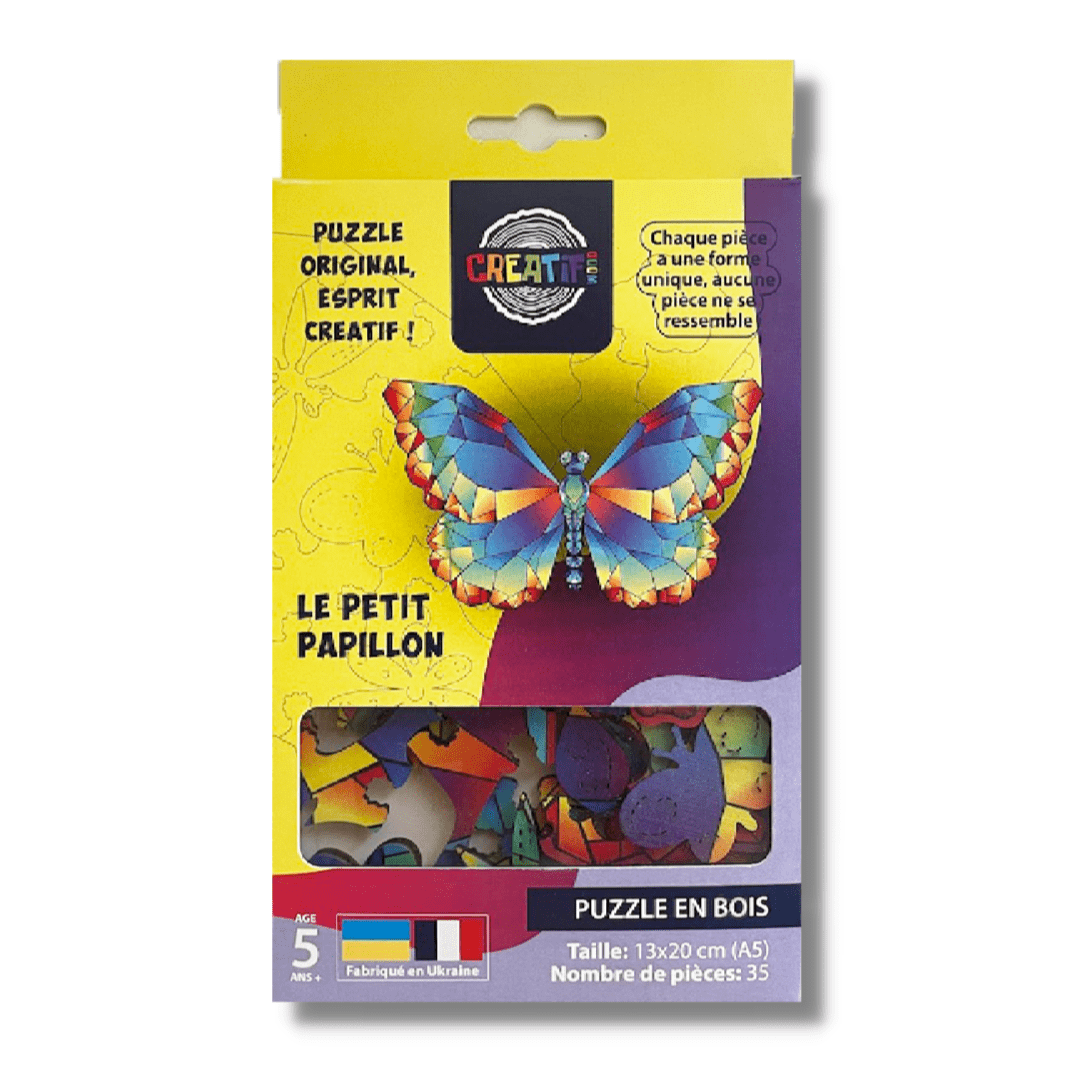
The Little Butterfly is the smallest and the boldest, worked in flat panels of blue, green and yellow with hard boundaries between them, closer to stained glass than to ornament.
Which insect puzzles are for children?
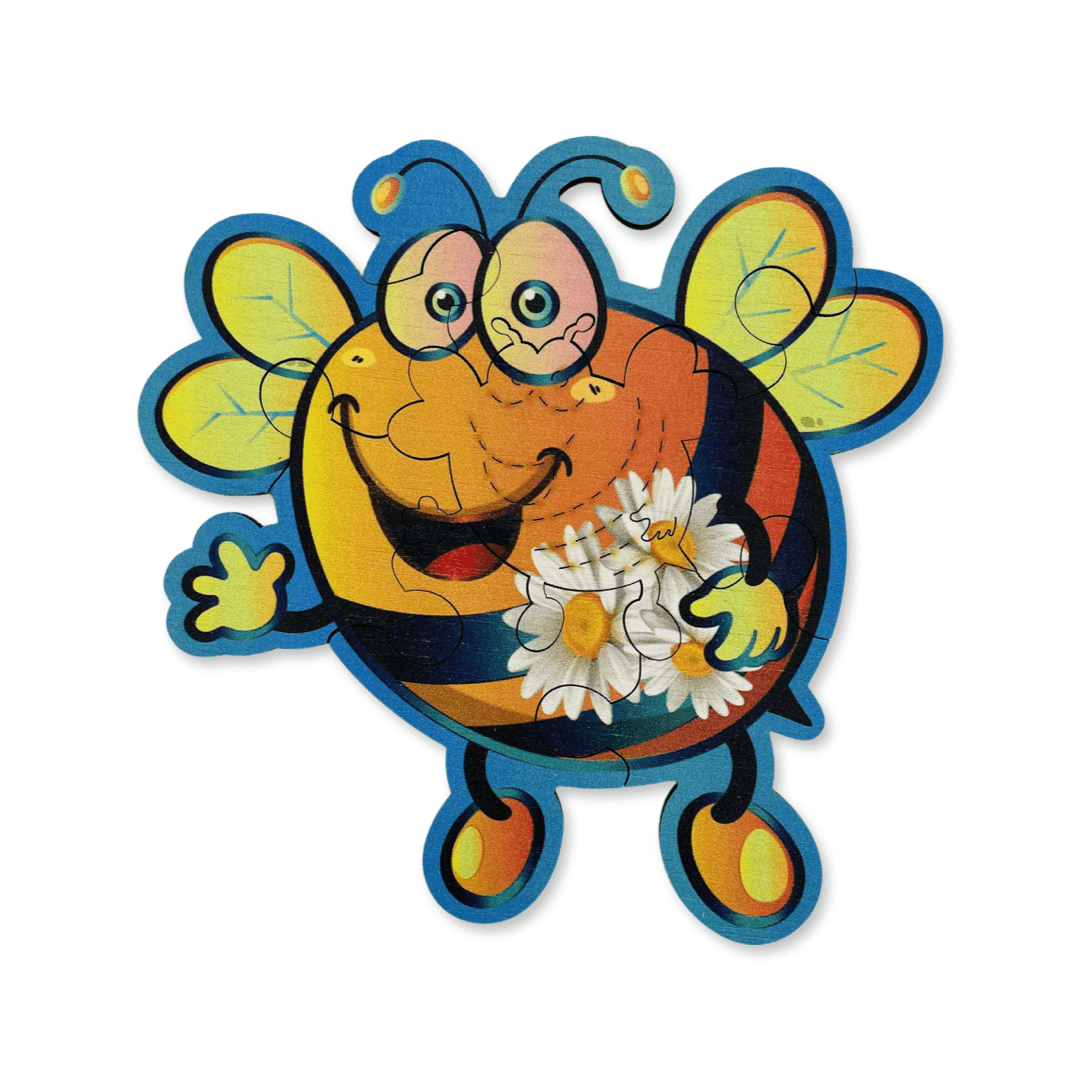
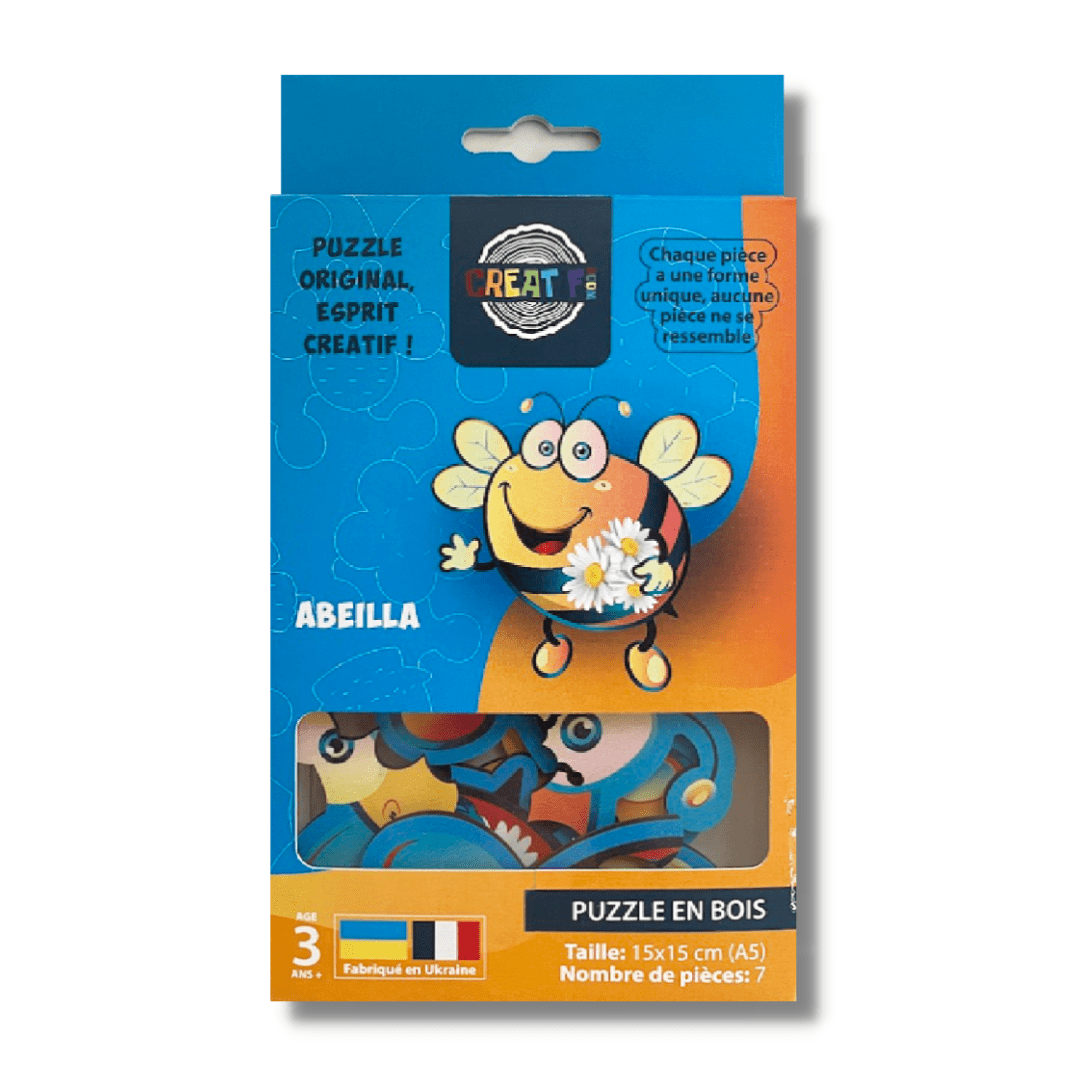
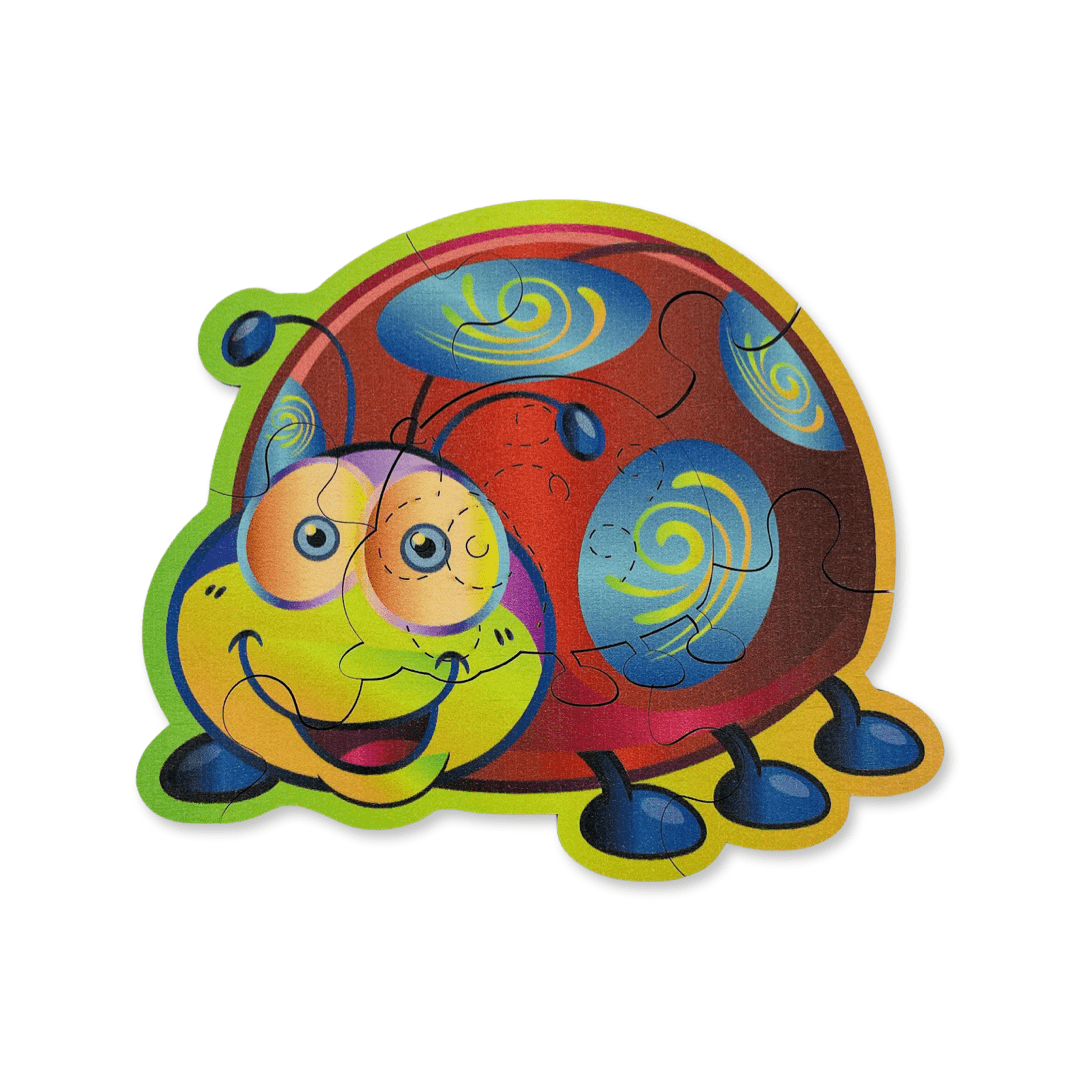
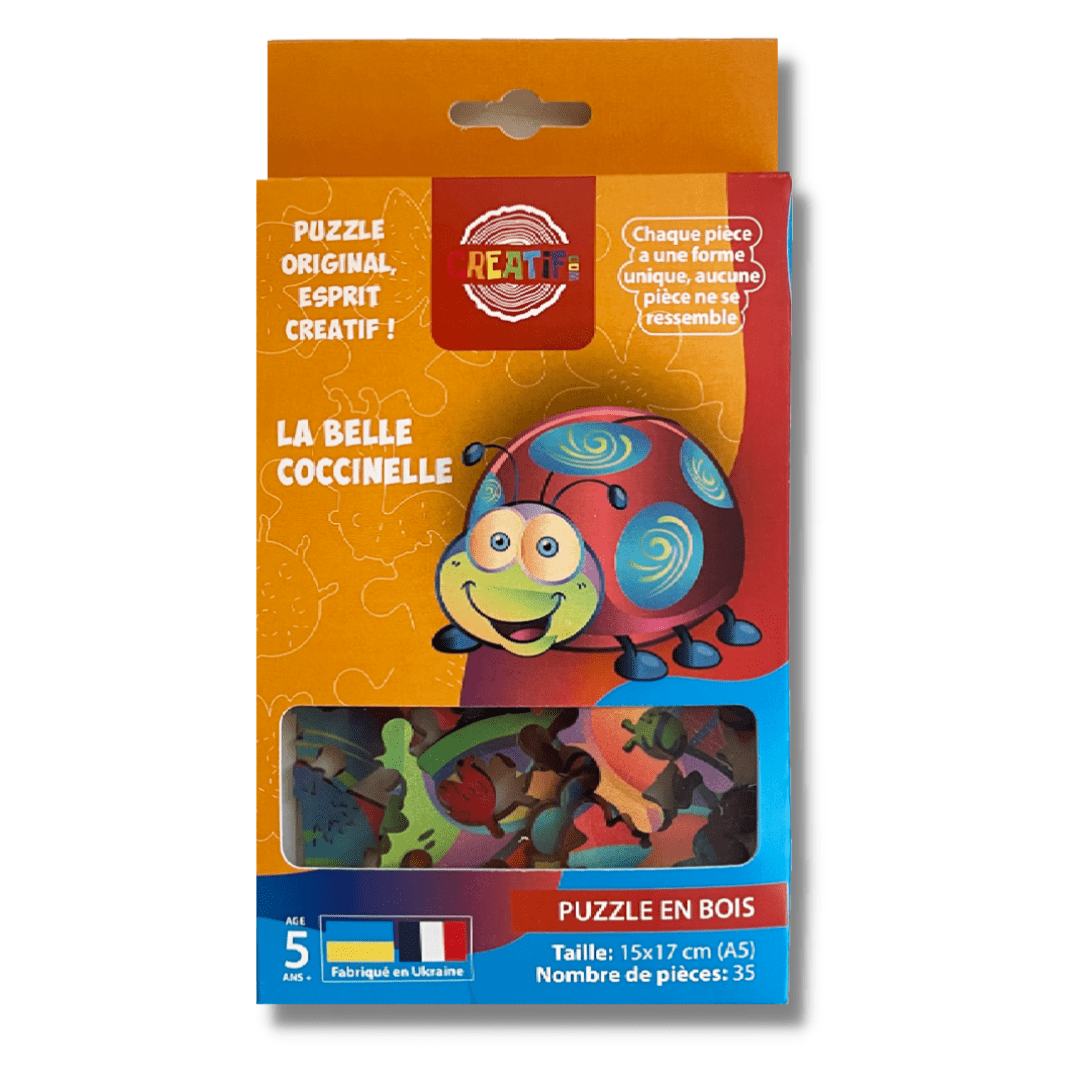
The bee and the ladybird designs have faces, thick outlines and seven to thirty-five pieces. They are cut for children who are learning that pieces go together at all, and the shape does the teaching: a bee-shaped board tells a child what it will be before a single piece is placed.
Age guidance is on each product page and it matters here more than anywhere else in our catalogue, since the same collection holds a seven-piece board and a 175-piece one.
How do people build a butterfly puzzle?
Butterfly puzzles get built as two halves rather than one board. Because the wings mirror each other, builders naturally sort into a left pile and a right pile early on, then work both outward from the body at the same rate, testing each rejected piece on the opposite side before returning it to the pile.
That is not how any other shape in our range is assembled, and it is the reason people who have built one butterfly tend to buy another.
How do they hang on the wall?
An open wing is the widest silhouette we cut, and the symmetry means these hang centred without looking placed. The Illusionist in particular needs clear wall on both sides: the pieces that sit beyond the wing edges are part of the composition, and crowding them against a shelf loses the effect.