







Landmark & Nature Wooden Puzzles
Filters
10 products
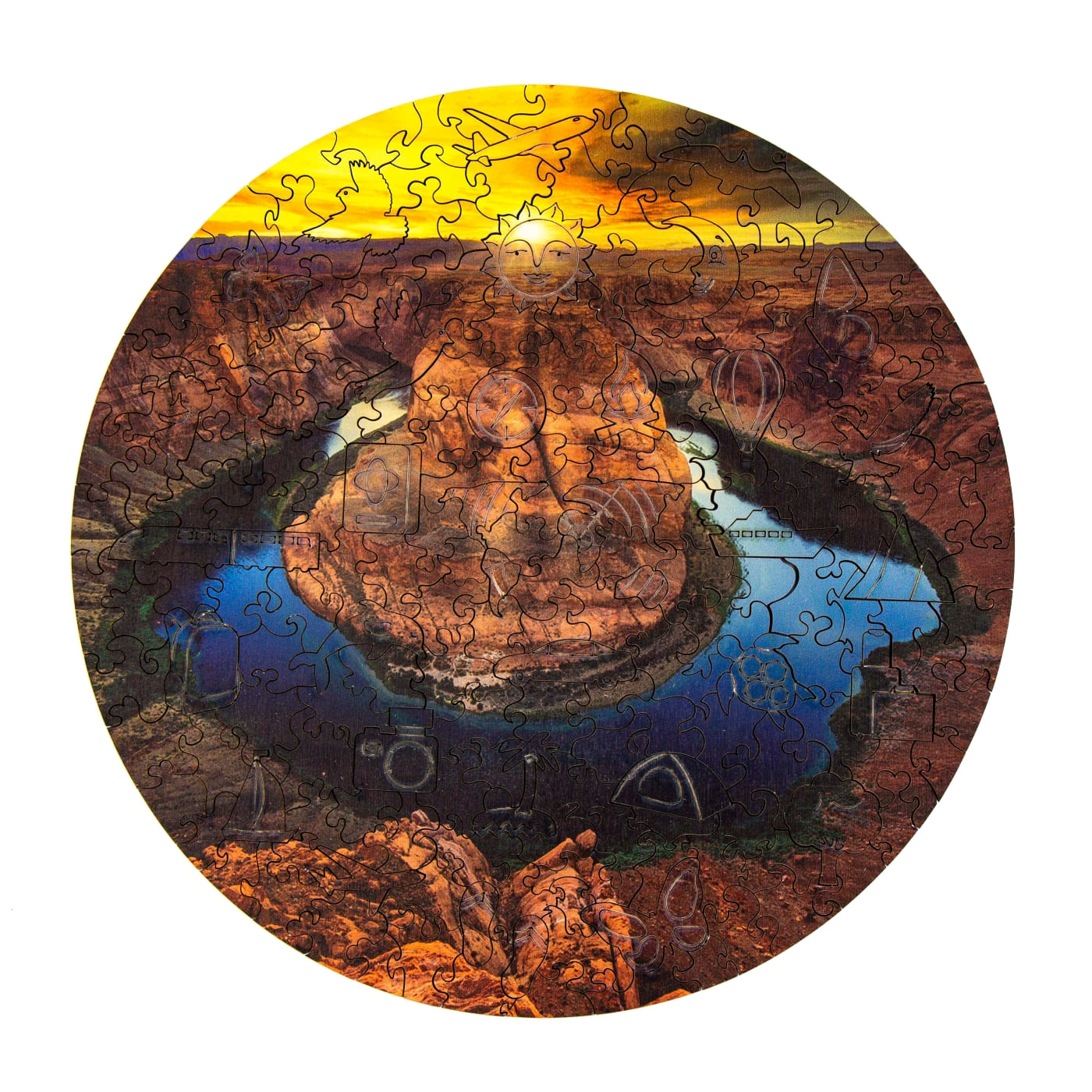
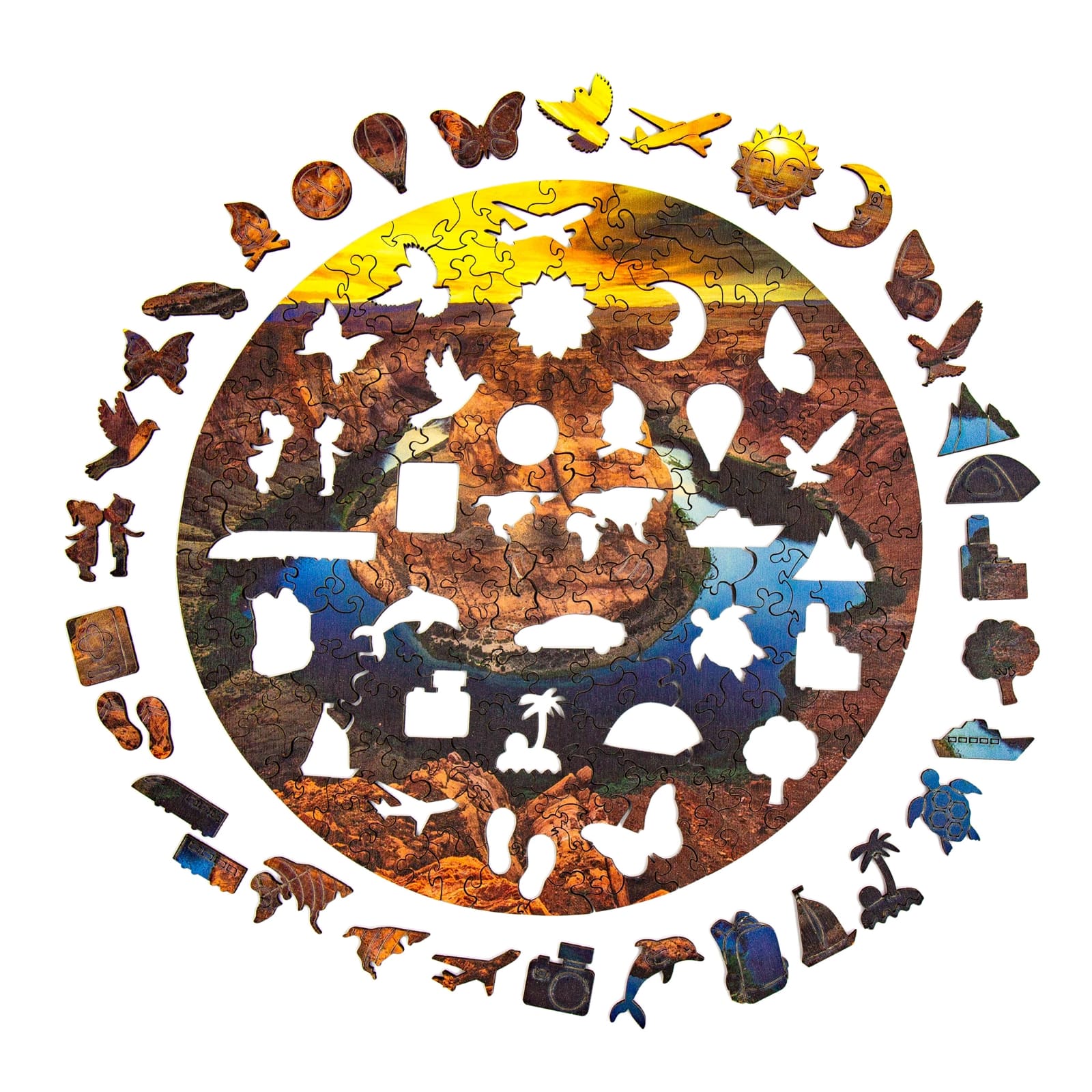
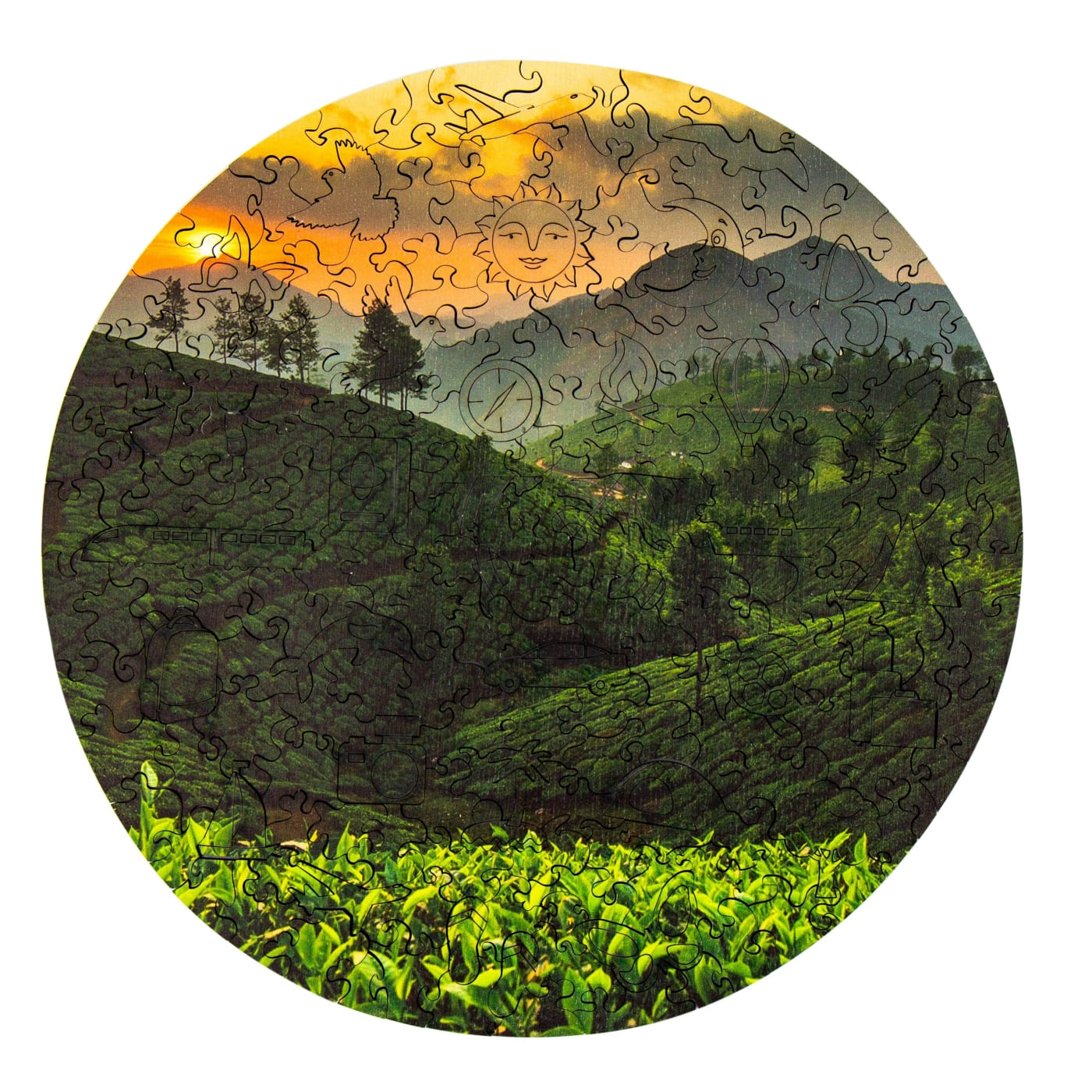
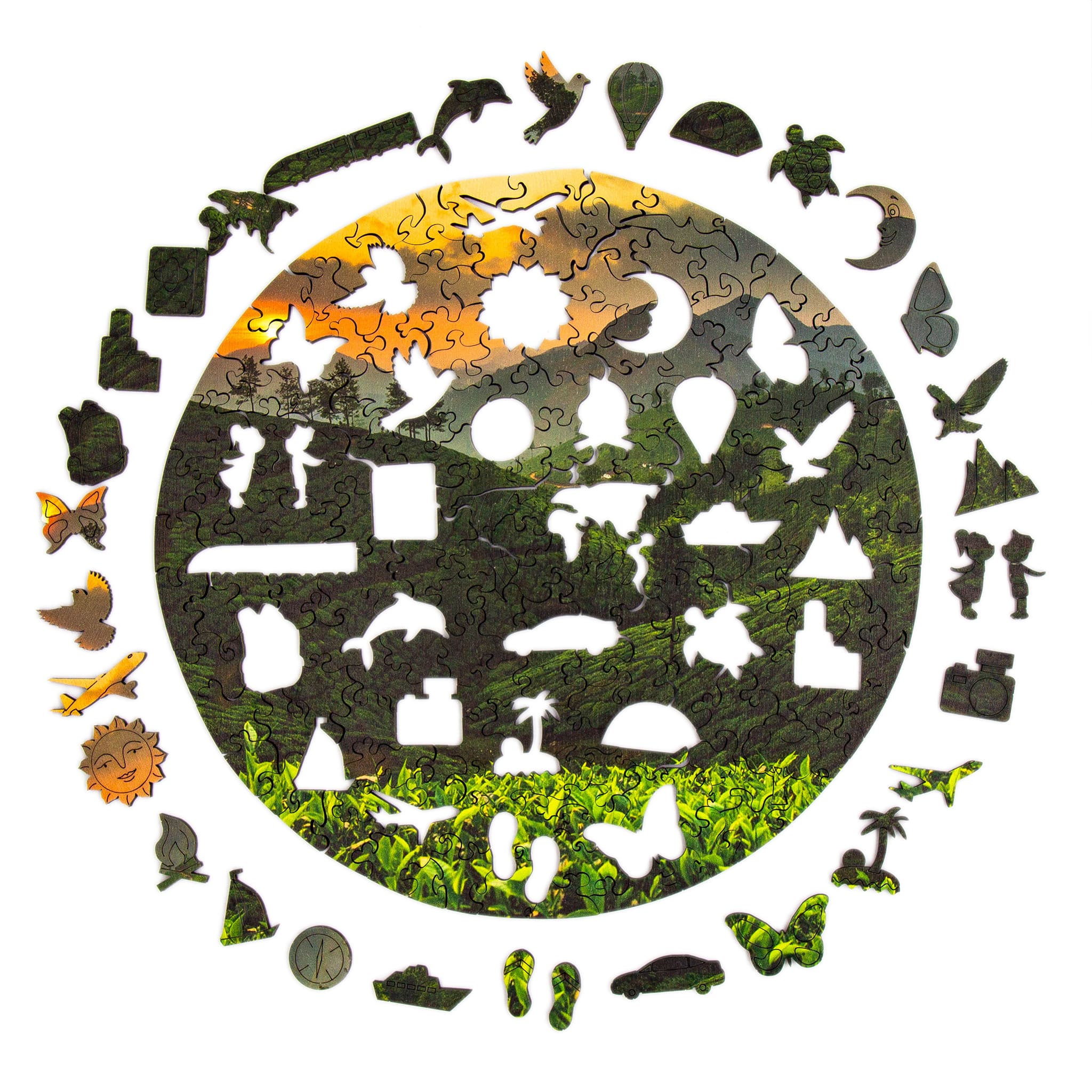
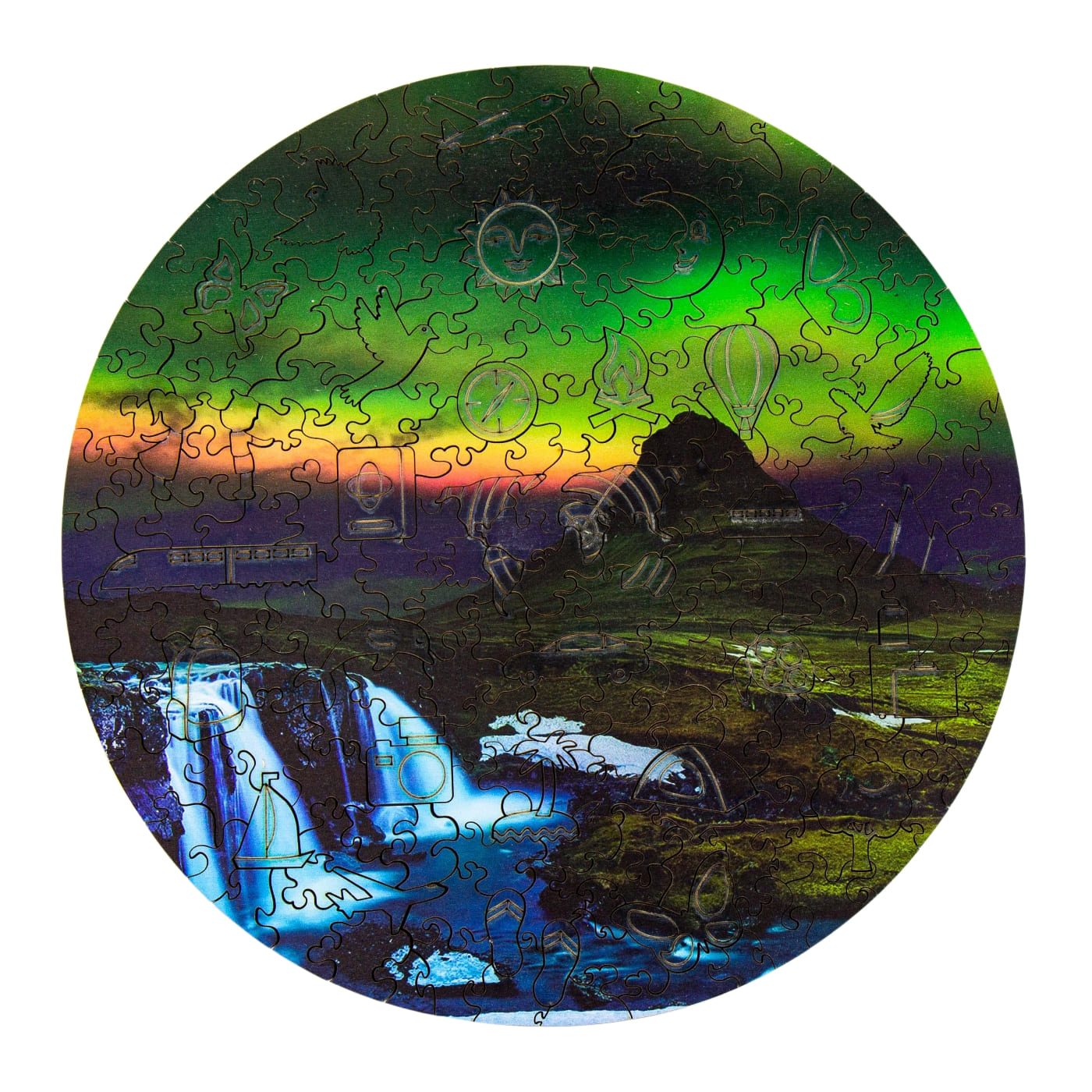
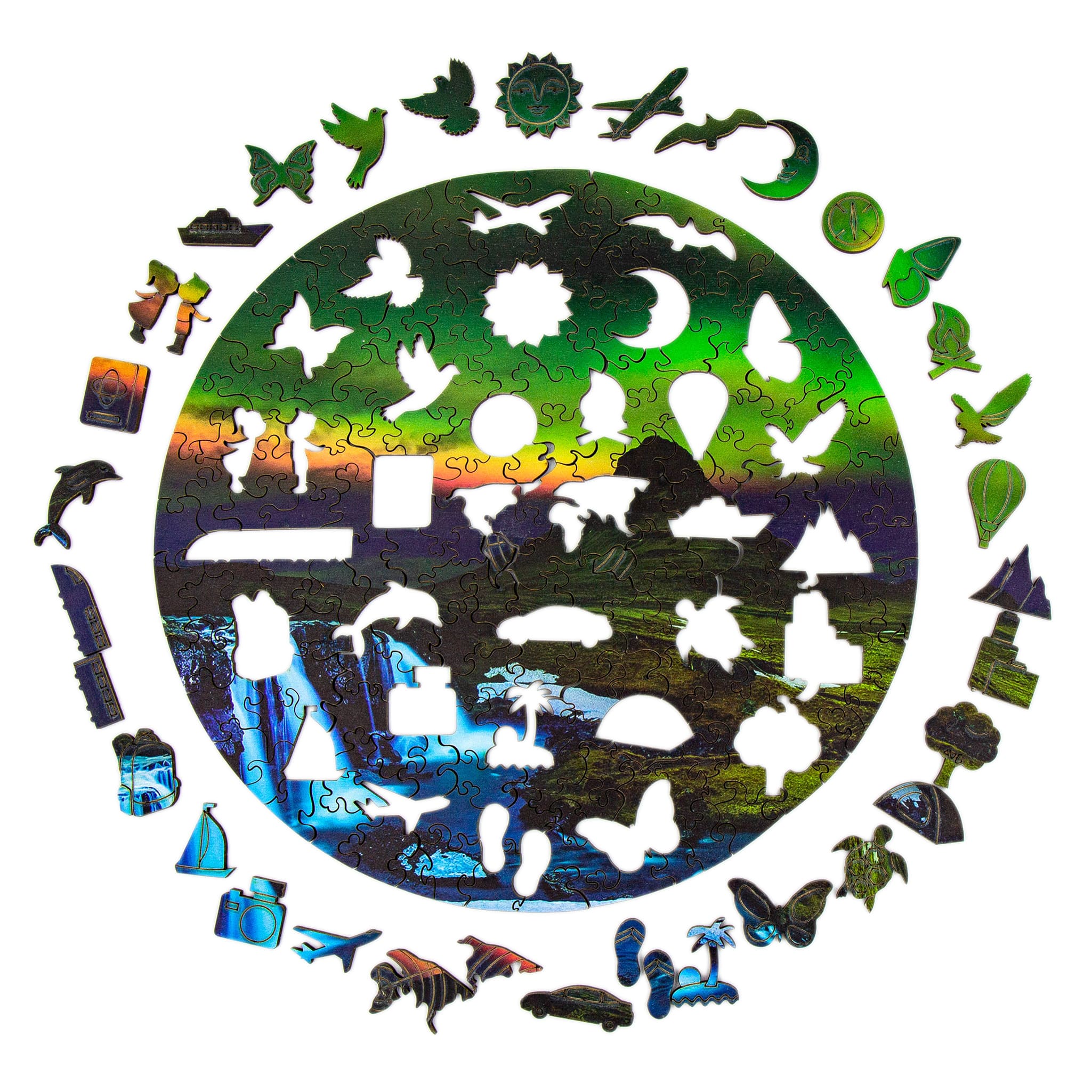
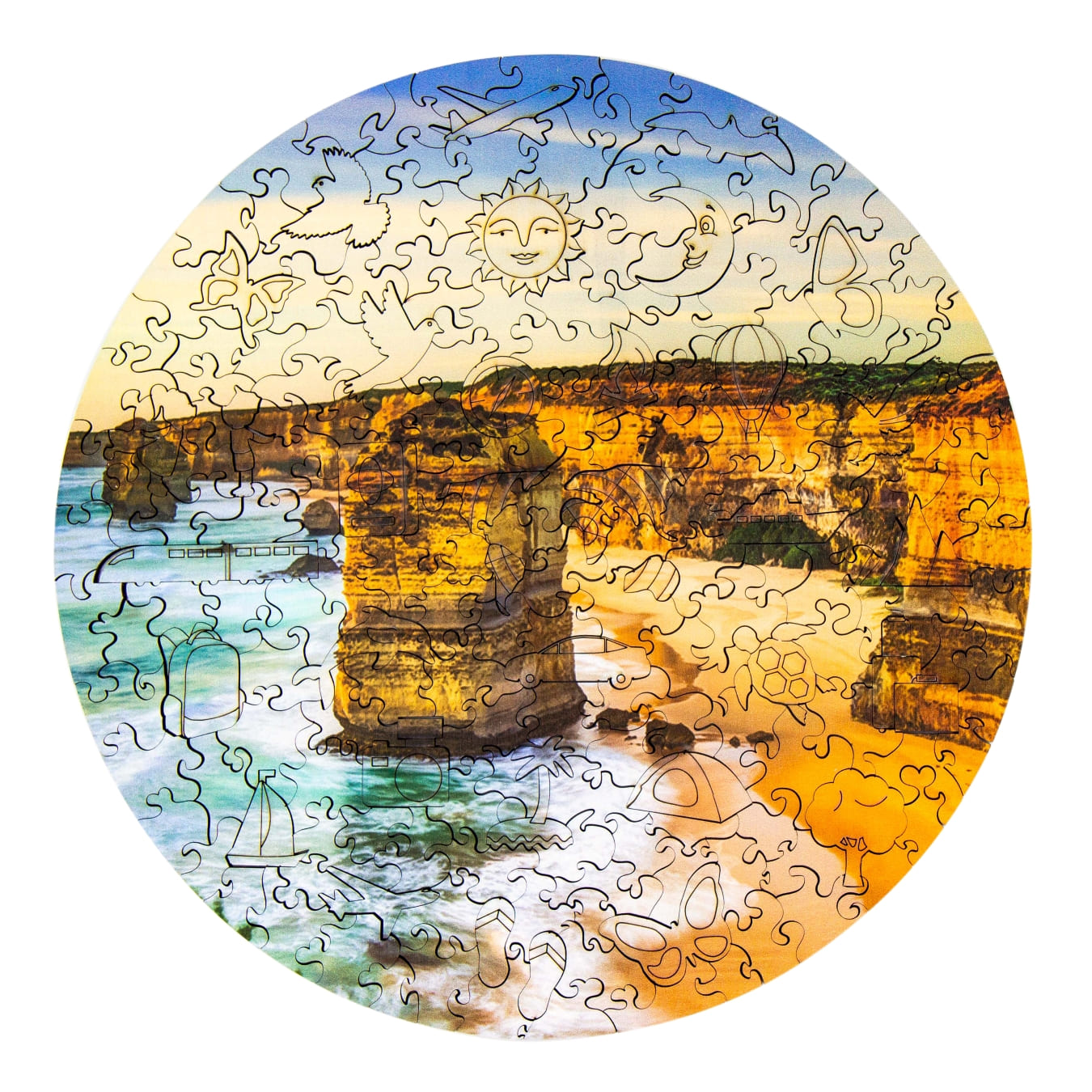
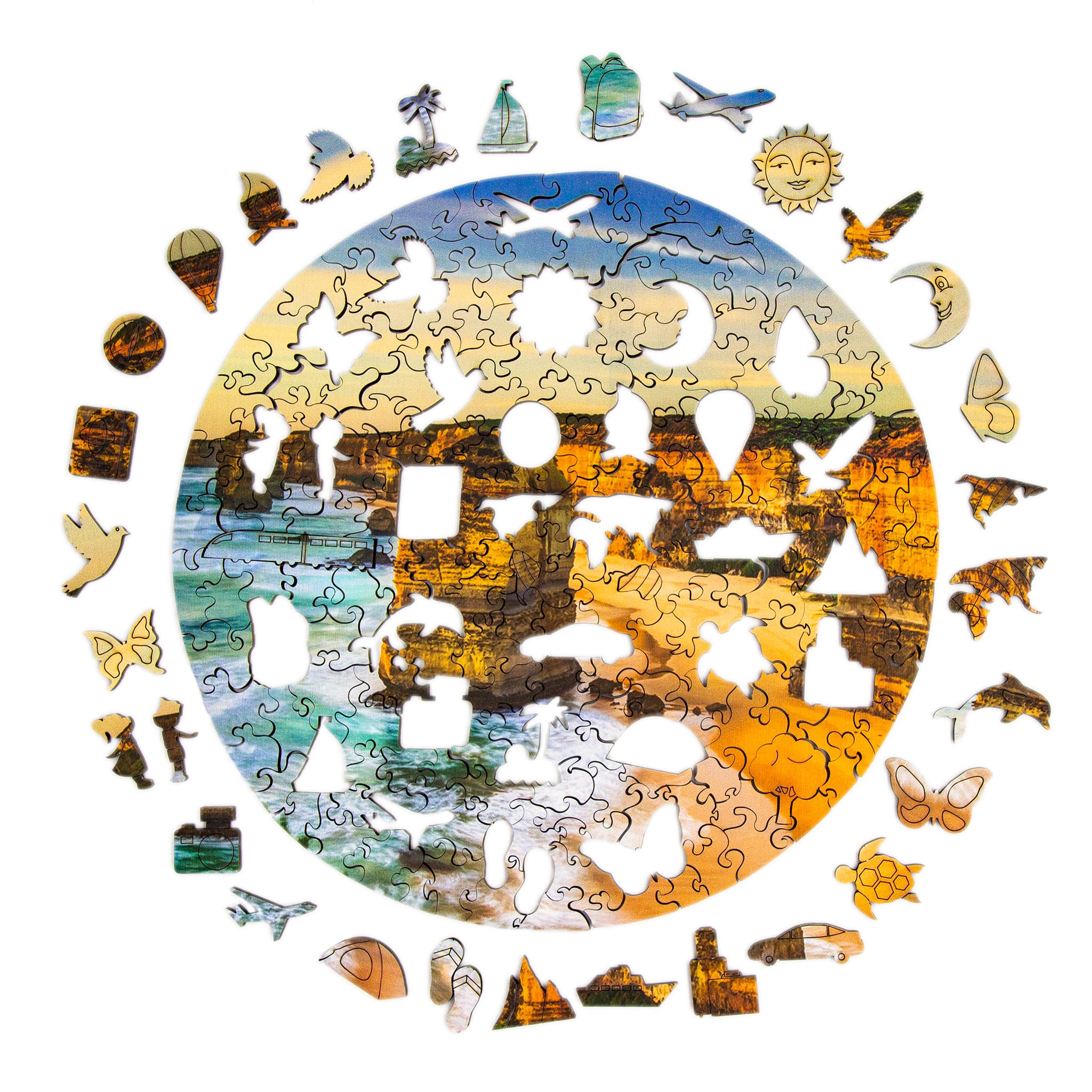


Places rather than creatures
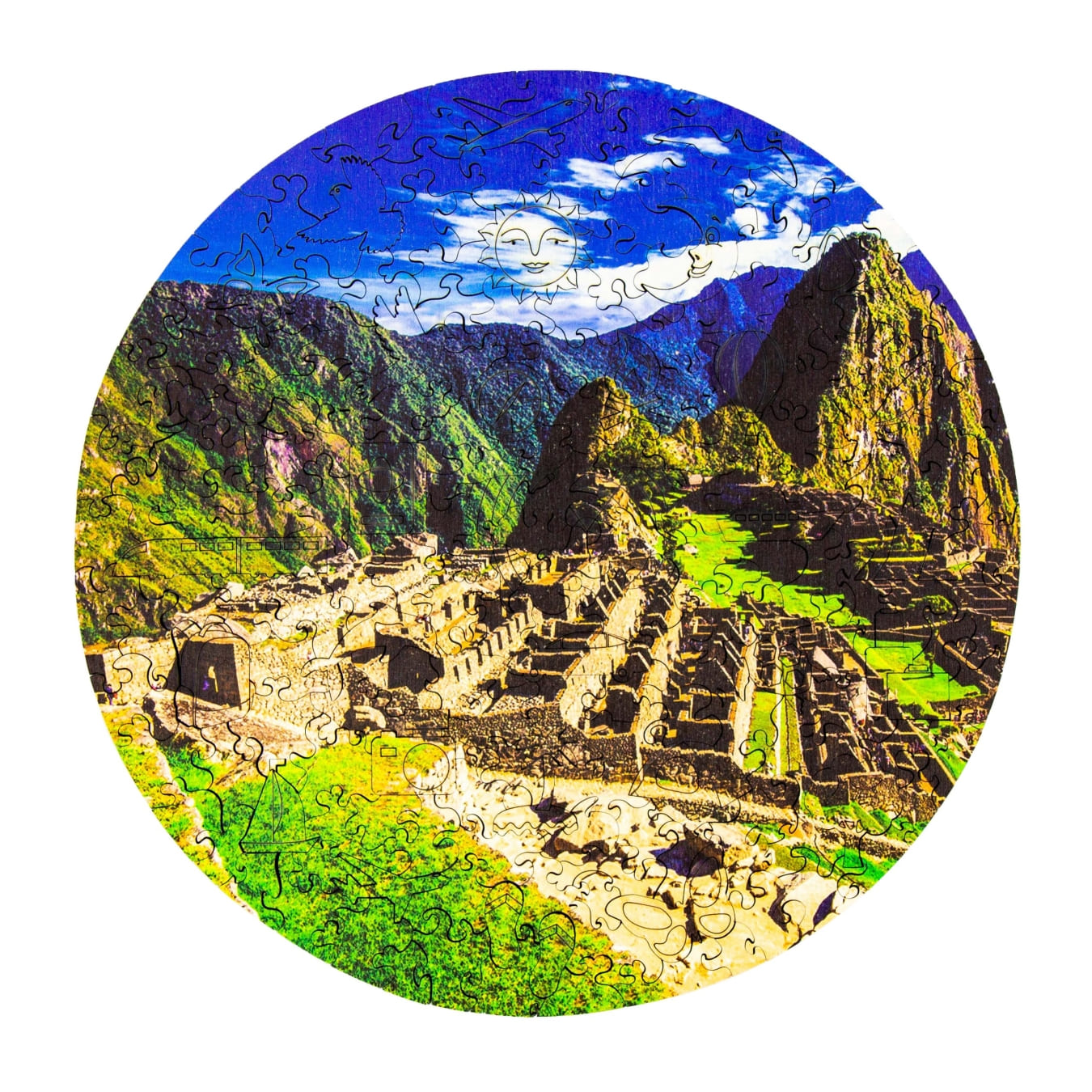
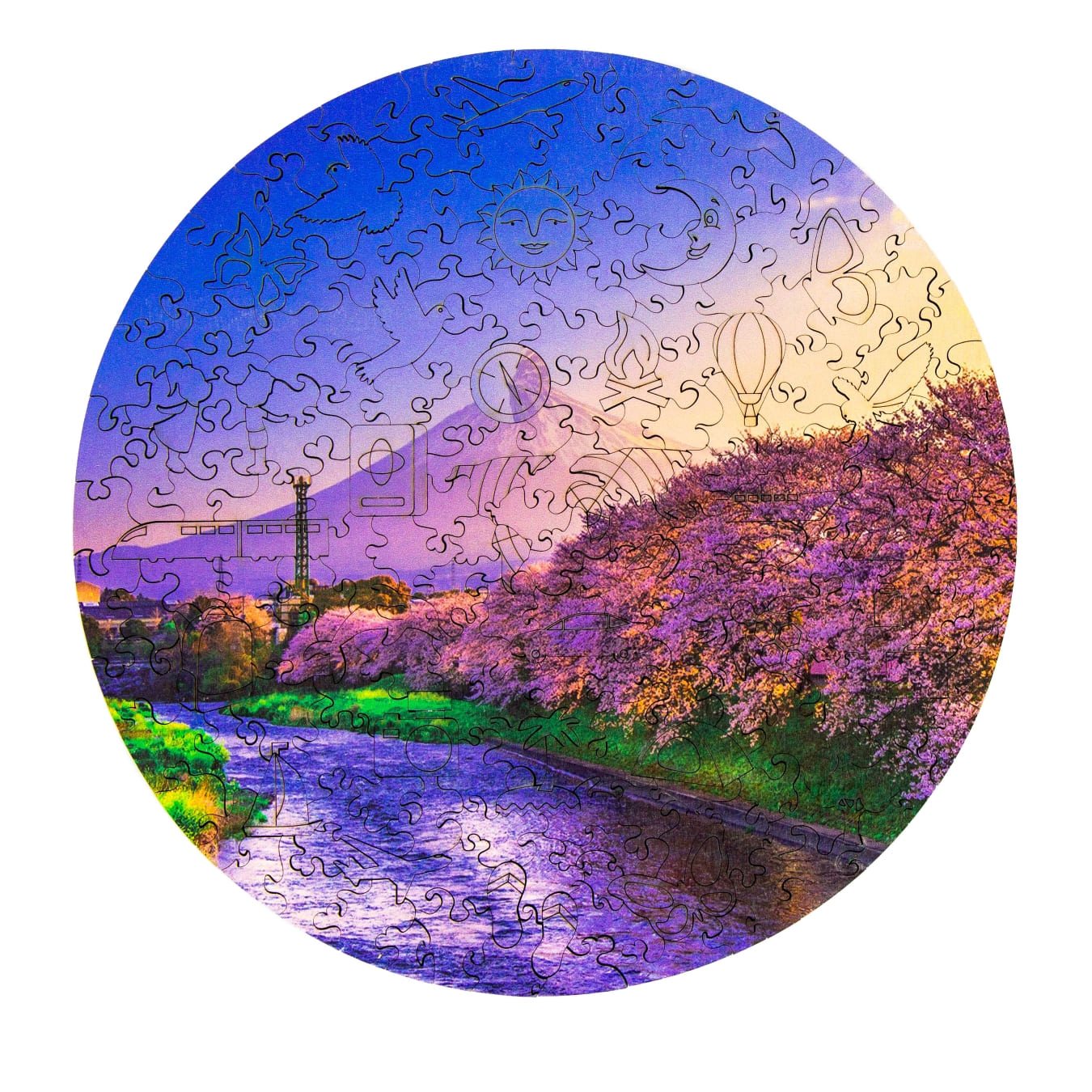
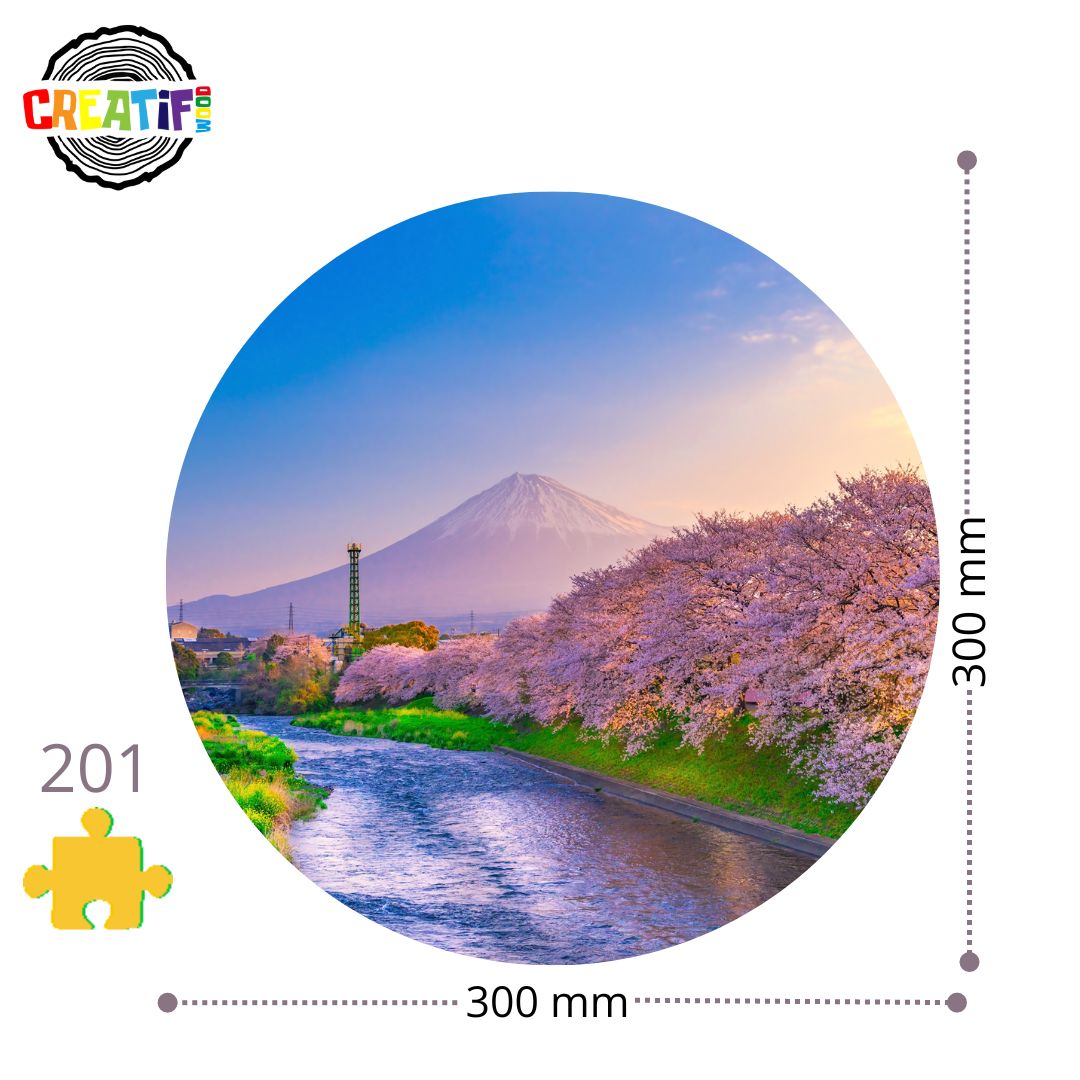
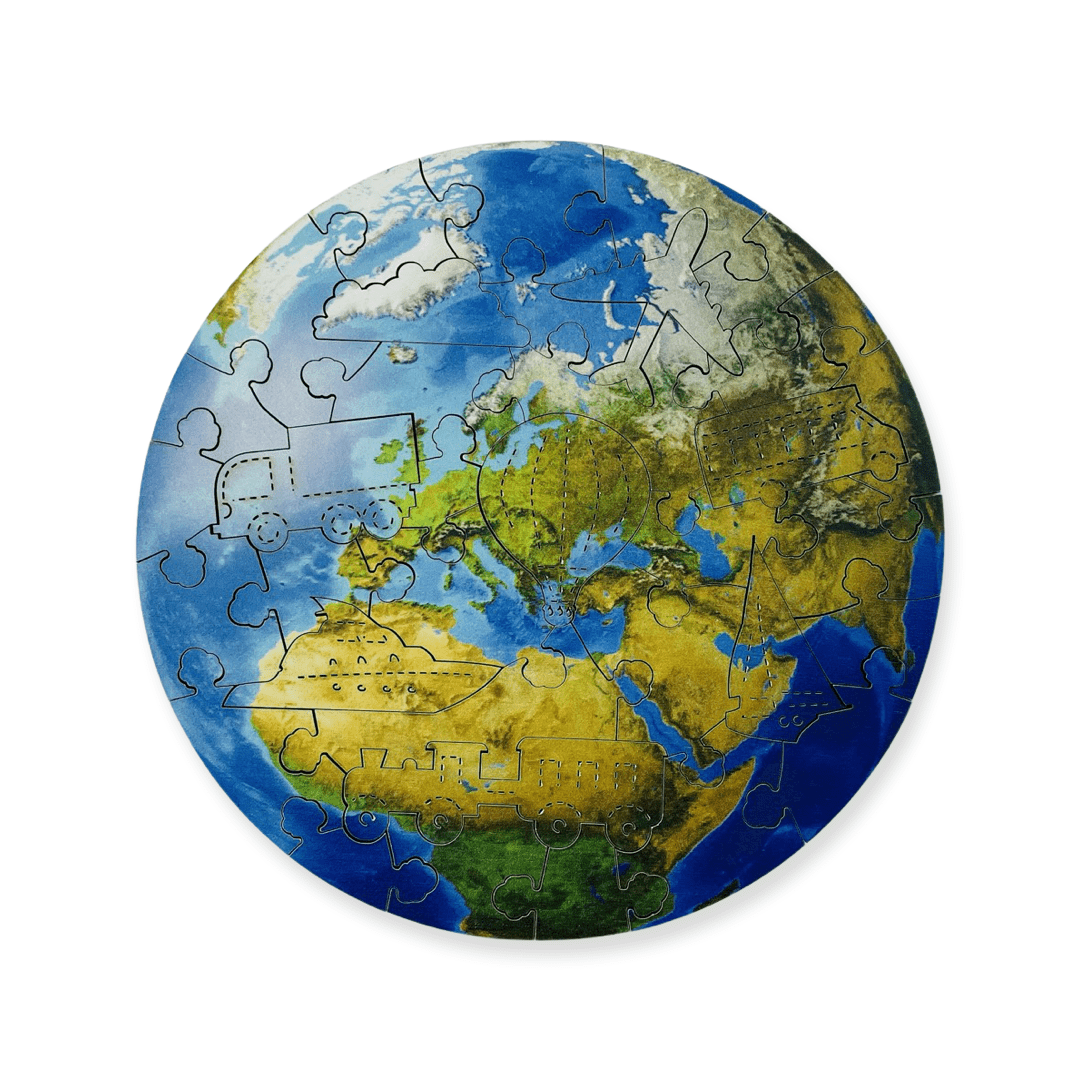
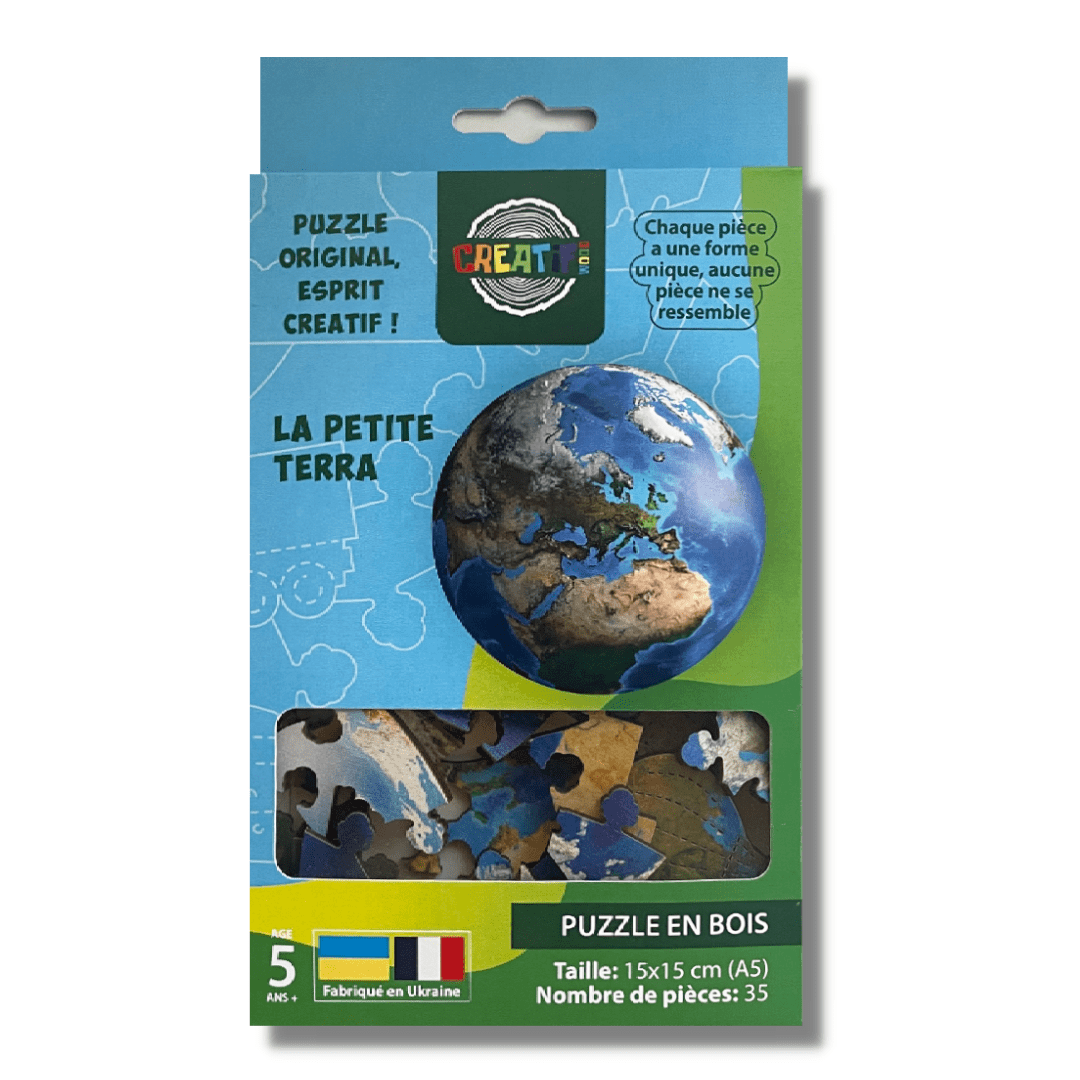
Six of these are photographs held inside a 30 cm disc: Machu Picchu under cloud, Mount Fuji, the Grand Canyon, a terraced tea field, the Northern Lights over an Icelandic waterfall, and the Great Ocean Road. Two are the Earth seen from space, one full-sized and one small enough for a child. One is a map of France drawn as an illustrated tour. And one, despite its name, is an impostor we will come to.
The distinction matters, because everything else we make is ornament. Here, the impostor aside, the image is a real place, reproduced, and the puzzle is cut across it without regard for what the picture contains.
Why is a photograph harder than a pattern?
Ornamental designs give you outlined shapes, flat colour fields and hard boundaries. A photograph gives you none of that. Sky shades continuously, water carries no repeating motif, and a cliff face is a thousand small variations of the same brown. The round format compounds it. There are no corners and no straight edges anywhere, only a curve, so the usual habit of assembling the border first gives you a ring of near-identical pieces that could sit almost anywhere along it.
How do people build a landscape disc?
These get built by horizon line. Every one of the landscape discs has a boundary where one kind of surface meets another: sky against ridge on Machu Picchu, aurora against black hill on the Northern Lights board, water against rock on the Great Ocean Road. Builders find that line first, lay it across the disc, and then work the two halves as separate tasks with different rules.
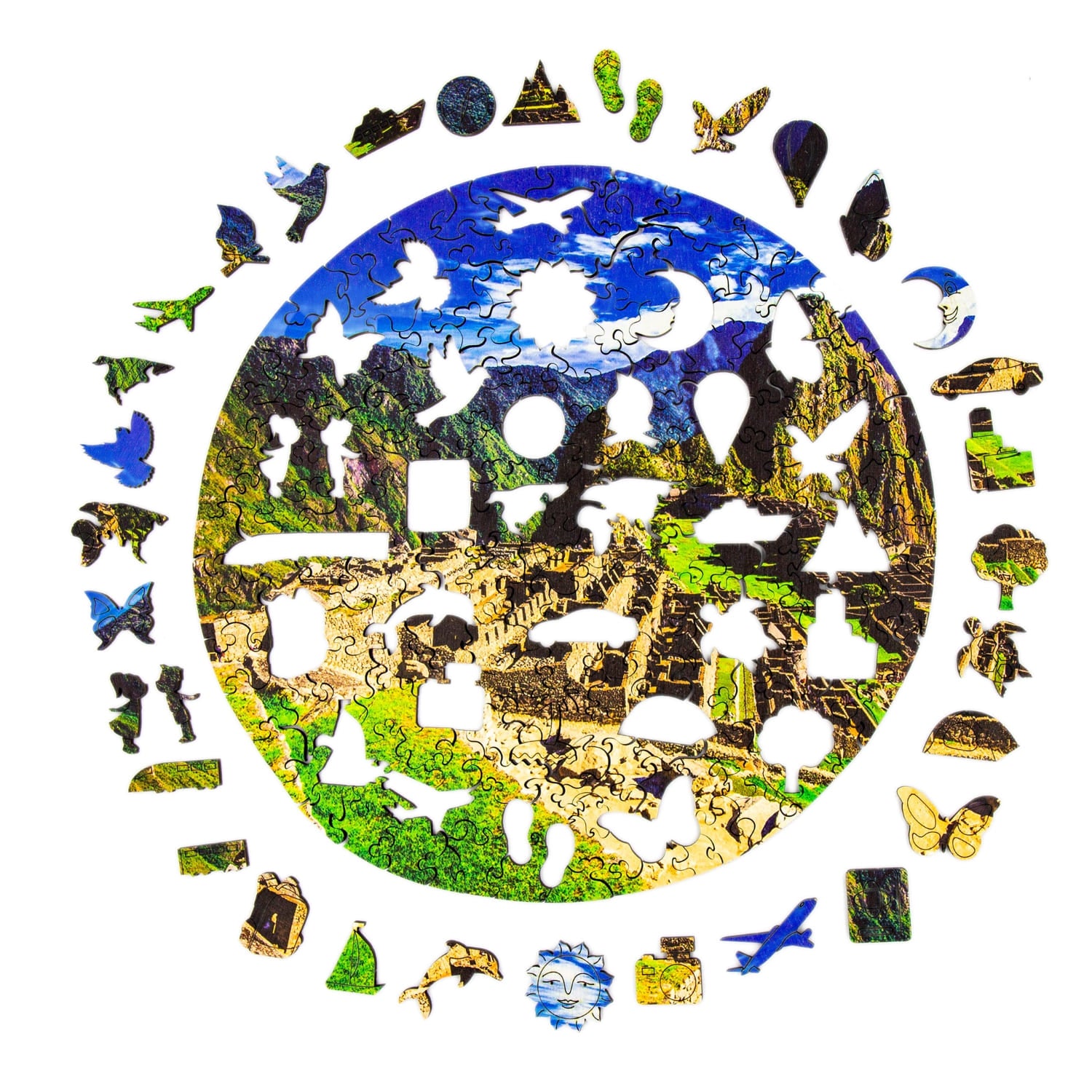
The sky half is where people slow down, and where the figural pieces help. Because those pieces are recognisable shapes rather than photographic fragments, they act as fixed points in areas that otherwise have none.
Which designs are not landscapes?
Planet Terra is the Earth from orbit, centred on Europe and Africa, and the one design in the collection where the subject and the shape agree: a round picture of a round object. Little Terra is the same idea at 15 cm and 35 pieces, for a child.
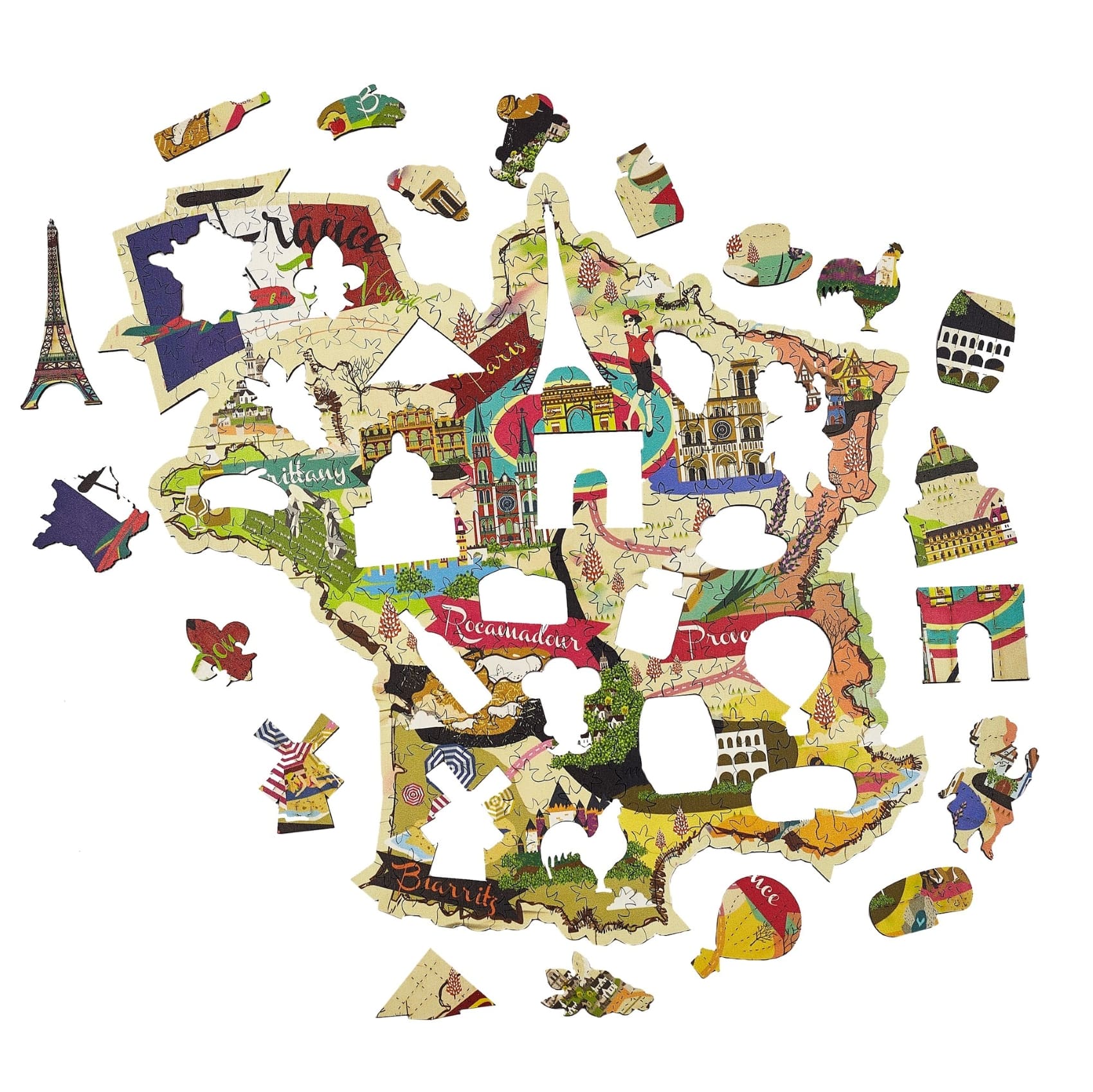
France Discovery is different again. It is cut to the outline of the country and filled with drawn landmarks by region – Paris, Brittany, Provence, Rocamadour, Biarritz – so it works as a map as much as a puzzle. At 38 cm it is the largest board in this collection.
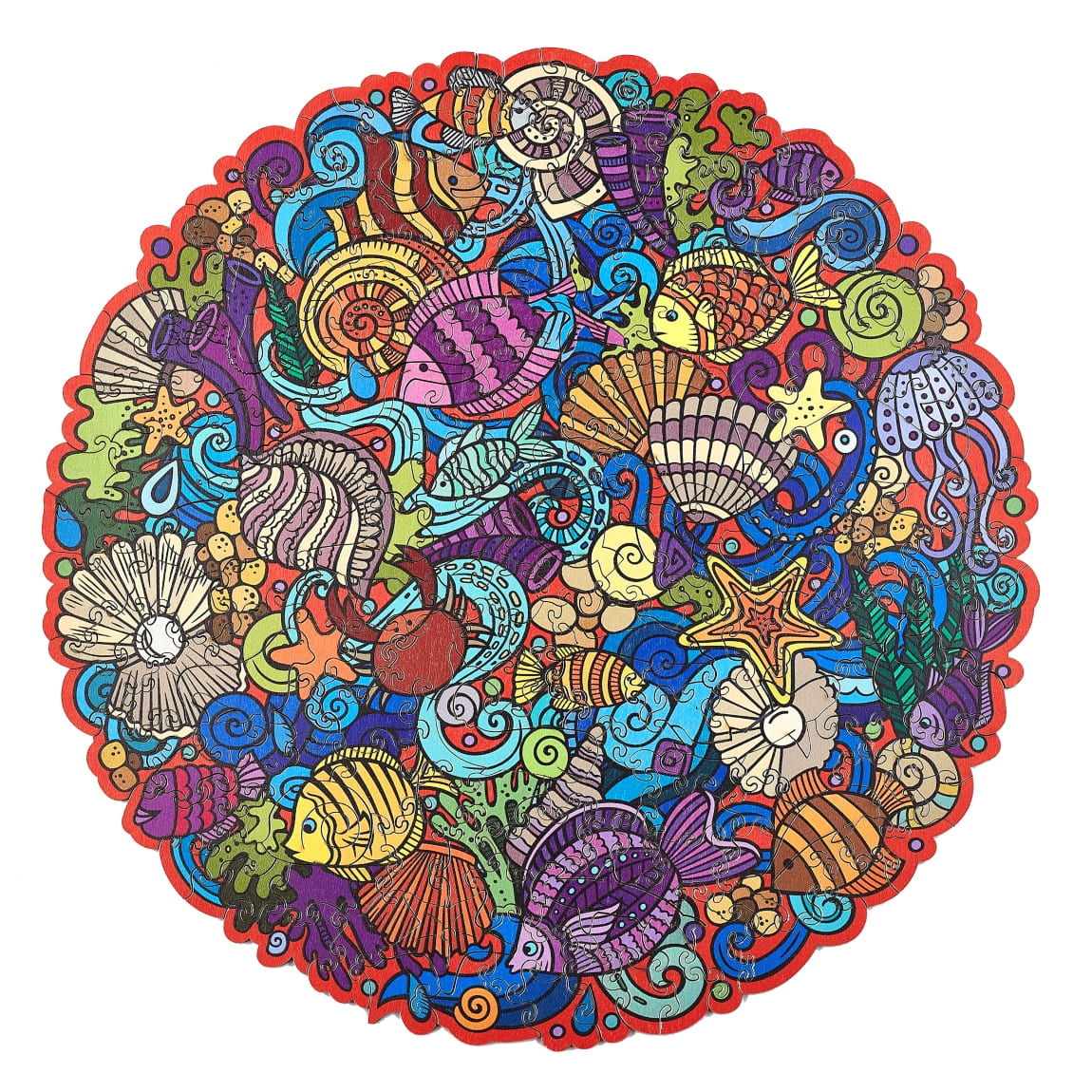
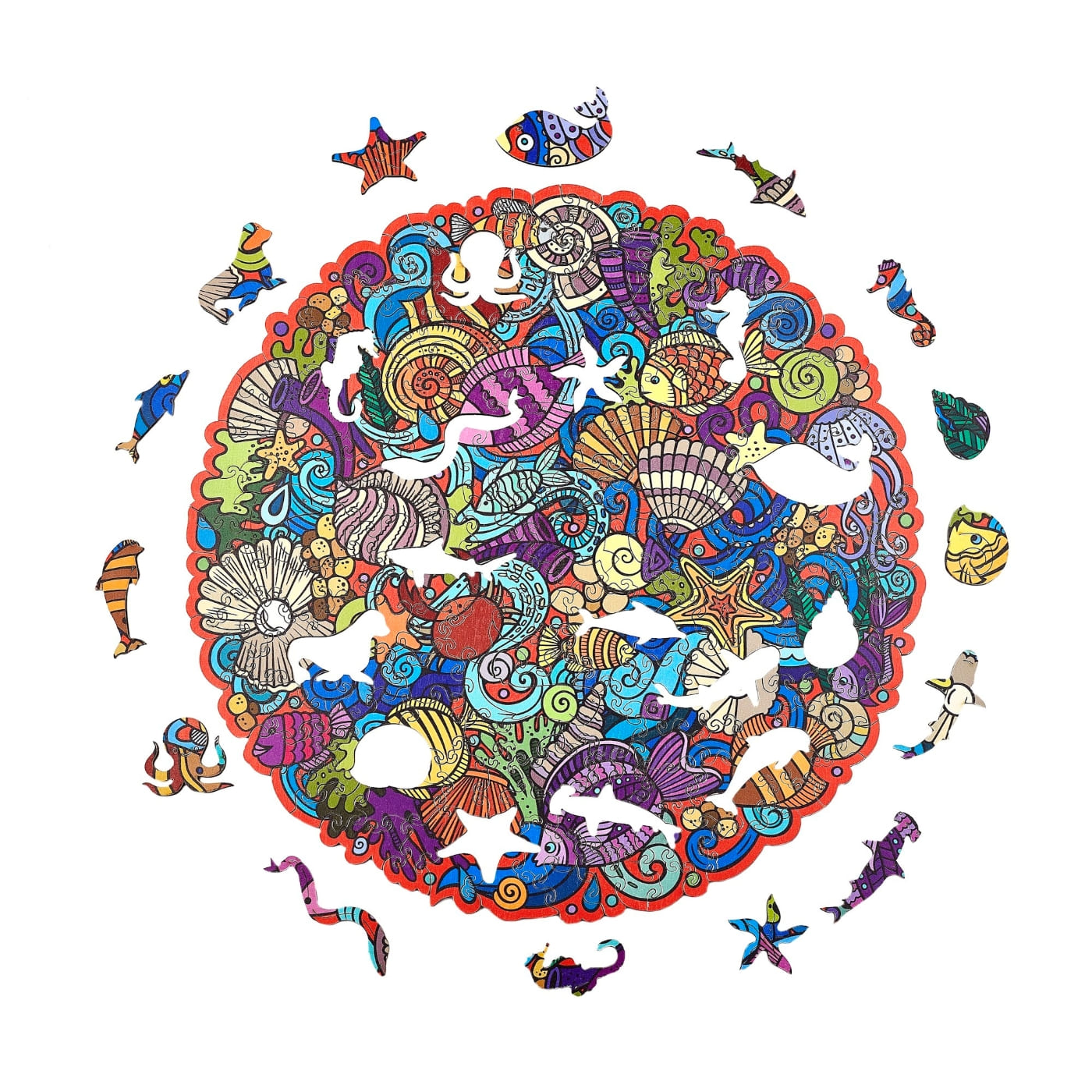
And Planet Marina, despite the name, is no photograph at all: an invented ocean planet, a disc packed edge to edge with drawn shells, fish and seahorses. It sits in this collection by name and shape, and belongs to our sea collection by heart.
Who are these puzzles for?
These are the designs people buy about somewhere specific: a place they have been, a place they intend to go, or a place someone else is from. That is a different purchase from the animal puzzles, where the subject is chosen for how it looks. It is worth checking which of the six landscapes is the one that matters to the person you are buying for, because they are not interchangeable in the way two ornamental birds would be.